Back to Menu
Retinol vs Retinal vs HPR: A Complete Guide to Choosing the Right Retinoid
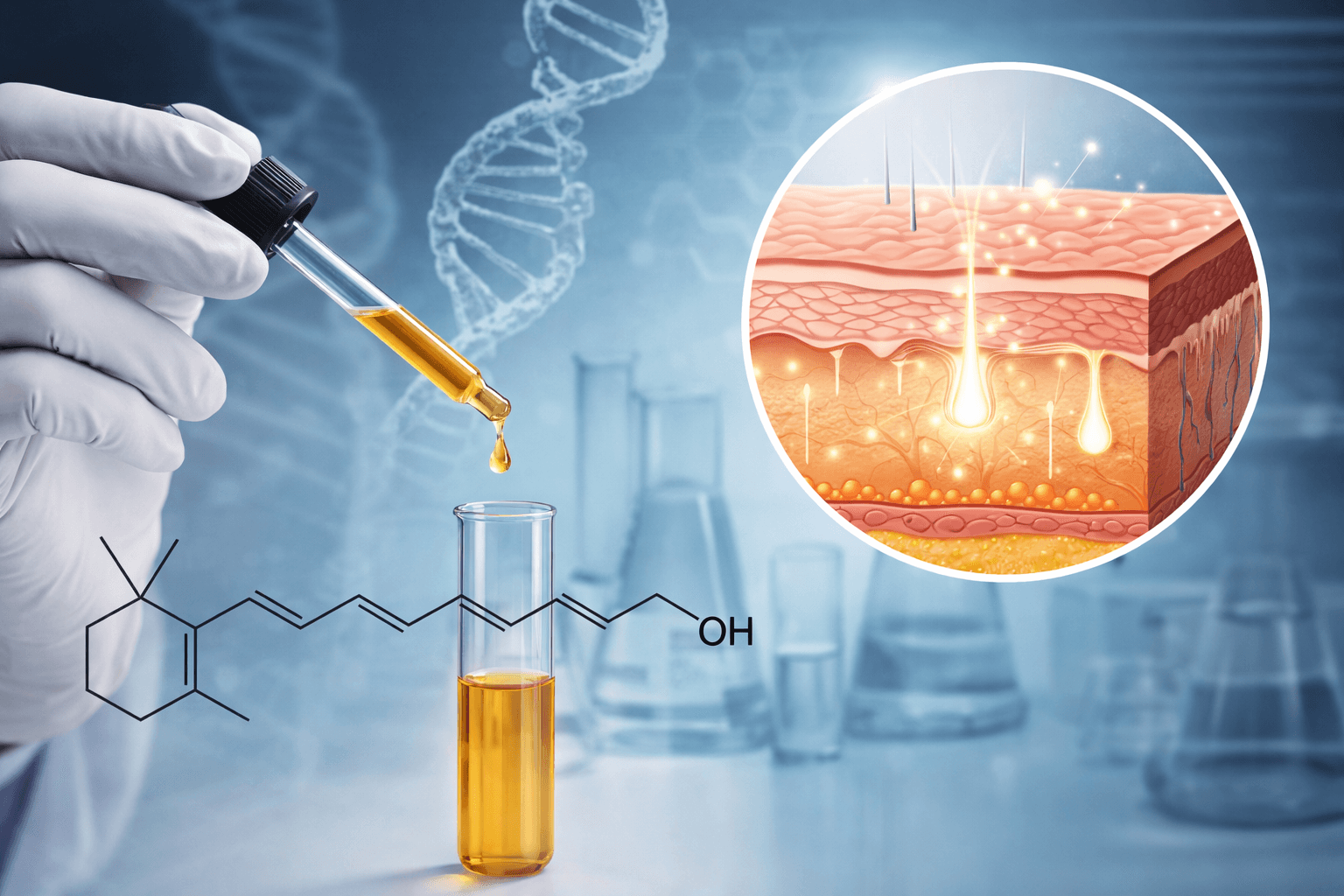
Retinoids are among the most researched ingredients in dermatology and aesthetic skincare, helping improve concerns such as wrinkles, pigmentation, enlarged pores, and uneven skin texture. However, choosing the right retinoid can be confusing, especially with ingredients like retinol, retinal, and HPR now widely available in skincare products.
While all three belong to the vitamin A family, they differ in strength, conversion process, stability, and potential for irritation. Understanding these differences can help you select the most suitable option for your skin concerns and treatment goals.
In this guide, we'll compare retinol, retinal, and HPR, review recent clinical findings, and explain how to choose the right retinoid for healthier, more resilient skin.
Retinol vs Retinal vs HPR: Which Retinoid Is Right for Your Skin?
Retinol, retinal, and HPR are among the most popular retinoids in modern skincare, but each works differently. Understanding their unique characteristics can help you choose the most suitable option for your skin concerns, tolerance, and treatment goals.
What is a Retinoid?
Retinoids are some of the most widely used skincare ingredients for improving wrinkles, pigmentation, acne, and overall skin texture. They work by helping the skin renew itself more efficiently, which can lead to healthier and smoother-looking skin over time. Retinol, retinal, and HPR are among the most common types of retinoids used in modern skincare.
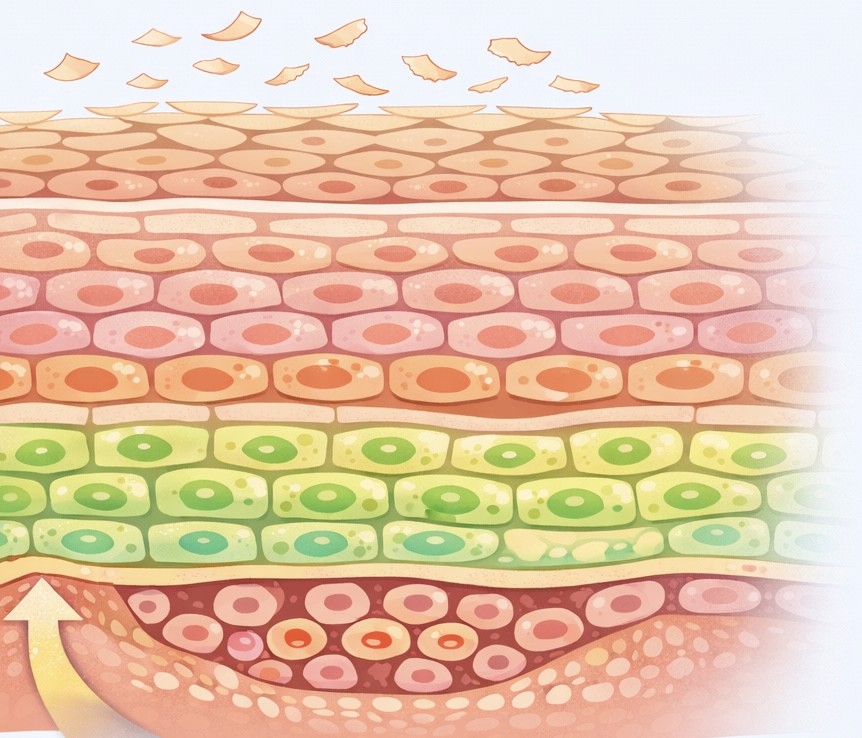
Retinol vs Retinal vs HPR: What's the Difference?
Although all three belong to the vitamin A family, retinol, retinal, and HPR differ in their conversion process, potency, stability, and clinical benefits.
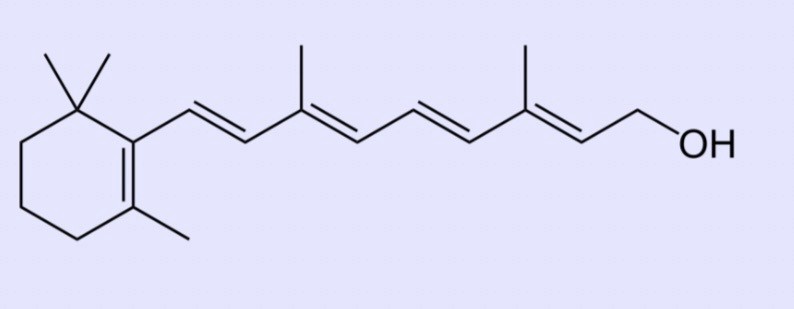
1. Retinol
How it works: Retinol must go through two conversion steps before becoming active in the skin.
Benefits: Gentle, well-studied, and suitable for beginners. It is one of the most commonly used retinoids in skincare.
Things to consider: Results may take longer to appear compared to stronger retinoids.
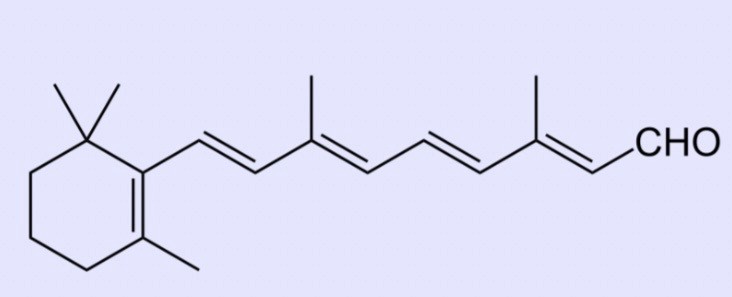
2. Retinal
How it works: Retinal only requires one conversion step to become active in the skin.
Benefits: Often delivers visible improvements faster than retinol, particularly for wrinkles and skin texture.
Things to consider: It can be less stable in formulations and may cause more irritation in some people.
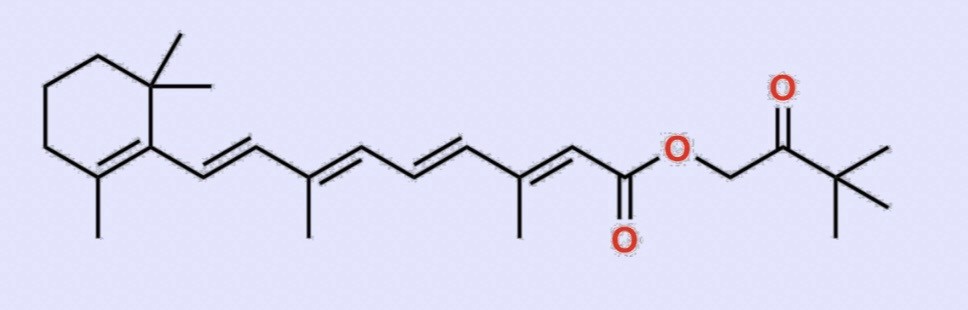
3. HPR (Hydroxypinacolone Retinoate)
How it works: HPR can interact with retinoid receptors more directly than traditional retinoids, requiring little to no conversion within the skin.
Benefits: Designed to provide retinoid benefits while remaining gentle and well tolerated. It is often considered a newer-generation retinoid.
Things to consider: Research on HPR continues to grow, but it is generally valued for its balance of efficacy and comfort.
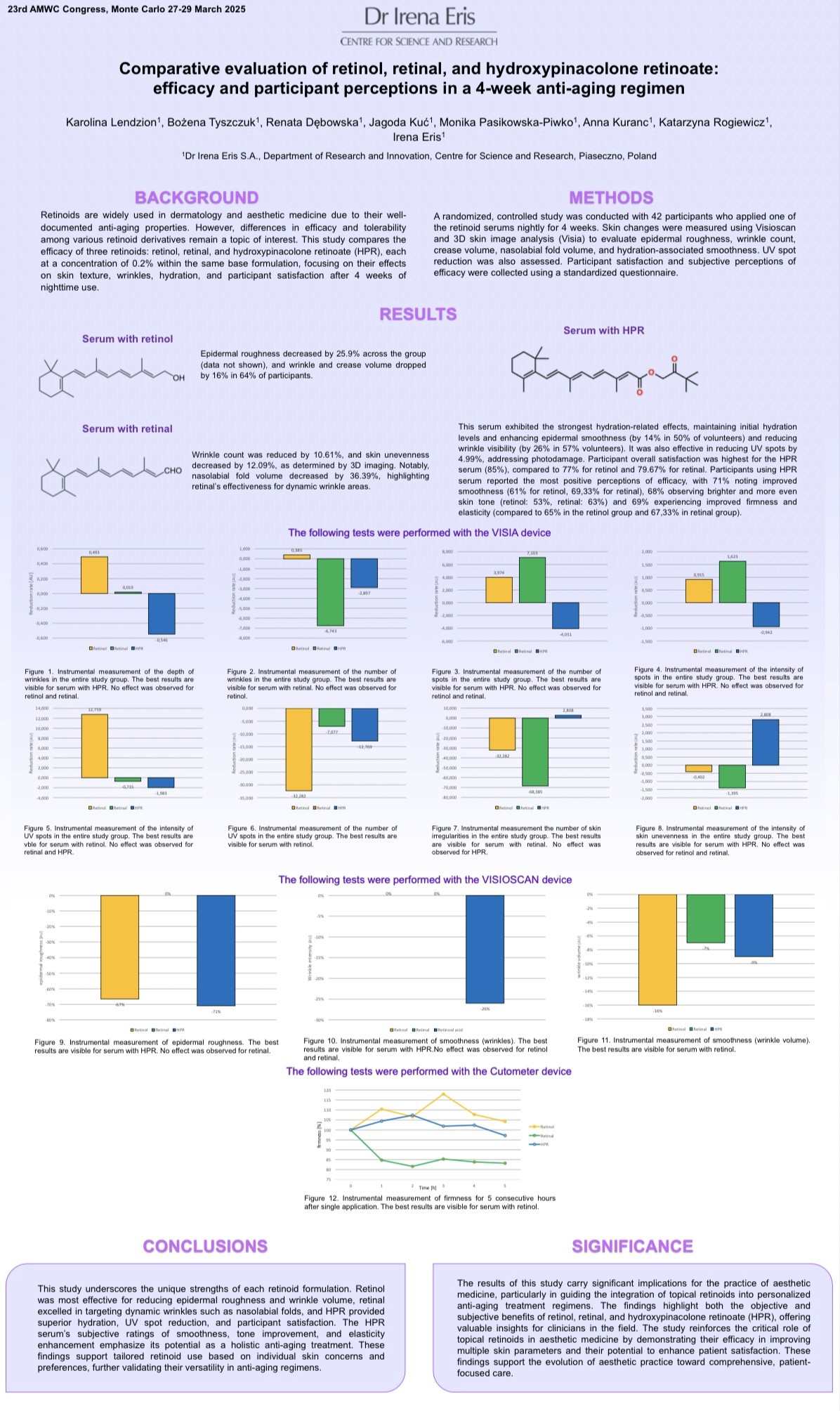
Clinical Evidence (AMWC 2025, Monte Carlo)
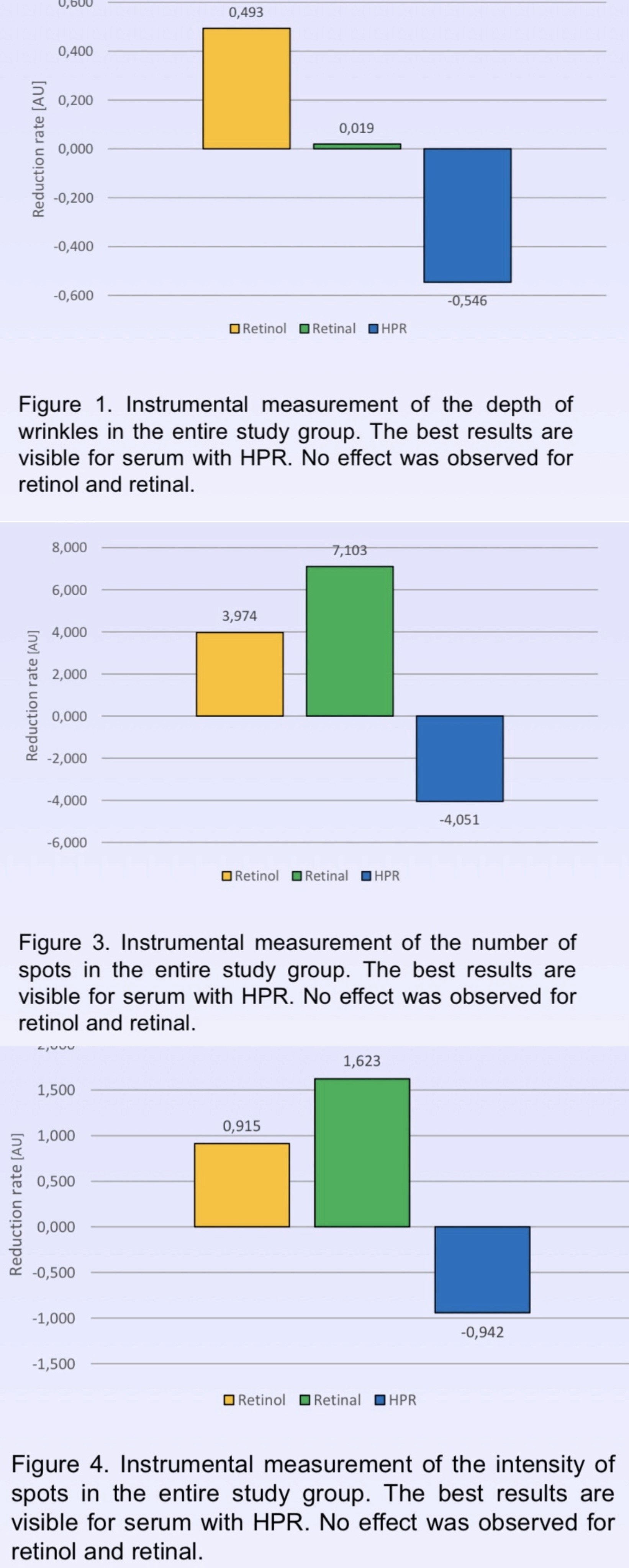
According to a study presented at the 2025 Monte Carlo International Conference, 42 participants applied a 0.2% concentration of the same skincare formulation for 4 weeks. The results showed that no single ingredient was overwhelmingly superior; instead, each retinoid demonstrated strengths in different areas.
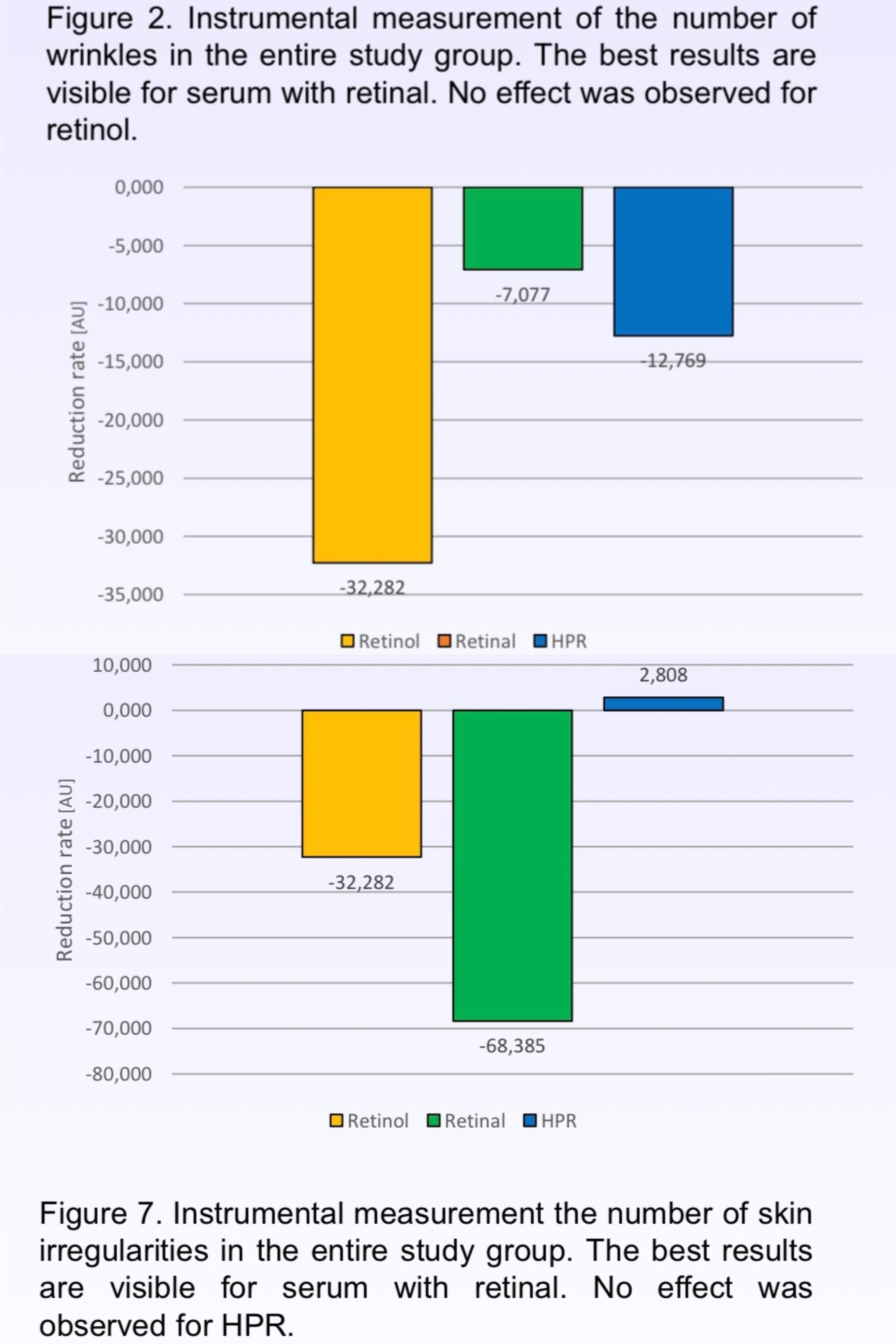
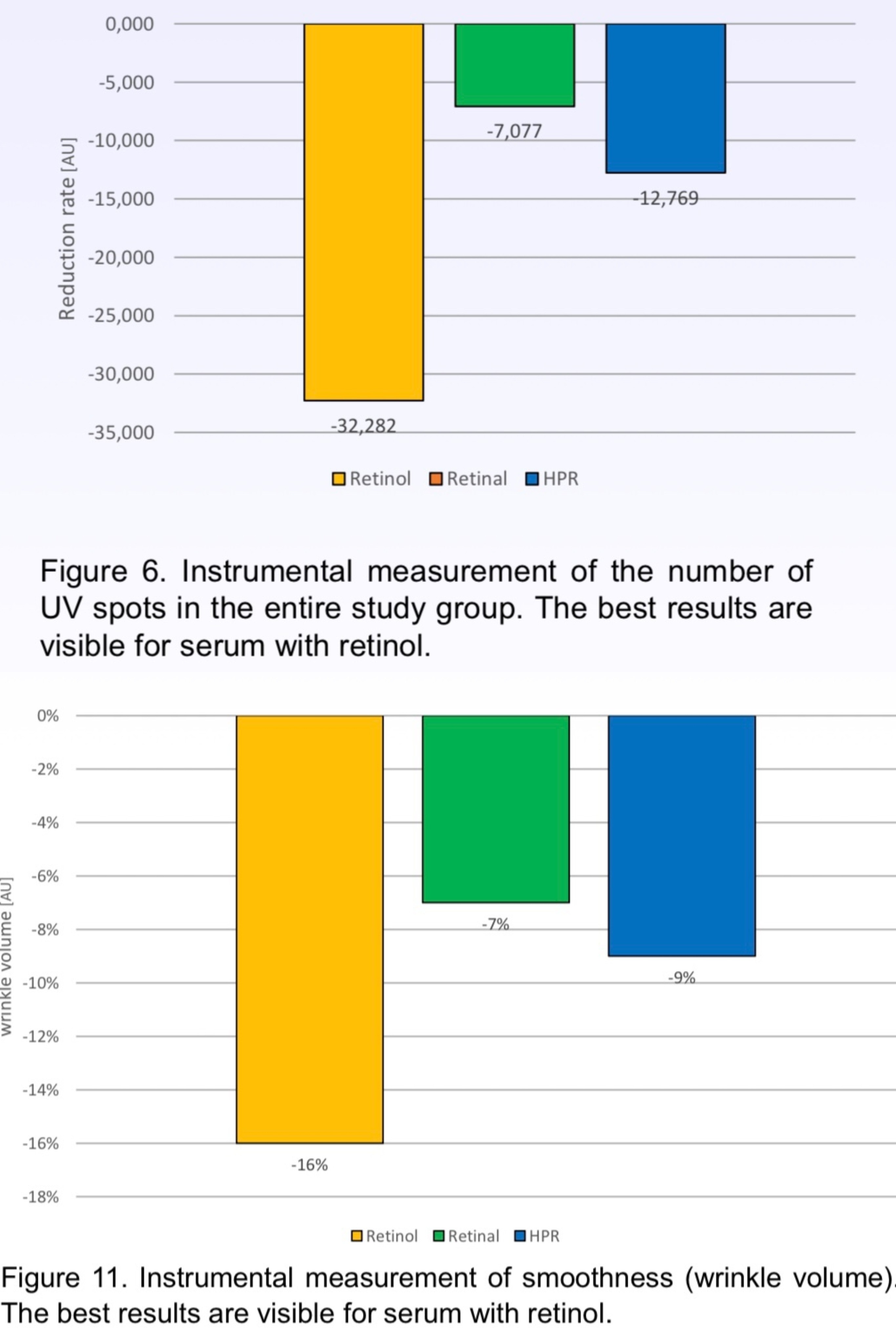
Chart Data & Instrumental Measurements
Efficacy Comparison Summary Table
Assessment Area | Retinol | Retinal | HPR |
|---|---|---|---|
Wrinkle Count | No significant improvement observed | ★ Strongest improvement | Moderate improvement |
Wrinkle Depth | No significant improvement observed | No significant improvement observed | ★ Strongest improvement |
Wrinkle Volume | ★ Strongest improvement | Moderate improvement | Moderate improvement |
Skin Texture / Irregularities | Good improvement | ★ Strongest improvement | No significant improvement observed |
UV Spots | ★ Strongest improvement | Mild improvement | Moderate improvement |
Spot Count | No significant improvement observed | No significant improvement observed | ★ Strongest improvement |
Spot Intensity | No significant improvement observed | No significant improvement observed | ★ Strongest improvement |
Key takeaway: Each retinoid targets slightly different aspects, no single retinoid is universally “best.”
How to Use Retinoids Safety Guidelines
1. Start gradually: If you're new to retinoids, begin by applying them 2–3 evenings per week. This allows your skin time to adjust and can help minimise irritation.
2. Expect an adjustment period: Mild dryness, peeling, or sensitivity may occur when first introducing a retinoid. Using a moisturiser afterwards can help support the skin barrier.
3. Use sunscreen every day: Because retinoids can increase sensitivity to sunlight, daily sun protection is essential. Choose a broad-spectrum sunscreen with SPF 30 or higher.
4. Pause after skin procedures: Avoid using retinoids immediately after treatments such as lasers, microneedling, or chemical peels. Wait until the skin has adequately recovered before restarting use.
5. Avoid during pregnancy and breastfeeding: As a precaution, vitamin A derivatives are generally not recommended during pregnancy or breastfeeding. Consult your healthcare provider for suitable alternatives.
Choosing the Right Retinoid for Your Skin
While retinoids can be highly effective, the most suitable option depends on your skin type, sensitivity, and primary concerns. Using a retinoid that is too strong or introducing it too quickly may lead to unnecessary irritation or barrier disruption.
At REPIC Clinic, we use advanced skin analysis systems, including Mark-Vu and MEIC-Vu, to evaluate factors such as:
Pore size and skin texture
Skin barrier condition
Redness and pigmentation
Moisture and sebum balance
Visible signs of skin ageing
A personalised assessment can help determine which retinoid is most appropriate for your skin and how to incorporate it safely into your routine.
Summary
We've explored:
Retinoid basics
The differences between retinol, retinal, and HPR
Clinical findings on their effects
How to choose and use retinoids safely
Retinol, retinal, and HPR each offer unique benefits, and the right choice depends on your skin concerns, tolerance, and treatment goals. Understanding these differences can help you build a more effective skincare routine and achieve better long-term results.
If you're unsure which retinoid is right for your skin, a professional skin assessment can provide personalised guidance. At REPIC Clinic in Gangnam, Seoul, we use advanced skin analysis technology to evaluate your skin condition and recommend treatments tailored to your individual needs.
Ready to find the most suitable retinoid for your skin?
Our team receives a personalised treatment plan designed to support healthier, clearer, and more confident skin.
FAQ: Retinoids in Skincare (Retinol, Retinal, and HPR)
Which retinoid works fastest for visible skin improvement?
Retinal and HPR generally work faster than retinol because they require fewer conversion steps within the skin.
Is the retinal stronger than retinol for wrinkles?
Yes. Retinal converts to retinoic acid more efficiently than retinol, which may lead to faster improvements in wrinkles and skin texture.
Does HPR cause less irritation than retinol?
HPR is often considered gentler than traditional retinoids and may be better tolerated by sensitive skin.
How do I choose the right retinoid type?
The best choice depends on your skin concerns, sensitivity, and goals. Retinol, retinal, and HPR each offer different benefits.
Can retinoids improve pigmentation and skin texture together?
Yes. Regular use of retinoids can help improve uneven pigmentation while supporting smoother, more refined skin texture over time.
Tags:
Share this blog
Related Posts.
Looking for more expert insights? Explore these articles from our team of skincare specialists.

Skincare Recommendations

Back to Menu
Back to Menu
Retinol vs Retinal vs HPR: A Complete Guide to Choosing the Right Retinoid
Retinoids are among the most researched ingredients in dermatology and aesthetic skincare, helping improve concerns such as wrinkles, pigmentation, enlarged pores, and uneven skin texture. However, choosing the right retinoid can be confusing, especially with ingredients like retinol, retinal, and HPR now widely available in skincare products.
While all three belong to the vitamin A family, they differ in strength, conversion process, stability, and potential for irritation. Understanding these differences can help you select the most suitable option for your skin concerns and treatment goals.
In this guide, we'll compare retinol, retinal, and HPR, review recent clinical findings, and explain how to choose the right retinoid for healthier, more resilient skin.
Retinol vs Retinal vs HPR: Which Retinoid Is Right for Your Skin?
Retinol, retinal, and HPR are among the most popular retinoids in modern skincare, but each works differently. Understanding their unique characteristics can help you choose the most suitable option for your skin concerns, tolerance, and treatment goals.
What is a Retinoid?
Retinoids are some of the most widely used skincare ingredients for improving wrinkles, pigmentation, acne, and overall skin texture. They work by helping the skin renew itself more efficiently, which can lead to healthier and smoother-looking skin over time. Retinol, retinal, and HPR are among the most common types of retinoids used in modern skincare.
Retinol vs Retinal vs HPR: What's the Difference?
Although all three belong to the vitamin A family, retinol, retinal, and HPR differ in their conversion process, potency, stability, and clinical benefits.
1. Retinol
How it works: Retinol must go through two conversion steps before becoming active in the skin.
Benefits: Gentle, well-studied, and suitable for beginners. It is one of the most commonly used retinoids in skincare.
Things to consider: Results may take longer to appear compared to stronger retinoids.
2. Retinal
How it works: Retinal only requires one conversion step to become active in the skin.
Benefits: Often delivers visible improvements faster than retinol, particularly for wrinkles and skin texture.
Things to consider: It can be less stable in formulations and may cause more irritation in some people.
3. HPR (Hydroxypinacolone Retinoate)
How it works: HPR can interact with retinoid receptors more directly than traditional retinoids, requiring little to no conversion within the skin.
Benefits: Designed to provide retinoid benefits while remaining gentle and well tolerated. It is often considered a newer-generation retinoid.
Things to consider: Research on HPR continues to grow, but it is generally valued for its balance of efficacy and comfort.
Clinical Evidence (AMWC 2025, Monte Carlo)
According to a study presented at the 2025 Monte Carlo International Conference, 42 participants applied a 0.2% concentration of the same skincare formulation for 4 weeks. The results showed that no single ingredient was overwhelmingly superior; instead, each retinoid demonstrated strengths in different areas.
Chart Data & Instrumental Measurements
Efficacy Comparison Summary Table
Assessment Area | Retinol | Retinal | HPR |
|---|---|---|---|
Wrinkle Count | No significant improvement observed | ★ Strongest improvement | Moderate improvement |
Wrinkle Depth | No significant improvement observed | No significant improvement observed | ★ Strongest improvement |
Wrinkle Volume | ★ Strongest improvement | Moderate improvement | Moderate improvement |
Skin Texture / Irregularities | Good improvement | ★ Strongest improvement | No significant improvement observed |
UV Spots | ★ Strongest improvement | Mild improvement | Moderate improvement |
Spot Count | No significant improvement observed | No significant improvement observed | ★ Strongest improvement |
Spot Intensity | No significant improvement observed | No significant improvement observed | ★ Strongest improvement |
Key takeaway: Each retinoid targets slightly different aspects, no single retinoid is universally “best.”
How to Use Retinoids Safety Guidelines
1. Start gradually: If you're new to retinoids, begin by applying them 2–3 evenings per week. This allows your skin time to adjust and can help minimise irritation.
2. Expect an adjustment period: Mild dryness, peeling, or sensitivity may occur when first introducing a retinoid. Using a moisturiser afterwards can help support the skin barrier.
3. Use sunscreen every day: Because retinoids can increase sensitivity to sunlight, daily sun protection is essential. Choose a broad-spectrum sunscreen with SPF 30 or higher.
4. Pause after skin procedures: Avoid using retinoids immediately after treatments such as lasers, microneedling, or chemical peels. Wait until the skin has adequately recovered before restarting use.
5. Avoid during pregnancy and breastfeeding: As a precaution, vitamin A derivatives are generally not recommended during pregnancy or breastfeeding. Consult your healthcare provider for suitable alternatives.
Choosing the Right Retinoid for Your Skin
While retinoids can be highly effective, the most suitable option depends on your skin type, sensitivity, and primary concerns. Using a retinoid that is too strong or introducing it too quickly may lead to unnecessary irritation or barrier disruption.
At REPIC Clinic, we use advanced skin analysis systems, including Mark-Vu and MEIC-Vu, to evaluate factors such as:
Pore size and skin texture
Skin barrier condition
Redness and pigmentation
Moisture and sebum balance
Visible signs of skin ageing
A personalised assessment can help determine which retinoid is most appropriate for your skin and how to incorporate it safely into your routine.
Summary
We've explored:
Retinoid basics
The differences between retinol, retinal, and HPR
Clinical findings on their effects
How to choose and use retinoids safely
Retinol, retinal, and HPR each offer unique benefits, and the right choice depends on your skin concerns, tolerance, and treatment goals. Understanding these differences can help you build a more effective skincare routine and achieve better long-term results.
If you're unsure which retinoid is right for your skin, a professional skin assessment can provide personalised guidance. At REPIC Clinic in Gangnam, Seoul, we use advanced skin analysis technology to evaluate your skin condition and recommend treatments tailored to your individual needs.
Ready to find the most suitable retinoid for your skin?
Our team receives a personalised treatment plan designed to support healthier, clearer, and more confident skin.
FAQ: Retinoids in Skincare (Retinol, Retinal, and HPR)
Which retinoid works fastest for visible skin improvement?
Retinal and HPR generally work faster than retinol because they require fewer conversion steps within the skin.
Is the retinal stronger than retinol for wrinkles?
Yes. Retinal converts to retinoic acid more efficiently than retinol, which may lead to faster improvements in wrinkles and skin texture.
Does HPR cause less irritation than retinol?
HPR is often considered gentler than traditional retinoids and may be better tolerated by sensitive skin.
How do I choose the right retinoid type?
The best choice depends on your skin concerns, sensitivity, and goals. Retinol, retinal, and HPR each offer different benefits.
Can retinoids improve pigmentation and skin texture together?
Yes. Regular use of retinoids can help improve uneven pigmentation while supporting smoother, more refined skin texture over time.
Tags:
Share this blog
Related Posts.
Looking for more expert insights? Explore these articles from our team of skincare specialists.
Skincare Recommendations
Back to Menu
Back to Menu
Retinol vs Retinal vs HPR: A Complete Guide to Choosing the Right Retinoid
Retinoids are among the most researched ingredients in dermatology and aesthetic skincare, helping improve concerns such as wrinkles, pigmentation, enlarged pores, and uneven skin texture. However, choosing the right retinoid can be confusing, especially with ingredients like retinol, retinal, and HPR now widely available in skincare products.
While all three belong to the vitamin A family, they differ in strength, conversion process, stability, and potential for irritation. Understanding these differences can help you select the most suitable option for your skin concerns and treatment goals.
In this guide, we'll compare retinol, retinal, and HPR, review recent clinical findings, and explain how to choose the right retinoid for healthier, more resilient skin.
Retinol vs Retinal vs HPR: Which Retinoid Is Right for Your Skin?
Retinol, retinal, and HPR are among the most popular retinoids in modern skincare, but each works differently. Understanding their unique characteristics can help you choose the most suitable option for your skin concerns, tolerance, and treatment goals.
What is a Retinoid?
Retinoids are some of the most widely used skincare ingredients for improving wrinkles, pigmentation, acne, and overall skin texture. They work by helping the skin renew itself more efficiently, which can lead to healthier and smoother-looking skin over time. Retinol, retinal, and HPR are among the most common types of retinoids used in modern skincare.
Retinol vs Retinal vs HPR: What's the Difference?
Although all three belong to the vitamin A family, retinol, retinal, and HPR differ in their conversion process, potency, stability, and clinical benefits.
1. Retinol
How it works: Retinol must go through two conversion steps before becoming active in the skin.
Benefits: Gentle, well-studied, and suitable for beginners. It is one of the most commonly used retinoids in skincare.
Things to consider: Results may take longer to appear compared to stronger retinoids.
2. Retinal
How it works: Retinal only requires one conversion step to become active in the skin.
Benefits: Often delivers visible improvements faster than retinol, particularly for wrinkles and skin texture.
Things to consider: It can be less stable in formulations and may cause more irritation in some people.
3. HPR (Hydroxypinacolone Retinoate)
How it works: HPR can interact with retinoid receptors more directly than traditional retinoids, requiring little to no conversion within the skin.
Benefits: Designed to provide retinoid benefits while remaining gentle and well tolerated. It is often considered a newer-generation retinoid.
Things to consider: Research on HPR continues to grow, but it is generally valued for its balance of efficacy and comfort.
Clinical Evidence (AMWC 2025, Monte Carlo)
According to a study presented at the 2025 Monte Carlo International Conference, 42 participants applied a 0.2% concentration of the same skincare formulation for 4 weeks. The results showed that no single ingredient was overwhelmingly superior; instead, each retinoid demonstrated strengths in different areas.
Chart Data & Instrumental Measurements
Efficacy Comparison Summary Table
Assessment Area | Retinol | Retinal | HPR |
|---|---|---|---|
Wrinkle Count | No significant improvement observed | ★ Strongest improvement | Moderate improvement |
Wrinkle Depth | No significant improvement observed | No significant improvement observed | ★ Strongest improvement |
Wrinkle Volume | ★ Strongest improvement | Moderate improvement | Moderate improvement |
Skin Texture / Irregularities | Good improvement | ★ Strongest improvement | No significant improvement observed |
UV Spots | ★ Strongest improvement | Mild improvement | Moderate improvement |
Spot Count | No significant improvement observed | No significant improvement observed | ★ Strongest improvement |
Spot Intensity | No significant improvement observed | No significant improvement observed | ★ Strongest improvement |
Key takeaway: Each retinoid targets slightly different aspects, no single retinoid is universally “best.”
How to Use Retinoids Safety Guidelines
1. Start gradually: If you're new to retinoids, begin by applying them 2–3 evenings per week. This allows your skin time to adjust and can help minimise irritation.
2. Expect an adjustment period: Mild dryness, peeling, or sensitivity may occur when first introducing a retinoid. Using a moisturiser afterwards can help support the skin barrier.
3. Use sunscreen every day: Because retinoids can increase sensitivity to sunlight, daily sun protection is essential. Choose a broad-spectrum sunscreen with SPF 30 or higher.
4. Pause after skin procedures: Avoid using retinoids immediately after treatments such as lasers, microneedling, or chemical peels. Wait until the skin has adequately recovered before restarting use.
5. Avoid during pregnancy and breastfeeding: As a precaution, vitamin A derivatives are generally not recommended during pregnancy or breastfeeding. Consult your healthcare provider for suitable alternatives.
Choosing the Right Retinoid for Your Skin
While retinoids can be highly effective, the most suitable option depends on your skin type, sensitivity, and primary concerns. Using a retinoid that is too strong or introducing it too quickly may lead to unnecessary irritation or barrier disruption.
At REPIC Clinic, we use advanced skin analysis systems, including Mark-Vu and MEIC-Vu, to evaluate factors such as:
Pore size and skin texture
Skin barrier condition
Redness and pigmentation
Moisture and sebum balance
Visible signs of skin ageing
A personalised assessment can help determine which retinoid is most appropriate for your skin and how to incorporate it safely into your routine.
Summary
We've explored:
Retinoid basics
The differences between retinol, retinal, and HPR
Clinical findings on their effects
How to choose and use retinoids safely
Retinol, retinal, and HPR each offer unique benefits, and the right choice depends on your skin concerns, tolerance, and treatment goals. Understanding these differences can help you build a more effective skincare routine and achieve better long-term results.
If you're unsure which retinoid is right for your skin, a professional skin assessment can provide personalised guidance. At REPIC Clinic in Gangnam, Seoul, we use advanced skin analysis technology to evaluate your skin condition and recommend treatments tailored to your individual needs.
Ready to find the most suitable retinoid for your skin?
Our team receives a personalised treatment plan designed to support healthier, clearer, and more confident skin.
FAQ: Retinoids in Skincare (Retinol, Retinal, and HPR)
Which retinoid works fastest for visible skin improvement?
Retinal and HPR generally work faster than retinol because they require fewer conversion steps within the skin.
Is the retinal stronger than retinol for wrinkles?
Yes. Retinal converts to retinoic acid more efficiently than retinol, which may lead to faster improvements in wrinkles and skin texture.
Does HPR cause less irritation than retinol?
HPR is often considered gentler than traditional retinoids and may be better tolerated by sensitive skin.
How do I choose the right retinoid type?
The best choice depends on your skin concerns, sensitivity, and goals. Retinol, retinal, and HPR each offer different benefits.
Can retinoids improve pigmentation and skin texture together?
Yes. Regular use of retinoids can help improve uneven pigmentation while supporting smoother, more refined skin texture over time.
Tags:
Share this blog
Related Posts.
Looking for more expert insights? Explore these articles from our team of skincare specialists.