Back to Menu
V-OLET Fat-Dissolving Injection for Arm & Targeted Fat Loss Clinically

If you are considering non-surgical arm fat reduction in Gangnam-gu, Seoul, V-OLET is one of the most talked-about injectable treatments in aesthetic medicine. In this article, you’ll explore how it targets localised fat deposits while supporting skin tightening, making it a popular option for those seeking improved arm contour without surgery.
Get details on Deoxycholic acid, the active ingredient behind the treatment, how it works, typical treatment times, and the clinical evidence supporting its use. We will also review available studies and discuss how results develop over the weeks following treatment as the body gradually removes damaged fat cells.
As a non-surgical body contouring option, V-OLET continues to attract interest from patients looking for lasting fat reduction. We will also answer common questions about effectiveness, treatment considerations, and potential side effects, while recognising that outcomes can vary based on dosage, treatment area, body composition, and clinical technique.
Understanding How V-OLET Targets Arm Fat and Supports Skin Tightening
With summer here, many patients are asking about body contouring treatments. Today, I’ll explain the principle, effectiveness, and side effects of Violette injections for fat reduction.
What is “Deoxycholic Acid” The Active Ingredient Behind V-OLET
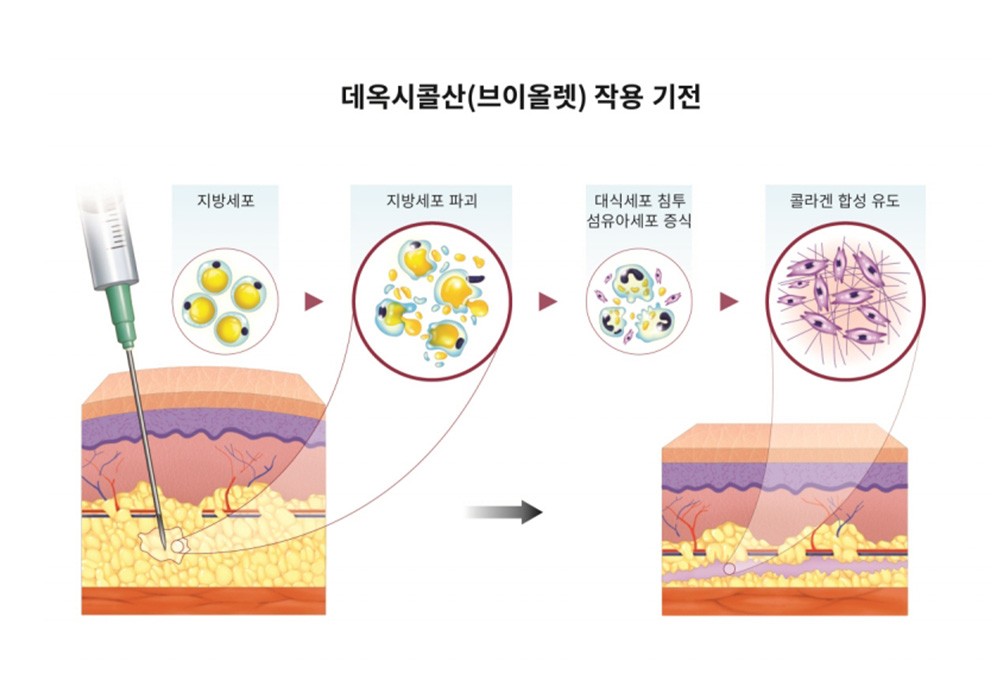
The key ingredient in V-OLET is deoxycholic acid, a naturally occurring bile acid that helps the body break down and absorb dietary fat. When used in aesthetic treatments, it works by disrupting the membrane of targeted fat cells, allowing the body to gradually remove them through its natural processes.
This sets deoxycholic acid apart from many traditional fat-dissolving injections, which are primarily designed to shrink fat cells rather than destroy them. As a result, V-OLET is often used for treating small, localised areas of stubborn fat where more defined contouring is desired.
When injected, it:
Destroys fat cells
Triggers a mild inflammatory response
Stimulates fibroblast formation and collagen synthesis
This process reduces localized fat and improves skin elasticity, especially in areas where fat previously caused sagging.
How V-OLET Differs from Traditional Fat-Dissolving Injections

Other popular injections, such as Accu Shot, Pink Shot, or “Girl Group” injections, usually contain:
L-Carnitine
Caffeine
Vitamin C
These mostly shrink fat cells rather than removing them permanently.
V-OLET, on the other hand:
Is KFDA-approved
Destroys fat cell membranes, eliminating fat cells permanently
Once destroyed, fat cells do not regenerate, so treated areas gain less fat even if weight is regained
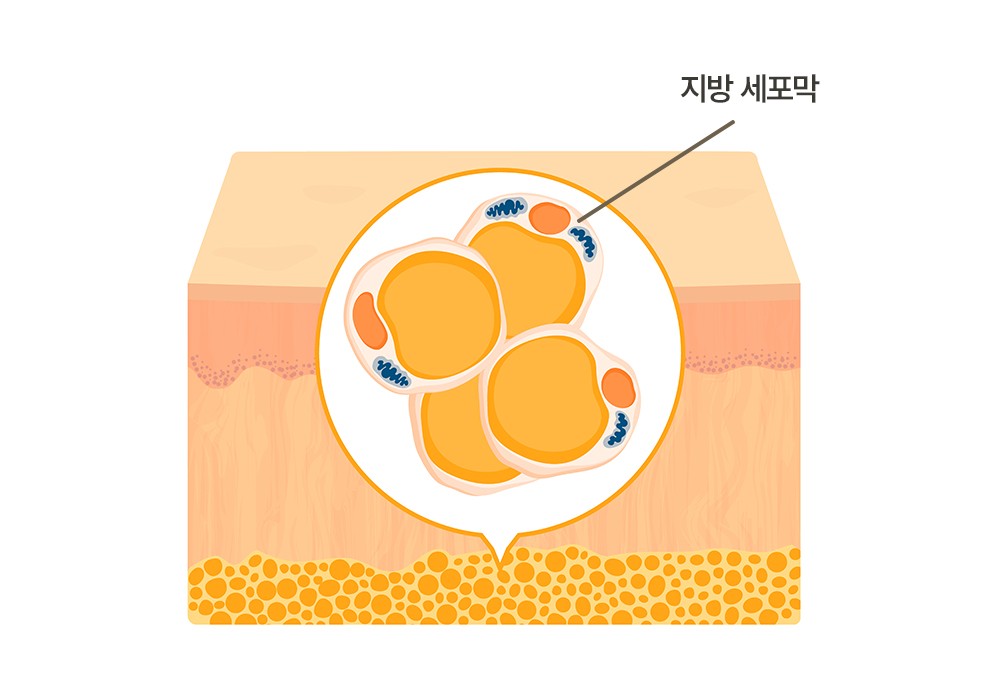
⚠️ Note: Treated areas can still gain some fat, permanent removal reduces, but does not eliminate, future fat accumulation.
Clinical Guideline: Deoxycholic Acid Injection for Submental Fat Reduction
Domestic studies show that after 3 treatments at one-month intervals, there is a noticeable reduction in submental fat (under the chin).
V-OLET for Arm Fat
Clinical findings suggest that V-OLET injections can contribute to noticeable reductions in arm fat when administered as part of an appropriate treatment plan. While individual results may vary, studies have reported measurable improvements in both arm circumference and fat thickness following treatment.
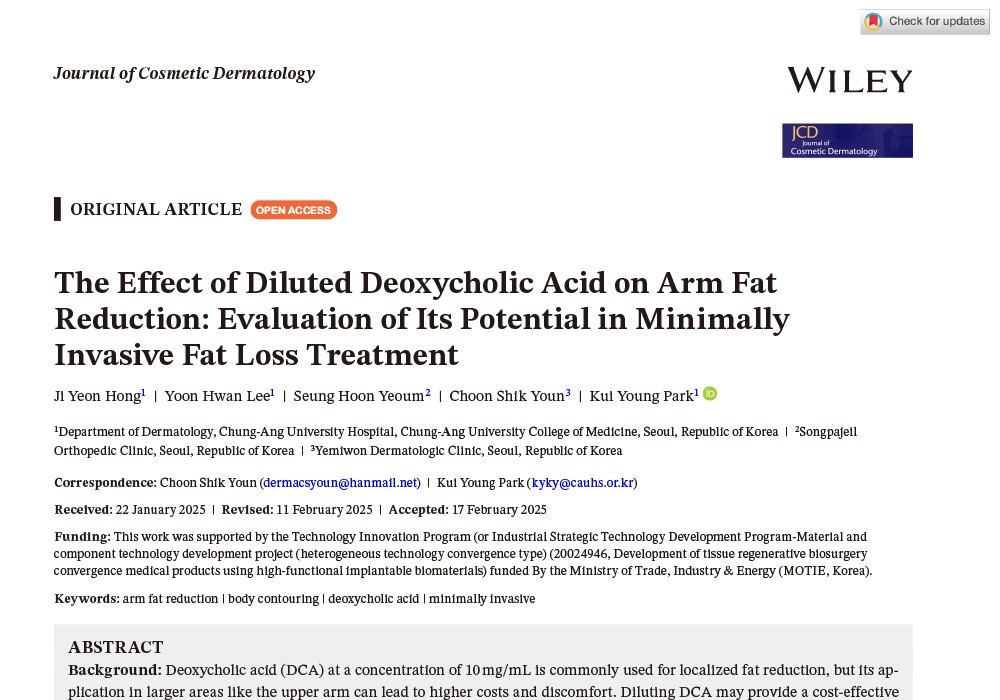
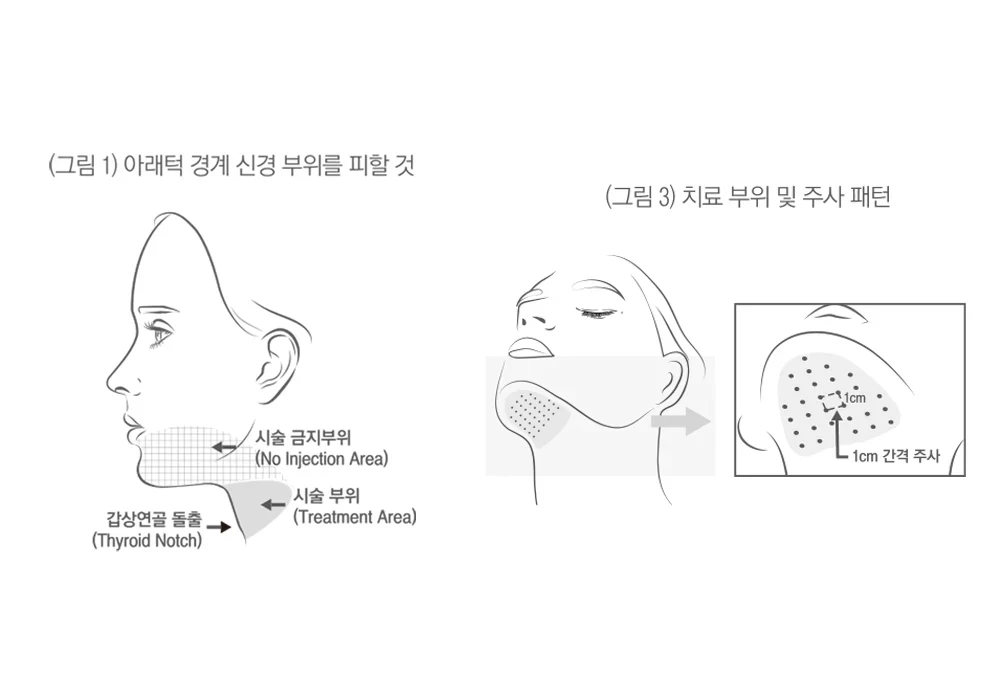
A recent study (The Effect of Diluted Deoxycholic Acid on Arm Fat Reduction) confirmed its efficacy on arms:
Participants: 4 Korean women (ages 27–34)
Doses: 2.5 mg/mL (2 participants), 5 mg/mL (2 participants)
Injection: upper arms, 3 sessions at 4-week intervals
The effectiveness and safety of V-OLET depend heavily on proper injection placement and dosage. Treatment should always be performed by a qualified medical professional who can assess individual anatomy, determine the appropriate treatment approach, and minimise the risk of complications.
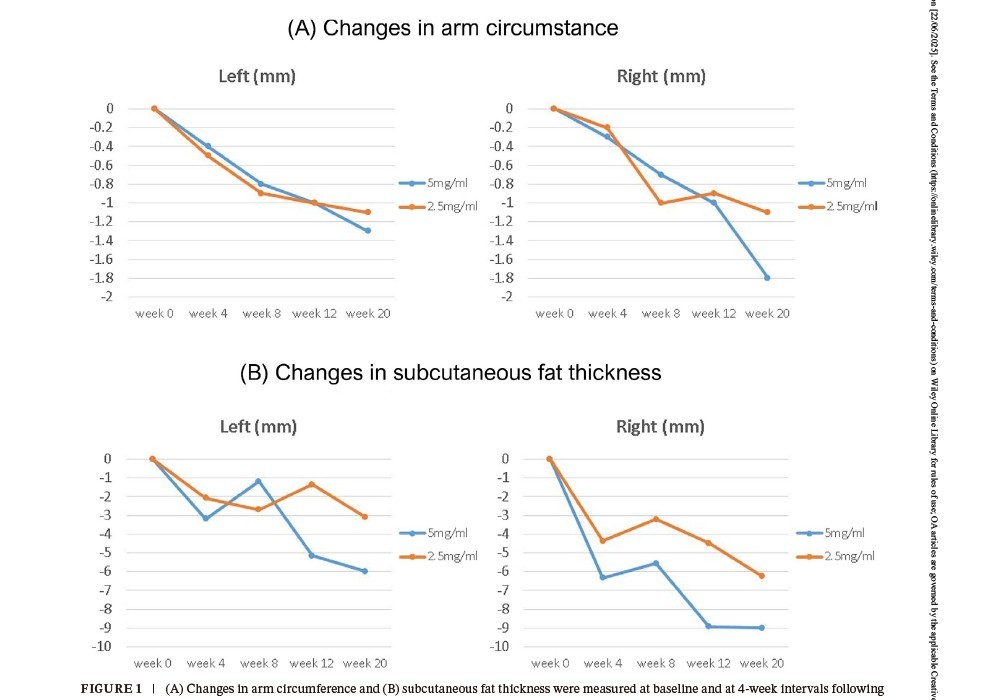
Results:
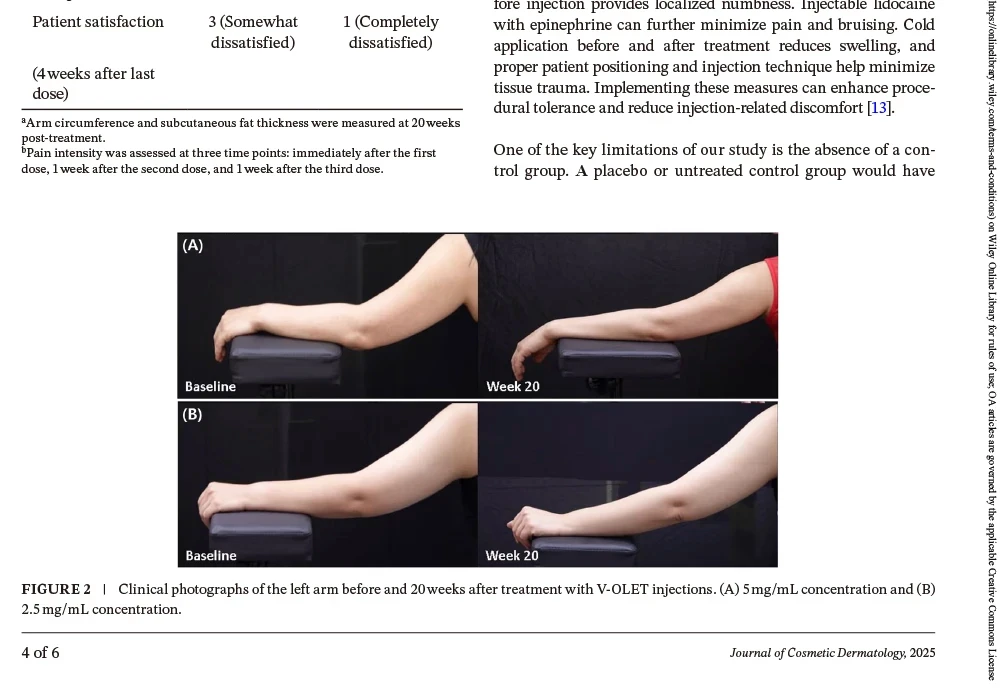
Arm circumference reduction:
2.5 mg/mL: 1.1 mm
5 mg/mL: 1.55 mm
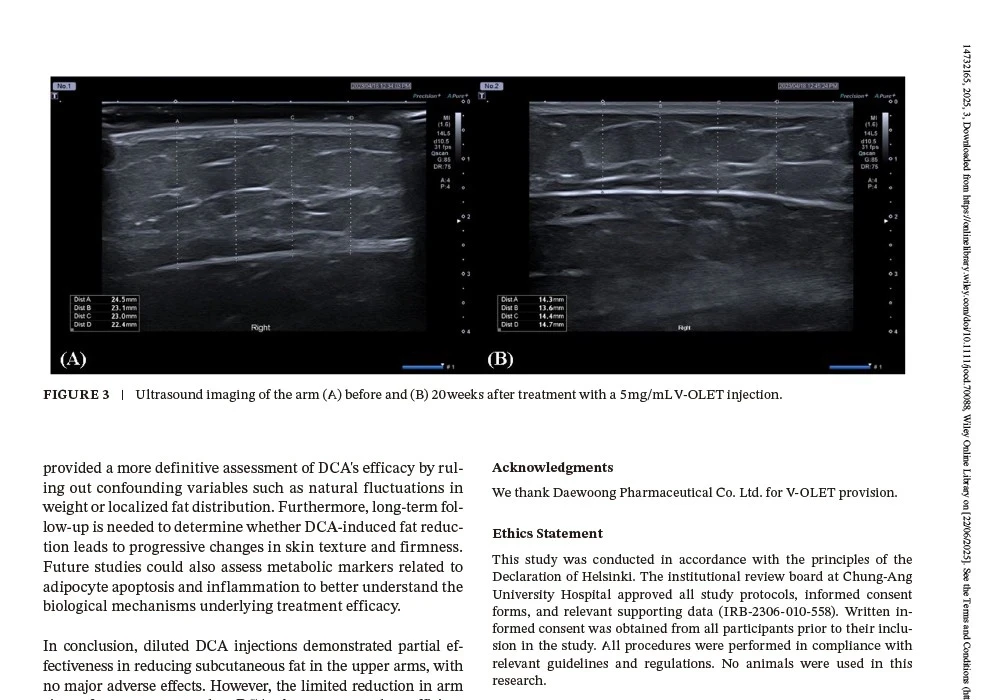
Fat thickness (via ultrasound):
2.5 mg/mL: 4.68 mm reduction
5 mg/mL: 7.49 mm reduction
Proper injection location and dosage are crucial. Always consult a skilled medical professional to minimize risks.
Effectiveness and Side Effects
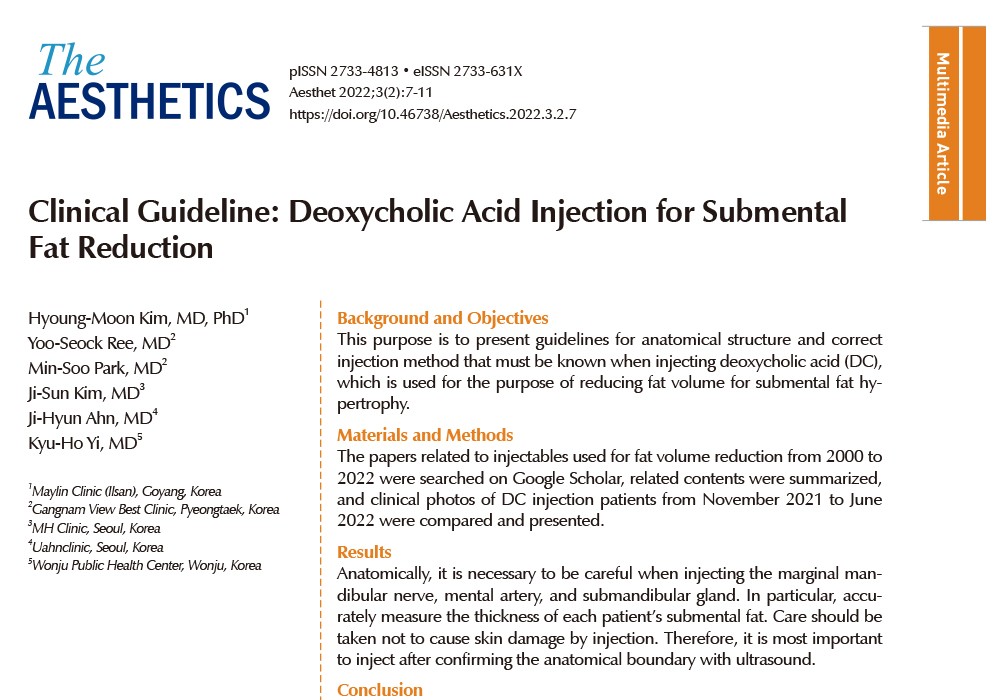
Clinical Guideline: Deoxycholic Acid Injection for Submental Fat Reduction
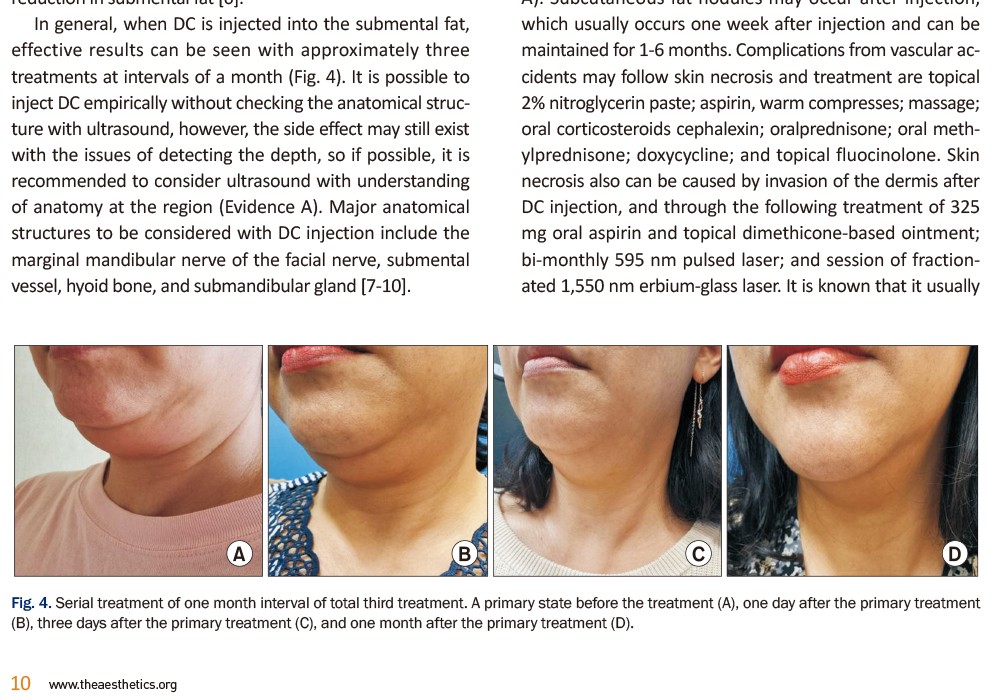
Redness, swelling, pain at injection site
Pain usually lasts 1–2 days
Rarely: subcutaneous fat nodules or skin necrosis (usually resolves with treatment)
While clinical studies demonstrate the potential benefits of deoxycholic acid treatments, outcomes are influenced by factors such as injection technique, dosage, and patient anatomy. In my experience, careful treatment planning and precise injection placement play a significant role in achieving natural-looking contouring results while minimising unnecessary side effects. This is why a thorough assessment and an individualised approach remain important parts of the treatment process.
Key Takeaways
V-OLET injections permanently destroy fat cells and restore skin elasticity
Effects are long-lasting due to permanent fat removal
Mild side effects are common; severe complications are rare
Proper technique and dosing by experienced clinicians are essential
V-OLET Injections Provide Significant Arm Fat Reduction
V-OLET offers a non-surgical approach to arm fat reduction by targeting and destroying selected fat cells while supporting skin firmness. Although results vary, clinical studies suggest measurable improvements in arm contour and fat thickness following treatment.
As with any injectable procedure, proper assessment, dosage, and technique are essential. At REPIC Clinic in Gangnam-gu, Seoul, I focus on providing personalised treatment recommendations based on each patient's individual needs and treatment goals. I hope this guide has helped you better understand V-OLET, its potential benefits, and the key considerations involved in arm fat reduction treatment.
Thank you for reading!
FAQ
How does V-OLET fat-dissolving injection actually break down fat?
V-OLET contains deoxycholic acid, a bile acid that breaks down fat cell membranes. Once the cells are damaged, the body gradually removes them through its natural metabolic processes while a mild inflammatory response supports tissue remodelling.
Is V-OLET effective for reducing upper arm fat?
Clinical studies suggest that V-OLET can help reduce upper arm fat thickness and circumference when administered over multiple treatment sessions. Results vary depending on dosage, treatment technique, and individual body composition.
How many V-OLET sessions are needed for visible results?
Most patients begin noticing improvements after several weeks, with many treatment plans involving two to three sessions spaced approximately four weeks apart. The exact number of sessions depends on the treatment area and desired outcome.
What side effects can occur after V-OLET injections?
Common side effects include swelling, redness, tenderness, and mild discomfort at the injection site. These effects are usually temporary and resolve within a few days. More serious complications are uncommon when treatment is performed appropriately.
Is V-OLET a non-surgical alternative for arm fat reduction?
Yes. V-OLET is commonly used as a non-surgical body contouring treatment for small, localised fat deposits. For patients in Gangnam-gu, Seoul considering arm fat reduction, a personalised consultation can help determine whether the treatment aligns with their goals and anatomy.
Interested in body treatments?
Book a consultation at REPIC Clinic now!
Tags:
Fat
Body
Share this blog
Related Posts.
Looking for more expert insights? Explore these articles from our team of skincare specialists.
Skincare Recommendations


Back to Menu
Back to Menu
V-OLET Fat-Dissolving Injection for Arm & Targeted Fat Loss Clinically
If you are considering non-surgical arm fat reduction in Gangnam-gu, Seoul, V-OLET is one of the most talked-about injectable treatments in aesthetic medicine. In this article, you’ll explore how it targets localised fat deposits while supporting skin tightening, making it a popular option for those seeking improved arm contour without surgery.
Get details on Deoxycholic acid, the active ingredient behind the treatment, how it works, typical treatment times, and the clinical evidence supporting its use. We will also review available studies and discuss how results develop over the weeks following treatment as the body gradually removes damaged fat cells.
As a non-surgical body contouring option, V-OLET continues to attract interest from patients looking for lasting fat reduction. We will also answer common questions about effectiveness, treatment considerations, and potential side effects, while recognising that outcomes can vary based on dosage, treatment area, body composition, and clinical technique.
Understanding How V-OLET Targets Arm Fat and Supports Skin Tightening
With summer here, many patients are asking about body contouring treatments. Today, I’ll explain the principle, effectiveness, and side effects of Violette injections for fat reduction.
What is “Deoxycholic Acid” The Active Ingredient Behind V-OLET
The key ingredient in V-OLET is deoxycholic acid, a naturally occurring bile acid that helps the body break down and absorb dietary fat. When used in aesthetic treatments, it works by disrupting the membrane of targeted fat cells, allowing the body to gradually remove them through its natural processes.
This sets deoxycholic acid apart from many traditional fat-dissolving injections, which are primarily designed to shrink fat cells rather than destroy them. As a result, V-OLET is often used for treating small, localised areas of stubborn fat where more defined contouring is desired.
When injected, it:
Destroys fat cells
Triggers a mild inflammatory response
Stimulates fibroblast formation and collagen synthesis
This process reduces localized fat and improves skin elasticity, especially in areas where fat previously caused sagging.
How V-OLET Differs from Traditional Fat-Dissolving Injections
Other popular injections, such as Accu Shot, Pink Shot, or “Girl Group” injections, usually contain:
L-Carnitine
Caffeine
Vitamin C
These mostly shrink fat cells rather than removing them permanently.
V-OLET, on the other hand:
Is KFDA-approved
Destroys fat cell membranes, eliminating fat cells permanently
Once destroyed, fat cells do not regenerate, so treated areas gain less fat even if weight is regained
⚠️ Note: Treated areas can still gain some fat, permanent removal reduces, but does not eliminate, future fat accumulation.
Clinical Guideline: Deoxycholic Acid Injection for Submental Fat Reduction
Domestic studies show that after 3 treatments at one-month intervals, there is a noticeable reduction in submental fat (under the chin).
V-OLET for Arm Fat
Clinical findings suggest that V-OLET injections can contribute to noticeable reductions in arm fat when administered as part of an appropriate treatment plan. While individual results may vary, studies have reported measurable improvements in both arm circumference and fat thickness following treatment.
A recent study (The Effect of Diluted Deoxycholic Acid on Arm Fat Reduction) confirmed its efficacy on arms:
Participants: 4 Korean women (ages 27–34)
Doses: 2.5 mg/mL (2 participants), 5 mg/mL (2 participants)
Injection: upper arms, 3 sessions at 4-week intervals
The effectiveness and safety of V-OLET depend heavily on proper injection placement and dosage. Treatment should always be performed by a qualified medical professional who can assess individual anatomy, determine the appropriate treatment approach, and minimise the risk of complications.
Results:
Arm circumference reduction:
2.5 mg/mL: 1.1 mm
5 mg/mL: 1.55 mm
Fat thickness (via ultrasound):
2.5 mg/mL: 4.68 mm reduction
5 mg/mL: 7.49 mm reduction
Proper injection location and dosage are crucial. Always consult a skilled medical professional to minimize risks.
Effectiveness and Side Effects
Clinical Guideline: Deoxycholic Acid Injection for Submental Fat Reduction
Redness, swelling, pain at injection site
Pain usually lasts 1–2 days
Rarely: subcutaneous fat nodules or skin necrosis (usually resolves with treatment)
While clinical studies demonstrate the potential benefits of deoxycholic acid treatments, outcomes are influenced by factors such as injection technique, dosage, and patient anatomy. In my experience, careful treatment planning and precise injection placement play a significant role in achieving natural-looking contouring results while minimising unnecessary side effects. This is why a thorough assessment and an individualised approach remain important parts of the treatment process.
Key Takeaways
V-OLET injections permanently destroy fat cells and restore skin elasticity
Effects are long-lasting due to permanent fat removal
Mild side effects are common; severe complications are rare
Proper technique and dosing by experienced clinicians are essential
V-OLET Injections Provide Significant Arm Fat Reduction
V-OLET offers a non-surgical approach to arm fat reduction by targeting and destroying selected fat cells while supporting skin firmness. Although results vary, clinical studies suggest measurable improvements in arm contour and fat thickness following treatment.
As with any injectable procedure, proper assessment, dosage, and technique are essential. At REPIC Clinic in Gangnam-gu, Seoul, I focus on providing personalised treatment recommendations based on each patient's individual needs and treatment goals. I hope this guide has helped you better understand V-OLET, its potential benefits, and the key considerations involved in arm fat reduction treatment.
Thank you for reading!
FAQ
How does V-OLET fat-dissolving injection actually break down fat?
V-OLET contains deoxycholic acid, a bile acid that breaks down fat cell membranes. Once the cells are damaged, the body gradually removes them through its natural metabolic processes while a mild inflammatory response supports tissue remodelling.
Is V-OLET effective for reducing upper arm fat?
Clinical studies suggest that V-OLET can help reduce upper arm fat thickness and circumference when administered over multiple treatment sessions. Results vary depending on dosage, treatment technique, and individual body composition.
How many V-OLET sessions are needed for visible results?
Most patients begin noticing improvements after several weeks, with many treatment plans involving two to three sessions spaced approximately four weeks apart. The exact number of sessions depends on the treatment area and desired outcome.
What side effects can occur after V-OLET injections?
Common side effects include swelling, redness, tenderness, and mild discomfort at the injection site. These effects are usually temporary and resolve within a few days. More serious complications are uncommon when treatment is performed appropriately.
Is V-OLET a non-surgical alternative for arm fat reduction?
Yes. V-OLET is commonly used as a non-surgical body contouring treatment for small, localised fat deposits. For patients in Gangnam-gu, Seoul considering arm fat reduction, a personalised consultation can help determine whether the treatment aligns with their goals and anatomy.
Interested in body treatments?
Book a consultation at REPIC Clinic now!
Tags:
Fat
Body
Share this blog
Related Posts.
Looking for more expert insights? Explore these articles from our team of skincare specialists.
Skincare Recommendations
Back to Menu
Back to Menu
V-OLET Fat-Dissolving Injection for Arm & Targeted Fat Loss Clinically
If you are considering non-surgical arm fat reduction in Gangnam-gu, Seoul, V-OLET is one of the most talked-about injectable treatments in aesthetic medicine. In this article, you’ll explore how it targets localised fat deposits while supporting skin tightening, making it a popular option for those seeking improved arm contour without surgery.
Get details on Deoxycholic acid, the active ingredient behind the treatment, how it works, typical treatment times, and the clinical evidence supporting its use. We will also review available studies and discuss how results develop over the weeks following treatment as the body gradually removes damaged fat cells.
As a non-surgical body contouring option, V-OLET continues to attract interest from patients looking for lasting fat reduction. We will also answer common questions about effectiveness, treatment considerations, and potential side effects, while recognising that outcomes can vary based on dosage, treatment area, body composition, and clinical technique.
Understanding How V-OLET Targets Arm Fat and Supports Skin Tightening
With summer here, many patients are asking about body contouring treatments. Today, I’ll explain the principle, effectiveness, and side effects of Violette injections for fat reduction.
What is “Deoxycholic Acid” The Active Ingredient Behind V-OLET
The key ingredient in V-OLET is deoxycholic acid, a naturally occurring bile acid that helps the body break down and absorb dietary fat. When used in aesthetic treatments, it works by disrupting the membrane of targeted fat cells, allowing the body to gradually remove them through its natural processes.
This sets deoxycholic acid apart from many traditional fat-dissolving injections, which are primarily designed to shrink fat cells rather than destroy them. As a result, V-OLET is often used for treating small, localised areas of stubborn fat where more defined contouring is desired.
When injected, it:
Destroys fat cells
Triggers a mild inflammatory response
Stimulates fibroblast formation and collagen synthesis
This process reduces localized fat and improves skin elasticity, especially in areas where fat previously caused sagging.
How V-OLET Differs from Traditional Fat-Dissolving Injections
Other popular injections, such as Accu Shot, Pink Shot, or “Girl Group” injections, usually contain:
L-Carnitine
Caffeine
Vitamin C
These mostly shrink fat cells rather than removing them permanently.
V-OLET, on the other hand:
Is KFDA-approved
Destroys fat cell membranes, eliminating fat cells permanently
Once destroyed, fat cells do not regenerate, so treated areas gain less fat even if weight is regained
⚠️ Note: Treated areas can still gain some fat, permanent removal reduces, but does not eliminate, future fat accumulation.
Clinical Guideline: Deoxycholic Acid Injection for Submental Fat Reduction
Domestic studies show that after 3 treatments at one-month intervals, there is a noticeable reduction in submental fat (under the chin).
V-OLET for Arm Fat
Clinical findings suggest that V-OLET injections can contribute to noticeable reductions in arm fat when administered as part of an appropriate treatment plan. While individual results may vary, studies have reported measurable improvements in both arm circumference and fat thickness following treatment.
A recent study (The Effect of Diluted Deoxycholic Acid on Arm Fat Reduction) confirmed its efficacy on arms:
Participants: 4 Korean women (ages 27–34)
Doses: 2.5 mg/mL (2 participants), 5 mg/mL (2 participants)
Injection: upper arms, 3 sessions at 4-week intervals
The effectiveness and safety of V-OLET depend heavily on proper injection placement and dosage. Treatment should always be performed by a qualified medical professional who can assess individual anatomy, determine the appropriate treatment approach, and minimise the risk of complications.
Results:
Arm circumference reduction:
2.5 mg/mL: 1.1 mm
5 mg/mL: 1.55 mm
Fat thickness (via ultrasound):
2.5 mg/mL: 4.68 mm reduction
5 mg/mL: 7.49 mm reduction
Proper injection location and dosage are crucial. Always consult a skilled medical professional to minimize risks.
Effectiveness and Side Effects
Clinical Guideline: Deoxycholic Acid Injection for Submental Fat Reduction
Redness, swelling, pain at injection site
Pain usually lasts 1–2 days
Rarely: subcutaneous fat nodules or skin necrosis (usually resolves with treatment)
While clinical studies demonstrate the potential benefits of deoxycholic acid treatments, outcomes are influenced by factors such as injection technique, dosage, and patient anatomy. In my experience, careful treatment planning and precise injection placement play a significant role in achieving natural-looking contouring results while minimising unnecessary side effects. This is why a thorough assessment and an individualised approach remain important parts of the treatment process.
Key Takeaways
V-OLET injections permanently destroy fat cells and restore skin elasticity
Effects are long-lasting due to permanent fat removal
Mild side effects are common; severe complications are rare
Proper technique and dosing by experienced clinicians are essential
V-OLET Injections Provide Significant Arm Fat Reduction
V-OLET offers a non-surgical approach to arm fat reduction by targeting and destroying selected fat cells while supporting skin firmness. Although results vary, clinical studies suggest measurable improvements in arm contour and fat thickness following treatment.
As with any injectable procedure, proper assessment, dosage, and technique are essential. At REPIC Clinic in Gangnam-gu, Seoul, I focus on providing personalised treatment recommendations based on each patient's individual needs and treatment goals. I hope this guide has helped you better understand V-OLET, its potential benefits, and the key considerations involved in arm fat reduction treatment.
Thank you for reading!
FAQ
How does V-OLET fat-dissolving injection actually break down fat?
V-OLET contains deoxycholic acid, a bile acid that breaks down fat cell membranes. Once the cells are damaged, the body gradually removes them through its natural metabolic processes while a mild inflammatory response supports tissue remodelling.
Is V-OLET effective for reducing upper arm fat?
Clinical studies suggest that V-OLET can help reduce upper arm fat thickness and circumference when administered over multiple treatment sessions. Results vary depending on dosage, treatment technique, and individual body composition.
How many V-OLET sessions are needed for visible results?
Most patients begin noticing improvements after several weeks, with many treatment plans involving two to three sessions spaced approximately four weeks apart. The exact number of sessions depends on the treatment area and desired outcome.
What side effects can occur after V-OLET injections?
Common side effects include swelling, redness, tenderness, and mild discomfort at the injection site. These effects are usually temporary and resolve within a few days. More serious complications are uncommon when treatment is performed appropriately.
Is V-OLET a non-surgical alternative for arm fat reduction?
Yes. V-OLET is commonly used as a non-surgical body contouring treatment for small, localised fat deposits. For patients in Gangnam-gu, Seoul considering arm fat reduction, a personalised consultation can help determine whether the treatment aligns with their goals and anatomy.
Interested in body treatments?
Book a consultation at REPIC Clinic now!
Tags:
Fat
Body
Share this blog
Related Posts.
Looking for more expert insights? Explore these articles from our team of skincare specialists.