Back to Menu
3 Main Types of Dark Circles and Their Causes
SKIN WIKI
SKIN WIKI
Dark Circles: 3 Common Types and Their Causes
Dark circles are one of the most familiar skincare concerns, most people have experienced them at least once.
On particularly tired days, or when someone comments, “You look a bit exhausted today,” many of us instinctively check the area under our eyes first.
Although “dark circles” is a widely recognized term, the causes and types of dark circles are not as simple as they seem.
A useful analogy is headaches:
A headache from lack of sleep is managed differently than one caused by stress or tension.
Similarly, dark circles require different care depending on their underlying cause and type.
For this reason, instead of treating dark circles as a single symptom, it’s helpful to categorize them into three representative types, each with its own management approach.
① Dark Brown or Grayish Dark Circles?
[Pigmentation-Type Dark Circles]
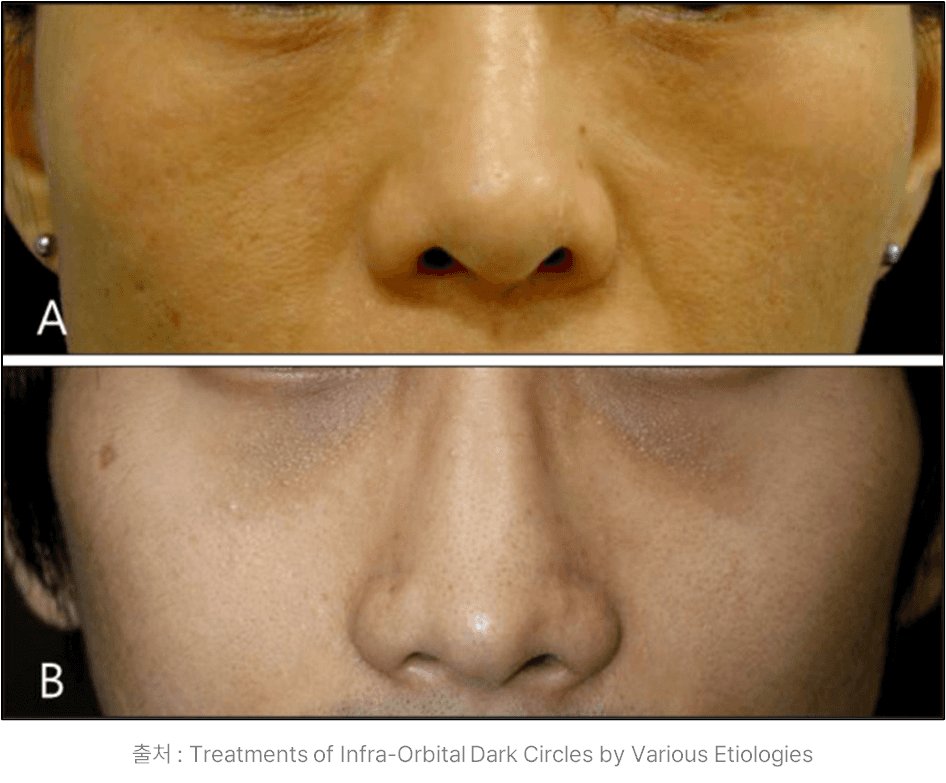
Pigmentation-type dark circles occur when melanin production increases in the under-eye skin, causing the area to appear darker in brown or gray tones.
Common causes include:
Frequent rubbing or touching of the eyes
Repeated UV exposure
These repeated stimuli can activate melanocytes, leading to localized hyperpigmentation (Post-Inflammatory Hyperpigmentation, PIH).
Unlike shadows or structural issues, this type of dark circle is primarily due to the skin’s color itself becoming darker.
② Bluish or purplish Dark Circles?
[Blood vessel-type dark circles]
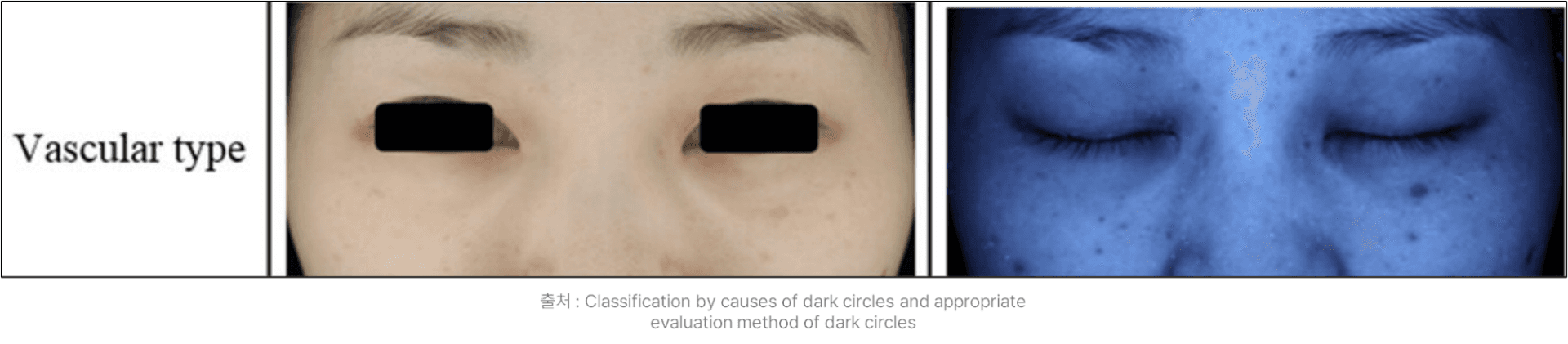
Blood vessel-type dark circles occur when the skin and subcutaneous fat under the eyes are thin, allowing the veins or vascular structures to show through, giving a bluish or purplish appearance.
They tend to become more noticeable when you’re tired, sleep-deprived, or experiencing blood flow congestion (venous stasis) due to nasal congestion (rhinitis), allergies, or under-eye puffiness.
They appear darker or lighter depending on your condition
Puffy in the morning, darker in the evening
Difficult to conceal the bluish tone with makeup
This type of dark circle is influenced more by skin thickness and blood flow (congestion) than by pigmentation.
③ Shadow-like Undereye?
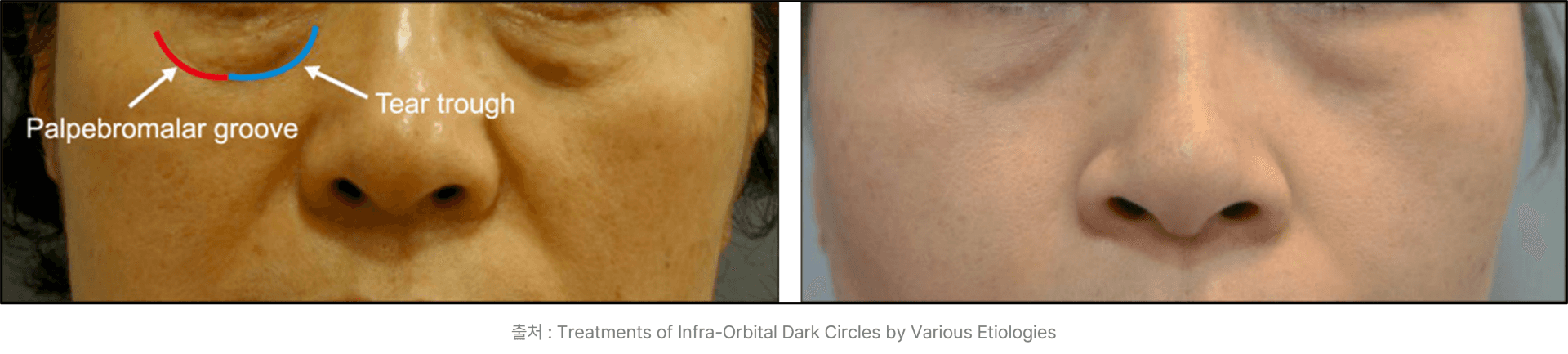
Structural dark circles are not caused by skin pigmentation or visible blood vessels. Instead, they appear due to hollows under the eyes and changes in facial structure, creating natural shadows that make the area look darker.
Common examples include:
Tear trough (nasojugal groove)
Palpebromalar groove (under-eye to midface boundary)
Areas with excessive under-eye fat protrusion
Even if there’s little change in skin color, shadows from these structural features can emphasize dark circles.
Key characteristics:
Appearance changes depending on lighting and angles
Hard to fully cover with makeup
Often gives a “tired” impression
This type of dark circle is more about facial structure and shading than skin tone.
Why Dark Circle Treatments Must Be Tailored

In reality, these three types of dark circles rarely appear in isolation.
They often overlap, meaning one person’s under-eye area may show signs of pigmentation, vascular issues, and structural shadows simultaneously.
This is why a method that works for someone else, like a friend’s recommendation or an SNS review, may not produce the same results for you.
The key point is that treatment and management should be personalized according to each individual’s dark circle type and condition.
In upcoming articles about dark circles, we will cover:
Specific management points for each type
Available treatment options and how to choose the right one
If you have any questions while reading, feel free to leave a comment.
Thank you for reading this long post all the way through!
FAQ
How can I tell which type of dark circles I have?
Brown/gray usually means pigmentation, blue/purple suggests visible veins, and darkness that changes with light is often due to shadows.
Why do my dark circles look blue instead of brown?
Blue tones appear when thin under-eye skin makes blood vessels more visible, especially when you’re tired or congested.
Are dark circles caused by pigmentation or shadows?
They can be caused by pigmentation, visible blood vessels, or structural shadows, often a mix of all three.
Can vascular dark circles be treated permanently?
Vascular dark circles can be improved with proper treatment, and a consultation at REPIC Clinic can help identify the best approach for your specific condition.
Why does under-eye darkness worsen with age?
As skin thins and volume reduces over time, veins show more and shadows deepen, making dark circles look stronger.
Find out which undereye treatments fit you best!
Book a consultation at REPIC Clinic now!
Tags:
Eyes
Skin Type
Share this blog
Related Posts.
Looking for more expert insights? Explore these articles from our team of skincare specialists.



Skincare Recommendations

Back to Menu
Rewrite Your Beauty Story with REPIC Clinic
The more you understand your skin, the better decisions you can make about your daily habits and long-term skincare plan. Knowledge is the first step toward healthy, confident skin.
Ready to discover what your skin truly needs?
Back to Menu
3 Main Types of Dark Circles and Their Causes
SKIN WIKI
SKIN WIKI
Dark Circles: 3 Common Types and Their Causes
Dark circles are one of the most familiar skincare concerns, most people have experienced them at least once.
On particularly tired days, or when someone comments, “You look a bit exhausted today,” many of us instinctively check the area under our eyes first.
Although “dark circles” is a widely recognized term, the causes and types of dark circles are not as simple as they seem.
A useful analogy is headaches:
A headache from lack of sleep is managed differently than one caused by stress or tension.
Similarly, dark circles require different care depending on their underlying cause and type.
For this reason, instead of treating dark circles as a single symptom, it’s helpful to categorize them into three representative types, each with its own management approach.
① Dark Brown or Grayish Dark Circles?
[Pigmentation-Type Dark Circles]
Pigmentation-type dark circles occur when melanin production increases in the under-eye skin, causing the area to appear darker in brown or gray tones.
Common causes include:
Frequent rubbing or touching of the eyes
Repeated UV exposure
These repeated stimuli can activate melanocytes, leading to localized hyperpigmentation (Post-Inflammatory Hyperpigmentation, PIH).
Unlike shadows or structural issues, this type of dark circle is primarily due to the skin’s color itself becoming darker.
② Bluish or purplish Dark Circles?
[Blood vessel-type dark circles]
Blood vessel-type dark circles occur when the skin and subcutaneous fat under the eyes are thin, allowing the veins or vascular structures to show through, giving a bluish or purplish appearance.
They tend to become more noticeable when you’re tired, sleep-deprived, or experiencing blood flow congestion (venous stasis) due to nasal congestion (rhinitis), allergies, or under-eye puffiness.
They appear darker or lighter depending on your condition
Puffy in the morning, darker in the evening
Difficult to conceal the bluish tone with makeup
This type of dark circle is influenced more by skin thickness and blood flow (congestion) than by pigmentation.
③ Shadow-like Undereye?
Structural dark circles are not caused by skin pigmentation or visible blood vessels. Instead, they appear due to hollows under the eyes and changes in facial structure, creating natural shadows that make the area look darker.
Common examples include:
Tear trough (nasojugal groove)
Palpebromalar groove (under-eye to midface boundary)
Areas with excessive under-eye fat protrusion
Even if there’s little change in skin color, shadows from these structural features can emphasize dark circles.
Key characteristics:
Appearance changes depending on lighting and angles
Hard to fully cover with makeup
Often gives a “tired” impression
This type of dark circle is more about facial structure and shading than skin tone.
Why Dark Circle Treatments Must Be Tailored
In reality, these three types of dark circles rarely appear in isolation.
They often overlap, meaning one person’s under-eye area may show signs of pigmentation, vascular issues, and structural shadows simultaneously.
This is why a method that works for someone else, like a friend’s recommendation or an SNS review, may not produce the same results for you.
The key point is that treatment and management should be personalized according to each individual’s dark circle type and condition.
In upcoming articles about dark circles, we will cover:
Specific management points for each type
Available treatment options and how to choose the right one
If you have any questions while reading, feel free to leave a comment.
Thank you for reading this long post all the way through!
FAQ
How can I tell which type of dark circles I have?
Brown/gray usually means pigmentation, blue/purple suggests visible veins, and darkness that changes with light is often due to shadows.
Why do my dark circles look blue instead of brown?
Blue tones appear when thin under-eye skin makes blood vessels more visible, especially when you’re tired or congested.
Are dark circles caused by pigmentation or shadows?
They can be caused by pigmentation, visible blood vessels, or structural shadows, often a mix of all three.
Can vascular dark circles be treated permanently?
Vascular dark circles can be improved with proper treatment, and a consultation at REPIC Clinic can help identify the best approach for your specific condition.
Why does under-eye darkness worsen with age?
As skin thins and volume reduces over time, veins show more and shadows deepen, making dark circles look stronger.
Find out which undereye treatments fit you best!
Book a consultation at REPIC Clinic now!
Tags:
Eyes
Skin Type
Share this blog
Related Posts.
Looking for more expert insights? Explore these articles from our team of skincare specialists.
Skincare Recommendations
Back to Menu
Rewrite Your Beauty Story with REPIC Clinic
The more you understand your skin, the better decisions you can make about your daily habits and long-term skincare plan. Knowledge is the first step toward healthy, confident skin.
Ready to discover what your skin truly needs?
Back to Menu
3 Main Types of Dark Circles and Their Causes
SKIN WIKI
SKIN WIKI
Dark Circles: 3 Common Types and Their Causes
Dark circles are one of the most familiar skincare concerns, most people have experienced them at least once.
On particularly tired days, or when someone comments, “You look a bit exhausted today,” many of us instinctively check the area under our eyes first.
Although “dark circles” is a widely recognized term, the causes and types of dark circles are not as simple as they seem.
A useful analogy is headaches:
A headache from lack of sleep is managed differently than one caused by stress or tension.
Similarly, dark circles require different care depending on their underlying cause and type.
For this reason, instead of treating dark circles as a single symptom, it’s helpful to categorize them into three representative types, each with its own management approach.
① Dark Brown or Grayish Dark Circles?
[Pigmentation-Type Dark Circles]
Pigmentation-type dark circles occur when melanin production increases in the under-eye skin, causing the area to appear darker in brown or gray tones.
Common causes include:
Frequent rubbing or touching of the eyes
Repeated UV exposure
These repeated stimuli can activate melanocytes, leading to localized hyperpigmentation (Post-Inflammatory Hyperpigmentation, PIH).
Unlike shadows or structural issues, this type of dark circle is primarily due to the skin’s color itself becoming darker.
② Bluish or purplish Dark Circles?
[Blood vessel-type dark circles]
Blood vessel-type dark circles occur when the skin and subcutaneous fat under the eyes are thin, allowing the veins or vascular structures to show through, giving a bluish or purplish appearance.
They tend to become more noticeable when you’re tired, sleep-deprived, or experiencing blood flow congestion (venous stasis) due to nasal congestion (rhinitis), allergies, or under-eye puffiness.
They appear darker or lighter depending on your condition
Puffy in the morning, darker in the evening
Difficult to conceal the bluish tone with makeup
This type of dark circle is influenced more by skin thickness and blood flow (congestion) than by pigmentation.
③ Shadow-like Undereye?
Structural dark circles are not caused by skin pigmentation or visible blood vessels. Instead, they appear due to hollows under the eyes and changes in facial structure, creating natural shadows that make the area look darker.
Common examples include:
Tear trough (nasojugal groove)
Palpebromalar groove (under-eye to midface boundary)
Areas with excessive under-eye fat protrusion
Even if there’s little change in skin color, shadows from these structural features can emphasize dark circles.
Key characteristics:
Appearance changes depending on lighting and angles
Hard to fully cover with makeup
Often gives a “tired” impression
This type of dark circle is more about facial structure and shading than skin tone.
Why Dark Circle Treatments Must Be Tailored
In reality, these three types of dark circles rarely appear in isolation.
They often overlap, meaning one person’s under-eye area may show signs of pigmentation, vascular issues, and structural shadows simultaneously.
This is why a method that works for someone else, like a friend’s recommendation or an SNS review, may not produce the same results for you.
The key point is that treatment and management should be personalized according to each individual’s dark circle type and condition.
In upcoming articles about dark circles, we will cover:
Specific management points for each type
Available treatment options and how to choose the right one
If you have any questions while reading, feel free to leave a comment.
Thank you for reading this long post all the way through!
FAQ
How can I tell which type of dark circles I have?
Brown/gray usually means pigmentation, blue/purple suggests visible veins, and darkness that changes with light is often due to shadows.
Why do my dark circles look blue instead of brown?
Blue tones appear when thin under-eye skin makes blood vessels more visible, especially when you’re tired or congested.
Are dark circles caused by pigmentation or shadows?
They can be caused by pigmentation, visible blood vessels, or structural shadows, often a mix of all three.
Can vascular dark circles be treated permanently?
Vascular dark circles can be improved with proper treatment, and a consultation at REPIC Clinic can help identify the best approach for your specific condition.
Why does under-eye darkness worsen with age?
As skin thins and volume reduces over time, veins show more and shadows deepen, making dark circles look stronger.
Find out which undereye treatments fit you best!
Book a consultation at REPIC Clinic now!
Tags:
Eyes
Skin Type
Share this blog
Related Posts.
Looking for more expert insights? Explore these articles from our team of skincare specialists.
Skincare Recommendations
Back to Menu
Rewrite Your Beauty Story with
REPIC Clinic
The more you understand your skin, the better decisions you can make about your daily habits and long-term skincare plan. Knowledge is the first step toward healthy, confident skin.
Ready to discover what your skin truly needs?