Back to Menu
The Hidden Cause of Dehydrated Skin That Moisturizers Can’t Fix
SKIN WIKI
SKIN WIKI
Why does my skin still feel tight despite moisturizers?
Hello, this is Repic Clinic.
Among patients who visit Repic Clinic for consultations about inner skin dryness, there is one concern we hear repeatedly:
“I’ve tried switching moisturizers and applying generous amounts,
but my skin still feels tight from within.”
In many cases, inner dryness cannot be resolved by skincare alone.
Although it may feel like the same type of tightness, the underlying causes of skin dryness can differ significantly from person to person.
That’s why today, we’d like to break down inner dryness into different types,
and help you understand what may be happening beneath the surface of your skin.
Barrier-Type Inner Dryness — Rapid Moisture Loss
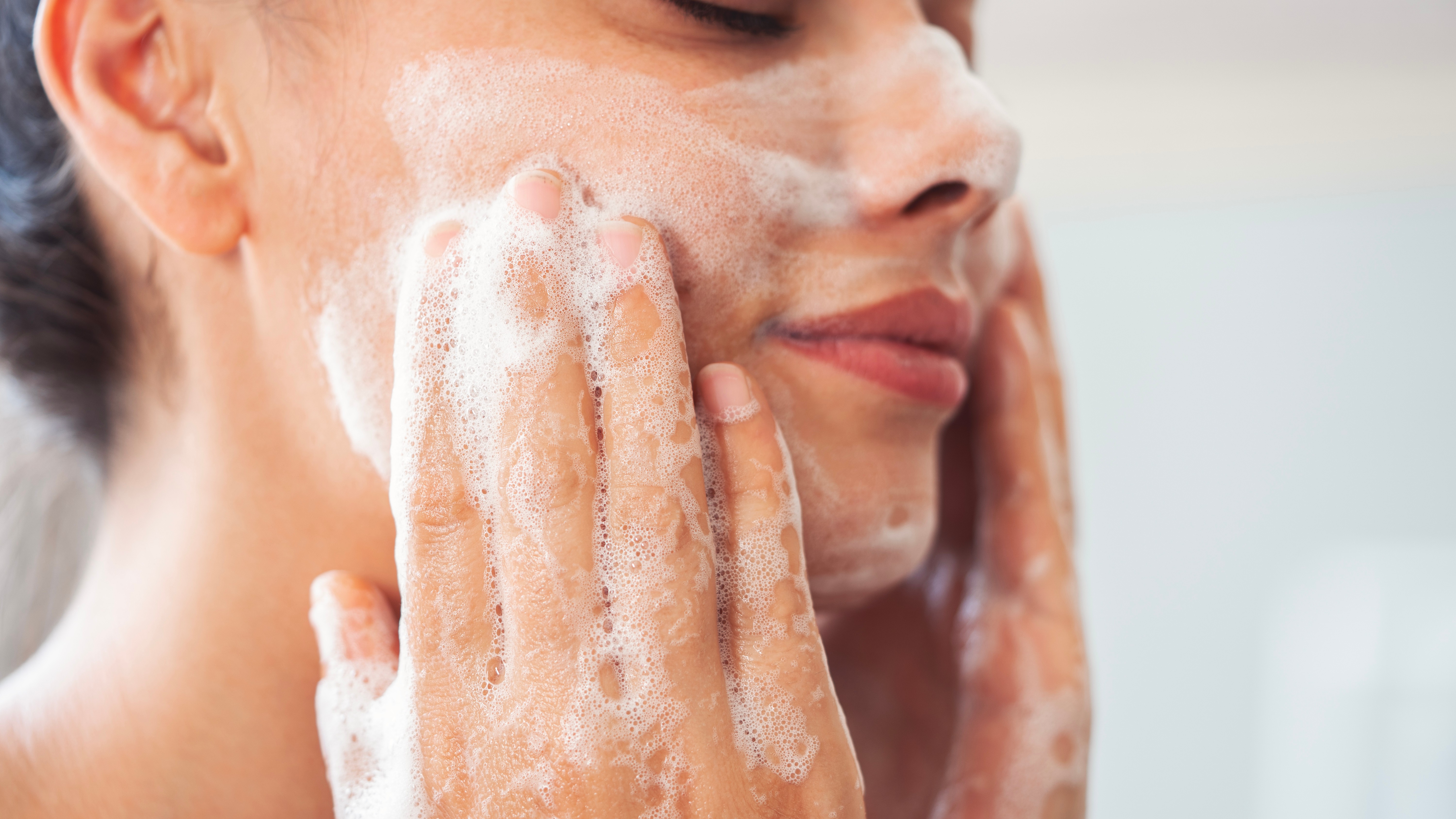
You may notice that your skin starts to feel tight shortly after cleansing, even when you haven’t applied anything yet.
Or, despite applying your basic skincare products, dryness returns quickly within a short period of time.
In these cases, the issue is often not simply a lack of moisture, but rather an unstable skin barrier that cannot retain the moisture that has been added.
This type of inner dryness suggests that the skin needs barrier repair and strengthening, not just additional hydration.
The Role of the Stratum Corneum and Increased TEWL
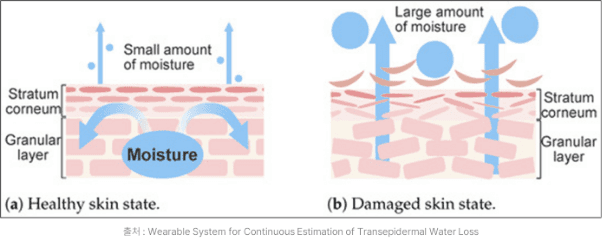
The outermost layer of the skin, the stratum corneum, acts as a protective barrier that prevents excessive moisture evaporation.
When this protective barrier becomes compromised, TEWL (transepidermal water loss) increases, making it difficult for moisture to remain in the skin for long.
As a result, this type of inner dryness often presents with the following pattern:
Moisturizers evaporate quickly, even after repeated application
Heightened sensitivity to external stimuli
Skin that feels persistently reactive or fragile
In these cases, inner dryness is best understood not as a simple lack of hydration, but as skin that cannot keep up with the rate of moisture loss.
Inner Dryness Caused by Weak Dermal Hydration
There is another form of inner dryness that looks slightly different.
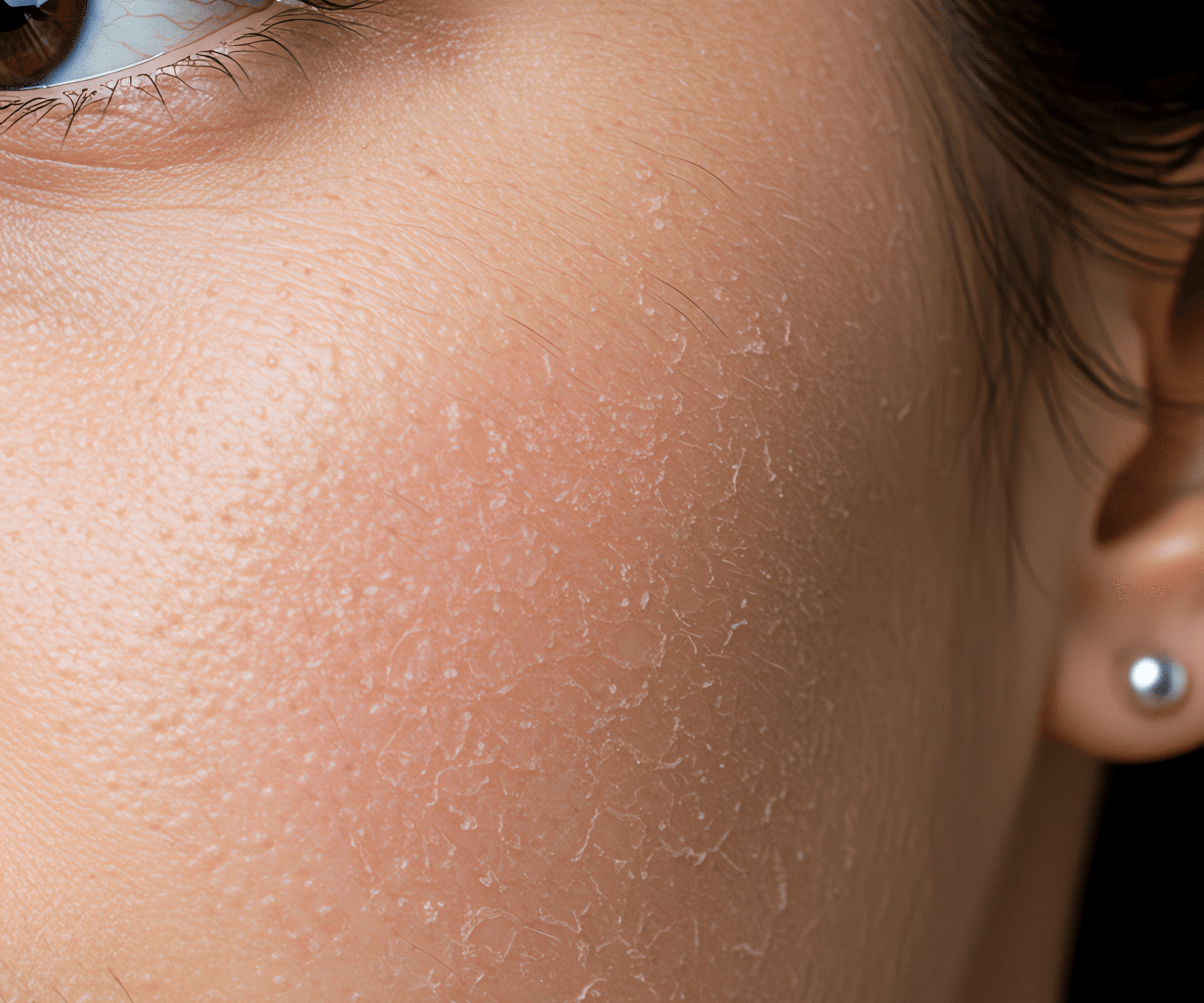
On the surface, the skin texture may appear smooth, and immediately after cleansing, it feels relatively fine. However, as time passes, the skin begins to feel empty or tight from within.
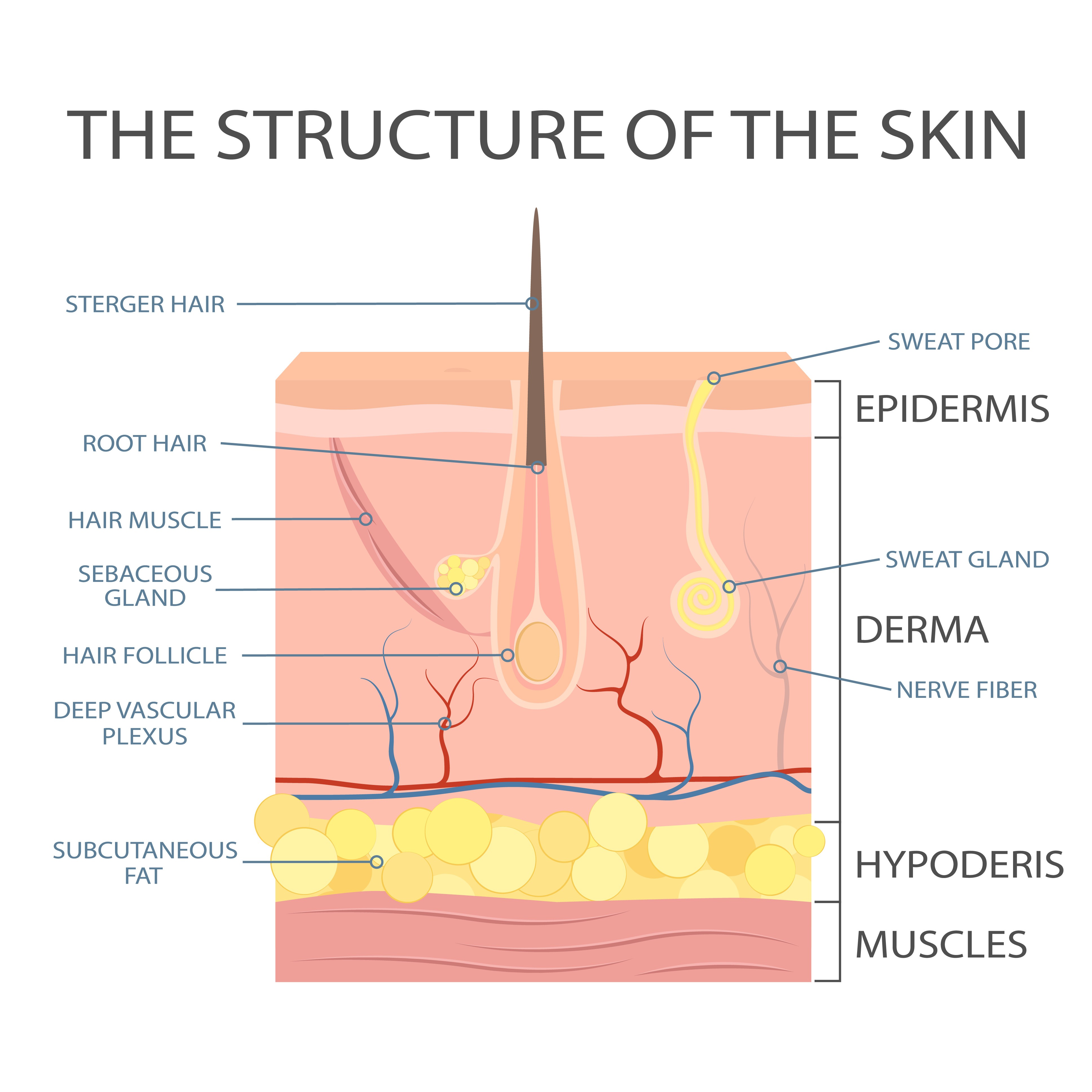
In these cases, it’s important to evaluate the skin’s ability to retain moisture in the dermis (dermal hydration).
When this internal hydration is weakened, topical moisturizers only provide a surface-level effect. While applying them may feel soothing initially, the sensation of tightness often returns shortly after.
Over time, the skin may feel as though moisture is trapped on the surface, leaving the deeper layers inadequately hydrated.
Which Type of Inner Dryness Do You Have?
The inner dryness discussed earlier is often explained by barrier dysfunction or weakened dermal hydration, but it doesn’t always fall neatly into just these two categories.
For example:
Combination-type inner dryness (oily outside, dry inside)
The skin may appear shiny, yet feel tight beneath the surface, making you wonder, “Has my oil production increased?”Sensitive or irritation-prone inner dryness
Even after applying moisturizer, the skin may sting, feel hot, or appear red.Structural or age-related inner dryness
In thinner areas like around the eyes or mouth, tightness may be more pronounced, and dryness can worsen with facial movements.
This shows that the treatment approach must vary depending on the underlying cause.
In some cases, the priority is to reduce the rate of water loss.
In others, it’s to enhance moisture retention in the deeper skin layers.
Sometimes, reducing irritation takes precedence over adding more moisturizer.
The smartest starting point is to listen to your skin’s signals, then decide what to prioritize and what to avoid.
Thank you for reading through this detailed guide!
FAQ
Does age affect how well the skin holds moisture?
Yes, as we age, the skin’s ability to retain moisture naturally declines, making it more prone to dryness and tightness.
Can dehydrated skin cause sensitivity and redness?
Dehydrated skin often becomes sensitive, red, or reactive because the protective barrier is weakened.
How do changes in humidity affect dehydrated skin?
Low humidity accelerates water loss, while high humidity can temporarily improve hydration, affecting how dehydrated skin feels.
Can dehydration from stress affect skin barrier function?
Stress can disrupt the skin barrier, increasing transepidermal water loss and worsening inner dryness.
Why do moisturizers sometimes fail to improve dehydrated skin?
Moisturizers sometimes fail because they only hydrate the surface; inner layers need barrier repair or deeper hydration, which is why our experts at REPIC Clinic emphasize targeted treatments for lasting results.
Struggling with dry skin?
Book a consultation at REPIC Clinic now!
Tags:
Skin Type
Dry Skin
Share this blog
Related Posts.
Looking for more expert insights? Explore these articles from our team of skincare specialists.

Skincare Recommendations
Back to Menu
Rewrite Your Beauty Story with REPIC Clinic
The more you understand your skin, the better decisions you can make about your daily habits and long-term skincare plan. Knowledge is the first step toward healthy, confident skin.
Ready to discover what your skin truly needs?
Back to Menu
The Hidden Cause of Dehydrated Skin That Moisturizers Can’t Fix
SKIN WIKI
SKIN WIKI
Why does my skin still feel tight despite moisturizers?
Hello, this is Repic Clinic.
Among patients who visit Repic Clinic for consultations about inner skin dryness, there is one concern we hear repeatedly:
“I’ve tried switching moisturizers and applying generous amounts,
but my skin still feels tight from within.”
In many cases, inner dryness cannot be resolved by skincare alone.
Although it may feel like the same type of tightness, the underlying causes of skin dryness can differ significantly from person to person.
That’s why today, we’d like to break down inner dryness into different types,
and help you understand what may be happening beneath the surface of your skin.
Barrier-Type Inner Dryness — Rapid Moisture Loss
You may notice that your skin starts to feel tight shortly after cleansing, even when you haven’t applied anything yet.
Or, despite applying your basic skincare products, dryness returns quickly within a short period of time.
In these cases, the issue is often not simply a lack of moisture, but rather an unstable skin barrier that cannot retain the moisture that has been added.
This type of inner dryness suggests that the skin needs barrier repair and strengthening, not just additional hydration.
The Role of the Stratum Corneum and Increased TEWL
The outermost layer of the skin, the stratum corneum, acts as a protective barrier that prevents excessive moisture evaporation.
When this protective barrier becomes compromised, TEWL (transepidermal water loss) increases, making it difficult for moisture to remain in the skin for long.
As a result, this type of inner dryness often presents with the following pattern:
Moisturizers evaporate quickly, even after repeated application
Heightened sensitivity to external stimuli
Skin that feels persistently reactive or fragile
In these cases, inner dryness is best understood not as a simple lack of hydration, but as skin that cannot keep up with the rate of moisture loss.
Inner Dryness Caused by Weak Dermal Hydration
There is another form of inner dryness that looks slightly different.
On the surface, the skin texture may appear smooth, and immediately after cleansing, it feels relatively fine. However, as time passes, the skin begins to feel empty or tight from within.
In these cases, it’s important to evaluate the skin’s ability to retain moisture in the dermis (dermal hydration).
When this internal hydration is weakened, topical moisturizers only provide a surface-level effect. While applying them may feel soothing initially, the sensation of tightness often returns shortly after.
Over time, the skin may feel as though moisture is trapped on the surface, leaving the deeper layers inadequately hydrated.
Which Type of Inner Dryness Do You Have?
The inner dryness discussed earlier is often explained by barrier dysfunction or weakened dermal hydration, but it doesn’t always fall neatly into just these two categories.
For example:
Combination-type inner dryness (oily outside, dry inside)
The skin may appear shiny, yet feel tight beneath the surface, making you wonder, “Has my oil production increased?”Sensitive or irritation-prone inner dryness
Even after applying moisturizer, the skin may sting, feel hot, or appear red.Structural or age-related inner dryness
In thinner areas like around the eyes or mouth, tightness may be more pronounced, and dryness can worsen with facial movements.
This shows that the treatment approach must vary depending on the underlying cause.
In some cases, the priority is to reduce the rate of water loss.
In others, it’s to enhance moisture retention in the deeper skin layers.
Sometimes, reducing irritation takes precedence over adding more moisturizer.
The smartest starting point is to listen to your skin’s signals, then decide what to prioritize and what to avoid.
Thank you for reading through this detailed guide!
FAQ
Does age affect how well the skin holds moisture?
Yes, as we age, the skin’s ability to retain moisture naturally declines, making it more prone to dryness and tightness.
Can dehydrated skin cause sensitivity and redness?
Dehydrated skin often becomes sensitive, red, or reactive because the protective barrier is weakened.
How do changes in humidity affect dehydrated skin?
Low humidity accelerates water loss, while high humidity can temporarily improve hydration, affecting how dehydrated skin feels.
Can dehydration from stress affect skin barrier function?
Stress can disrupt the skin barrier, increasing transepidermal water loss and worsening inner dryness.
Why do moisturizers sometimes fail to improve dehydrated skin?
Moisturizers sometimes fail because they only hydrate the surface; inner layers need barrier repair or deeper hydration, which is why our experts at REPIC Clinic emphasize targeted treatments for lasting results.
Struggling with dry skin?
Book a consultation at REPIC Clinic now!
Tags:
Skin Type
Dry Skin
Share this blog
Related Posts.
Looking for more expert insights? Explore these articles from our team of skincare specialists.
Skincare Recommendations
Back to Menu
Rewrite Your Beauty Story with REPIC Clinic
The more you understand your skin, the better decisions you can make about your daily habits and long-term skincare plan. Knowledge is the first step toward healthy, confident skin.
Ready to discover what your skin truly needs?
Back to Menu
The Hidden Cause of Dehydrated Skin That Moisturizers Can’t Fix
SKIN WIKI
SKIN WIKI
Why does my skin still feel tight despite moisturizers?
Hello, this is Repic Clinic.
Among patients who visit Repic Clinic for consultations about inner skin dryness, there is one concern we hear repeatedly:
“I’ve tried switching moisturizers and applying generous amounts,
but my skin still feels tight from within.”
In many cases, inner dryness cannot be resolved by skincare alone.
Although it may feel like the same type of tightness, the underlying causes of skin dryness can differ significantly from person to person.
That’s why today, we’d like to break down inner dryness into different types,
and help you understand what may be happening beneath the surface of your skin.
Barrier-Type Inner Dryness — Rapid Moisture Loss
You may notice that your skin starts to feel tight shortly after cleansing, even when you haven’t applied anything yet.
Or, despite applying your basic skincare products, dryness returns quickly within a short period of time.
In these cases, the issue is often not simply a lack of moisture, but rather an unstable skin barrier that cannot retain the moisture that has been added.
This type of inner dryness suggests that the skin needs barrier repair and strengthening, not just additional hydration.
The Role of the Stratum Corneum and Increased TEWL
The outermost layer of the skin, the stratum corneum, acts as a protective barrier that prevents excessive moisture evaporation.
When this protective barrier becomes compromised, TEWL (transepidermal water loss) increases, making it difficult for moisture to remain in the skin for long.
As a result, this type of inner dryness often presents with the following pattern:
Moisturizers evaporate quickly, even after repeated application
Heightened sensitivity to external stimuli
Skin that feels persistently reactive or fragile
In these cases, inner dryness is best understood not as a simple lack of hydration, but as skin that cannot keep up with the rate of moisture loss.
Inner Dryness Caused by Weak Dermal Hydration
There is another form of inner dryness that looks slightly different.
On the surface, the skin texture may appear smooth, and immediately after cleansing, it feels relatively fine. However, as time passes, the skin begins to feel empty or tight from within.
In these cases, it’s important to evaluate the skin’s ability to retain moisture in the dermis (dermal hydration).
When this internal hydration is weakened, topical moisturizers only provide a surface-level effect. While applying them may feel soothing initially, the sensation of tightness often returns shortly after.
Over time, the skin may feel as though moisture is trapped on the surface, leaving the deeper layers inadequately hydrated.
Which Type of Inner Dryness Do You Have?
The inner dryness discussed earlier is often explained by barrier dysfunction or weakened dermal hydration, but it doesn’t always fall neatly into just these two categories.
For example:
Combination-type inner dryness (oily outside, dry inside)
The skin may appear shiny, yet feel tight beneath the surface, making you wonder, “Has my oil production increased?”Sensitive or irritation-prone inner dryness
Even after applying moisturizer, the skin may sting, feel hot, or appear red.Structural or age-related inner dryness
In thinner areas like around the eyes or mouth, tightness may be more pronounced, and dryness can worsen with facial movements.
This shows that the treatment approach must vary depending on the underlying cause.
In some cases, the priority is to reduce the rate of water loss.
In others, it’s to enhance moisture retention in the deeper skin layers.
Sometimes, reducing irritation takes precedence over adding more moisturizer.
The smartest starting point is to listen to your skin’s signals, then decide what to prioritize and what to avoid.
Thank you for reading through this detailed guide!
FAQ
Does age affect how well the skin holds moisture?
Yes, as we age, the skin’s ability to retain moisture naturally declines, making it more prone to dryness and tightness.
Can dehydrated skin cause sensitivity and redness?
Dehydrated skin often becomes sensitive, red, or reactive because the protective barrier is weakened.
How do changes in humidity affect dehydrated skin?
Low humidity accelerates water loss, while high humidity can temporarily improve hydration, affecting how dehydrated skin feels.
Can dehydration from stress affect skin barrier function?
Stress can disrupt the skin barrier, increasing transepidermal water loss and worsening inner dryness.
Why do moisturizers sometimes fail to improve dehydrated skin?
Moisturizers sometimes fail because they only hydrate the surface; inner layers need barrier repair or deeper hydration, which is why our experts at REPIC Clinic emphasize targeted treatments for lasting results.
Struggling with dry skin?
Book a consultation at REPIC Clinic now!
Tags:
Skin Type
Dry Skin
Share this blog
Related Posts.
Looking for more expert insights? Explore these articles from our team of skincare specialists.
Skincare Recommendations
Back to Menu
Rewrite Your Beauty Story with
REPIC Clinic
The more you understand your skin, the better decisions you can make about your daily habits and long-term skincare plan. Knowledge is the first step toward healthy, confident skin.
Ready to discover what your skin truly needs?