Back to Menu
What Type of Dark Circles Do You Have? 3 Clinical Categories & Causes
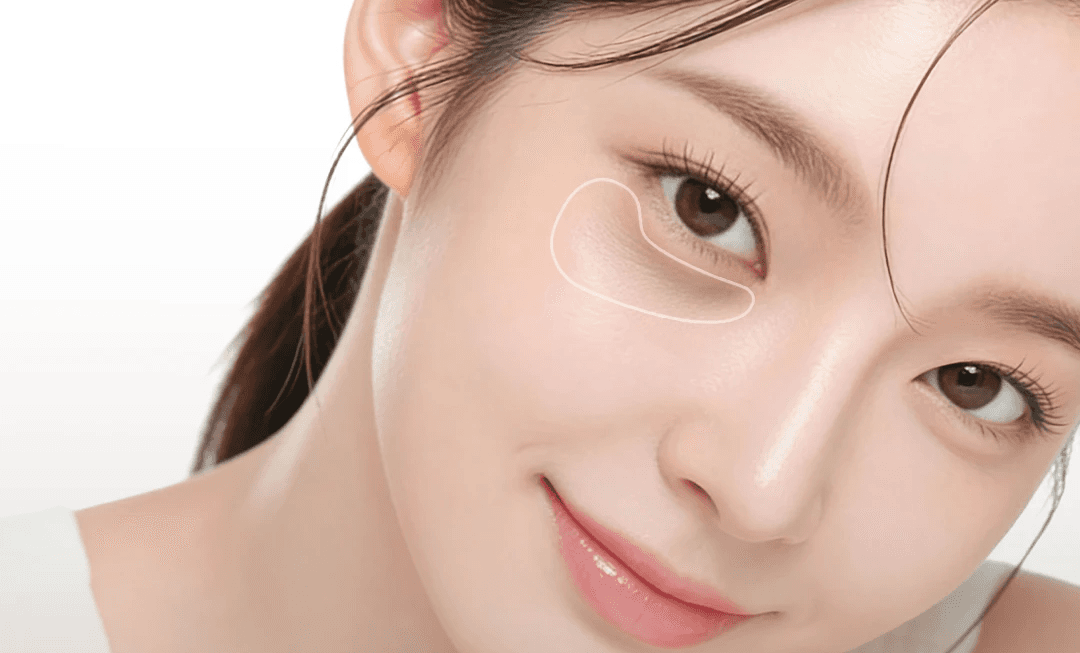
Dark circles are clinically categorized into three distinct types based on their physiological root causes: Pigmentation-type (brown/gray melanin buildup), Vascular-type (blue/purple visible veins from thin skin), and Structural-type (shadows caused by under-eye hollowing or fat protrusion). Recognizing your specific type is essential for effective clinical treatment.
Dark Circles: 3 Common Types and Their Causes
Dark circles are one of the most familiar skincare concerns—most people have experienced them at least once. On particularly tired days, or when someone comments, “You look a bit exhausted today,” many of us instinctively check the area under our eyes first.
However, the underlying causes are not as simple as they seem. Clinically, dark circles are categorized into three distinct types based on their physiological root causes:
Pigmentation-Type: Brown or gray tones caused by localized melanin buildup.
Vascular-Type: Blue or purple tones showing through thin under-eye skin.
Structural-Type: Shadows created by under-eye hollowing or fat protrusion.
A useful analogy is headaches: a headache from lack of sleep is managed entirely differently than one caused by muscle tension. Similarly, dark circles require distinct care depending on their true origin. Instead of treating them as a single symptom, identifying your specific type is essential for choosing the correct management approach.
① Dark Brown or Grayish Dark Circles?

Pigmentation-type dark circles occur when melanin production spikes within the delicate under-eye epidermis, causing the skin tone to shift toward noticeable brown, muddy, or grayish hues.
Common Clinical Causes Include:
Mechanical Friction: Frequent rubbing, scratching, or harsh makeup removal around the sensitive orbital area.
Chronic UV Exposure: Sun damage without adequate protection, which accelerates localized melanin synthesis.
These repeated environmental and physical stimuli activate deep melanocytes (pigment-producing cells), culminating in localized Post-Inflammatory Hyperpigmentation (PIH). Unlike structural hollowing or vascular pooling, this variation means the literal skin tissue itself has darkened.
② Bluish or purplish Dark Circles?
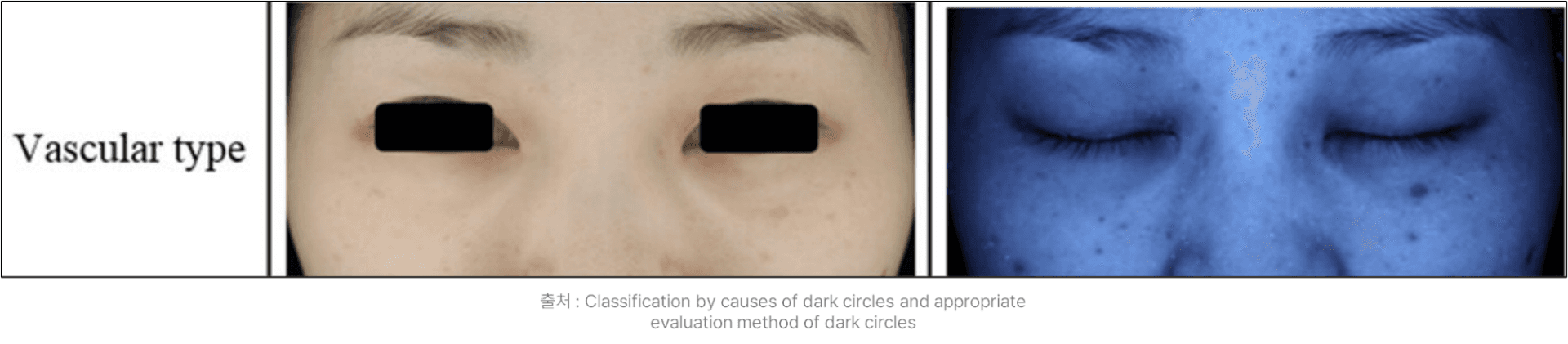
Vascular-type dark circles occur when the skin barrier and underlying subcutaneous fat layers beneath the eyes are exceptionally thin. This translucency allows the deeper network of veins and capillary structures to show through the surface, creating a distinct bluish, purplish, or deep red appearance.
They tend to become more noticeable when you’re tired, sleep-deprived, or experiencing blood flow congestion (venous stasis) due to nasal congestion (rhinitis), allergies, or under-eye puffiness.
Common Clinical Causes Include:
Microvascular Congestion (Venous Stasis): Poor local blood circulation and oxygenation. When you are fatigued, sleep-deprived, or under stress, blood pools in the dense under-eye capillary network, causing the vessels to expand and darken.
Allergenic & Nasal Pressures: Chronic swelling from conditions like allergic rhinitis or sinus congestion, which directly restricts facial venous drainage and intensifies under-eye pooling.
Natural Suborbital Thinning: A structural lack of collagen or fat in the lower eyelid area, which diminishes the natural buffer between the skin surface and the deep blood vessels.
This type of dark circle is influenced more by skin thickness and blood flow (congestion) than by pigmentation.
③ Shadow-like Undereye?
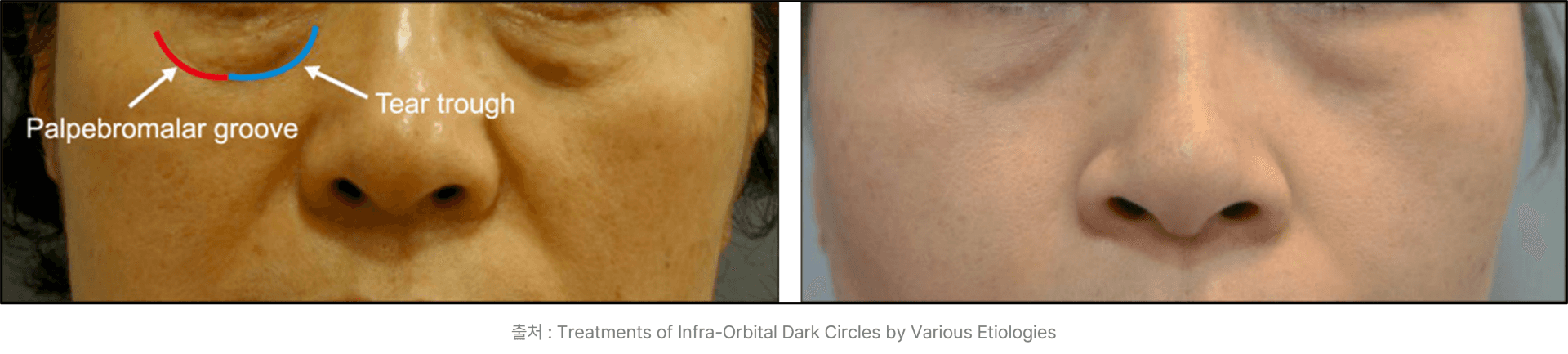
Structural dark circles are not caused by skin pigmentation or visible blood vessels. Instead, they appear due to hollows under the eyes and changes in facial structure, creating natural shadows that make the area look darker.
Common Structural Examples Include:
The Tear Trough (Nasojugal Groove): A deep, sunken line running from the inner corner of the eye down toward the cheek, caused by a tight orbital ligament and natural volume loss.
The Palpebromalar Groove: The distinct anatomical boundary separating the lower under-eye zone from the midface/cheek area.
Orbital Fat Protrusion (Under-Eye Bags): Areas where excessive or herniated fat pads push outward, creating a distinct shelf that casts a deep shadow directly beneath it.
Even if your literal skin tone is perfectly uniform and bright, these volumetric variations will still create an illusion of dark circles.
This type of dark circle is more about facial structure and shading than skin tone.
Hidden Daily Habits That Worsen Under-Eye Darkness
Your daily Seoul routine might be actively worsening your under-eye area. Aggressively removing heavy K-beauty glitter or rubbing your eyes during the high-fine-dust (misaemanyi) seasons irritates the delicate skin, triggering melanin production that turns into stubborn brown pigment.
Additionally, sleeping completely flat after a late-night hoesik (company dinner) or heavy sodium intake allows fluid to pool under your eyelids overnight, stretching tiny capillaries. Combined with the constant digital eye strain from working long hours or commuting on the subway, these habits force extra blood flow to the area, expanding the veins beneath your skin and making dark circles look significantly deeper by evening.
Why Standard K-Beauty Eye Creams Fail to Clear Chronic Dark Circles
If your 10-step skincare routine or expensive eye creams aren't working, it is because topical skincare cannot alter deep facial anatomy or correct complex circulatory issues.
Dark Circle Root Cause | Why Standard Eye Creams Fail to Fix It | The Advanced Gangnam Clinic Alternative |
|---|---|---|
Structural Shadows (Tear Troughs / Fat Bags) | No cream can fill physical hollows or flatten bulging fat bags to change how light hits your face. | Under-Eye Dermal Fillers or specialized Fat Repositioning (Nunmit Jiangcheby 배치) to flatten the contour. |
Deep Skin Pigment (PIH / Melanin Buildup) | Over-the-counter formulas sit on the surface and cannot penetrate deep enough to break up stubborn pigment. | Picosecond Laser Toning to shatter deep melanin without damaging the skin barrier. |
Vascular Congestion (Thin Skin / Poor Circulation) | Brightening ingredients cannot thicken the skin barrier or repair leaking, visible blood vessels. | Skin Boosters (Rejuran Healer / Juvelook) to physically thicken the dermal layer and mask veins. |
Why Dark Circle Treatments Must Be Tailored
In reality, these three types of dark circles rarely appear in isolation. They often overlap, meaning your under-eye area may show signs of surface pigmentation, vascular pooling, and structural shadows simultaneously.
This is exactly why a method that works for someone else—like a friend’s recommendation, a viral SNS trend, or a highly-rated online review—may not produce the same results for you. Because everyone's facial anatomy and genetic skin thickness are completely unique, treating the under-eye area requires a precise, personalized medical approach.
In our upcoming articles, we will dive deeper into specific management protocols for each distinct variation and how to choose the right advanced clinical treatments for your face.
REPIC Clinic: 2nd Floor, 318 Gangnam-daero. Book your consultation today!
FAQ
How can I tell which type of dark circles I have?
Brown/gray usually means pigmentation, blue/purple suggests visible veins, and darkness that changes with light is often due to shadows.
Why do my dark circles look blue instead of brown?
Blue tones appear when thin under-eye skin makes blood vessels more visible, especially when you're tired or congested.
Are dark circles caused by pigmentation or shadows?
They can be caused by pigmentation, visible blood vessels, or structural shadows, often a mix of all three
Can vascular dark circles be treated permanently?
Vascular dark circles can be improved with proper treatment, and a consultation at REPIC Clinic can help identify the best approach for your specific condition.
Why does under-eye darkness worsen with age?
As skin thins and volume reduces over time, veins show more and shadows deepen, making dark circles look stronger.
Find out which undereye treatments fit you best!
Book a consultation at REPIC Clinic now!
Tags:
Eyes
Skin Type
Share this blog
Related Posts.
Looking for more expert insights? Explore these articles from our team of skincare specialists.



Skincare Recommendations

Back to Menu
Rewrite Your Beauty Story with REPIC Clinic
The more you understand your skin, the better decisions you can make about your daily habits and long-term skincare plan. Knowledge is the first step toward healthy, confident skin.
Ready to discover what your skin truly needs?
Back to Menu
What Type of Dark Circles Do You Have? 3 Clinical Categories & Causes
Dark circles are clinically categorized into three distinct types based on their physiological root causes: Pigmentation-type (brown/gray melanin buildup), Vascular-type (blue/purple visible veins from thin skin), and Structural-type (shadows caused by under-eye hollowing or fat protrusion). Recognizing your specific type is essential for effective clinical treatment.
Dark Circles: 3 Common Types and Their Causes
Dark circles are one of the most familiar skincare concerns—most people have experienced them at least once. On particularly tired days, or when someone comments, “You look a bit exhausted today,” many of us instinctively check the area under our eyes first.
However, the underlying causes are not as simple as they seem. Clinically, dark circles are categorized into three distinct types based on their physiological root causes:
Pigmentation-Type: Brown or gray tones caused by localized melanin buildup.
Vascular-Type: Blue or purple tones showing through thin under-eye skin.
Structural-Type: Shadows created by under-eye hollowing or fat protrusion.
A useful analogy is headaches: a headache from lack of sleep is managed entirely differently than one caused by muscle tension. Similarly, dark circles require distinct care depending on their true origin. Instead of treating them as a single symptom, identifying your specific type is essential for choosing the correct management approach.
① Dark Brown or Grayish Dark Circles?
Pigmentation-type dark circles occur when melanin production spikes within the delicate under-eye epidermis, causing the skin tone to shift toward noticeable brown, muddy, or grayish hues.
Common Clinical Causes Include:
Mechanical Friction: Frequent rubbing, scratching, or harsh makeup removal around the sensitive orbital area.
Chronic UV Exposure: Sun damage without adequate protection, which accelerates localized melanin synthesis.
These repeated environmental and physical stimuli activate deep melanocytes (pigment-producing cells), culminating in localized Post-Inflammatory Hyperpigmentation (PIH). Unlike structural hollowing or vascular pooling, this variation means the literal skin tissue itself has darkened.
② Bluish or purplish Dark Circles?
Vascular-type dark circles occur when the skin barrier and underlying subcutaneous fat layers beneath the eyes are exceptionally thin. This translucency allows the deeper network of veins and capillary structures to show through the surface, creating a distinct bluish, purplish, or deep red appearance.
They tend to become more noticeable when you’re tired, sleep-deprived, or experiencing blood flow congestion (venous stasis) due to nasal congestion (rhinitis), allergies, or under-eye puffiness.
Common Clinical Causes Include:
Microvascular Congestion (Venous Stasis): Poor local blood circulation and oxygenation. When you are fatigued, sleep-deprived, or under stress, blood pools in the dense under-eye capillary network, causing the vessels to expand and darken.
Allergenic & Nasal Pressures: Chronic swelling from conditions like allergic rhinitis or sinus congestion, which directly restricts facial venous drainage and intensifies under-eye pooling.
Natural Suborbital Thinning: A structural lack of collagen or fat in the lower eyelid area, which diminishes the natural buffer between the skin surface and the deep blood vessels.
This type of dark circle is influenced more by skin thickness and blood flow (congestion) than by pigmentation.
③ Shadow-like Undereye?
Structural dark circles are not caused by skin pigmentation or visible blood vessels. Instead, they appear due to hollows under the eyes and changes in facial structure, creating natural shadows that make the area look darker.
Common Structural Examples Include:
The Tear Trough (Nasojugal Groove): A deep, sunken line running from the inner corner of the eye down toward the cheek, caused by a tight orbital ligament and natural volume loss.
The Palpebromalar Groove: The distinct anatomical boundary separating the lower under-eye zone from the midface/cheek area.
Orbital Fat Protrusion (Under-Eye Bags): Areas where excessive or herniated fat pads push outward, creating a distinct shelf that casts a deep shadow directly beneath it.
Even if your literal skin tone is perfectly uniform and bright, these volumetric variations will still create an illusion of dark circles.
This type of dark circle is more about facial structure and shading than skin tone.
Hidden Daily Habits That Worsen Under-Eye Darkness
Your daily Seoul routine might be actively worsening your under-eye area. Aggressively removing heavy K-beauty glitter or rubbing your eyes during the high-fine-dust (misaemanyi) seasons irritates the delicate skin, triggering melanin production that turns into stubborn brown pigment.
Additionally, sleeping completely flat after a late-night hoesik (company dinner) or heavy sodium intake allows fluid to pool under your eyelids overnight, stretching tiny capillaries. Combined with the constant digital eye strain from working long hours or commuting on the subway, these habits force extra blood flow to the area, expanding the veins beneath your skin and making dark circles look significantly deeper by evening.
Why Standard K-Beauty Eye Creams Fail to Clear Chronic Dark Circles
If your 10-step skincare routine or expensive eye creams aren't working, it is because topical skincare cannot alter deep facial anatomy or correct complex circulatory issues.
Dark Circle Root Cause | Why Standard Eye Creams Fail to Fix It | The Advanced Gangnam Clinic Alternative |
|---|---|---|
Structural Shadows (Tear Troughs / Fat Bags) | No cream can fill physical hollows or flatten bulging fat bags to change how light hits your face. | Under-Eye Dermal Fillers or specialized Fat Repositioning (Nunmit Jiangcheby 배치) to flatten the contour. |
Deep Skin Pigment (PIH / Melanin Buildup) | Over-the-counter formulas sit on the surface and cannot penetrate deep enough to break up stubborn pigment. | Picosecond Laser Toning to shatter deep melanin without damaging the skin barrier. |
Vascular Congestion (Thin Skin / Poor Circulation) | Brightening ingredients cannot thicken the skin barrier or repair leaking, visible blood vessels. | Skin Boosters (Rejuran Healer / Juvelook) to physically thicken the dermal layer and mask veins. |
Why Dark Circle Treatments Must Be Tailored
In reality, these three types of dark circles rarely appear in isolation. They often overlap, meaning your under-eye area may show signs of surface pigmentation, vascular pooling, and structural shadows simultaneously.
This is exactly why a method that works for someone else—like a friend’s recommendation, a viral SNS trend, or a highly-rated online review—may not produce the same results for you. Because everyone's facial anatomy and genetic skin thickness are completely unique, treating the under-eye area requires a precise, personalized medical approach.
In our upcoming articles, we will dive deeper into specific management protocols for each distinct variation and how to choose the right advanced clinical treatments for your face.
REPIC Clinic: 2nd Floor, 318 Gangnam-daero. Book your consultation today!
FAQ
How can I tell which type of dark circles I have?
Brown/gray usually means pigmentation, blue/purple suggests visible veins, and darkness that changes with light is often due to shadows.
Why do my dark circles look blue instead of brown?
Blue tones appear when thin under-eye skin makes blood vessels more visible, especially when you're tired or congested.
Are dark circles caused by pigmentation or shadows?
They can be caused by pigmentation, visible blood vessels, or structural shadows, often a mix of all three
Can vascular dark circles be treated permanently?
Vascular dark circles can be improved with proper treatment, and a consultation at REPIC Clinic can help identify the best approach for your specific condition.
Why does under-eye darkness worsen with age?
As skin thins and volume reduces over time, veins show more and shadows deepen, making dark circles look stronger.
Find out which undereye treatments fit you best!
Book a consultation at REPIC Clinic now!
Tags:
Eyes
Skin Type
Share this blog
Related Posts.
Looking for more expert insights? Explore these articles from our team of skincare specialists.
Skincare Recommendations
Back to Menu
Rewrite Your Beauty Story with REPIC Clinic
The more you understand your skin, the better decisions you can make about your daily habits and long-term skincare plan. Knowledge is the first step toward healthy, confident skin.
Ready to discover what your skin truly needs?
Back to Menu
What Type of Dark Circles Do You Have? 3 Clinical Categories & Causes
Dark circles are clinically categorized into three distinct types based on their physiological root causes: Pigmentation-type (brown/gray melanin buildup), Vascular-type (blue/purple visible veins from thin skin), and Structural-type (shadows caused by under-eye hollowing or fat protrusion). Recognizing your specific type is essential for effective clinical treatment.
Dark Circles: 3 Common Types and Their Causes
Dark circles are one of the most familiar skincare concerns—most people have experienced them at least once. On particularly tired days, or when someone comments, “You look a bit exhausted today,” many of us instinctively check the area under our eyes first.
However, the underlying causes are not as simple as they seem. Clinically, dark circles are categorized into three distinct types based on their physiological root causes:
Pigmentation-Type: Brown or gray tones caused by localized melanin buildup.
Vascular-Type: Blue or purple tones showing through thin under-eye skin.
Structural-Type: Shadows created by under-eye hollowing or fat protrusion.
A useful analogy is headaches: a headache from lack of sleep is managed entirely differently than one caused by muscle tension. Similarly, dark circles require distinct care depending on their true origin. Instead of treating them as a single symptom, identifying your specific type is essential for choosing the correct management approach.
① Dark Brown or Grayish Dark Circles?
Pigmentation-type dark circles occur when melanin production spikes within the delicate under-eye epidermis, causing the skin tone to shift toward noticeable brown, muddy, or grayish hues.
Common Clinical Causes Include:
Mechanical Friction: Frequent rubbing, scratching, or harsh makeup removal around the sensitive orbital area.
Chronic UV Exposure: Sun damage without adequate protection, which accelerates localized melanin synthesis.
These repeated environmental and physical stimuli activate deep melanocytes (pigment-producing cells), culminating in localized Post-Inflammatory Hyperpigmentation (PIH). Unlike structural hollowing or vascular pooling, this variation means the literal skin tissue itself has darkened.
② Bluish or purplish Dark Circles?
Vascular-type dark circles occur when the skin barrier and underlying subcutaneous fat layers beneath the eyes are exceptionally thin. This translucency allows the deeper network of veins and capillary structures to show through the surface, creating a distinct bluish, purplish, or deep red appearance.
They tend to become more noticeable when you’re tired, sleep-deprived, or experiencing blood flow congestion (venous stasis) due to nasal congestion (rhinitis), allergies, or under-eye puffiness.
Common Clinical Causes Include:
Microvascular Congestion (Venous Stasis): Poor local blood circulation and oxygenation. When you are fatigued, sleep-deprived, or under stress, blood pools in the dense under-eye capillary network, causing the vessels to expand and darken.
Allergenic & Nasal Pressures: Chronic swelling from conditions like allergic rhinitis or sinus congestion, which directly restricts facial venous drainage and intensifies under-eye pooling.
Natural Suborbital Thinning: A structural lack of collagen or fat in the lower eyelid area, which diminishes the natural buffer between the skin surface and the deep blood vessels.
This type of dark circle is influenced more by skin thickness and blood flow (congestion) than by pigmentation.
③ Shadow-like Undereye?
Structural dark circles are not caused by skin pigmentation or visible blood vessels. Instead, they appear due to hollows under the eyes and changes in facial structure, creating natural shadows that make the area look darker.
Common Structural Examples Include:
The Tear Trough (Nasojugal Groove): A deep, sunken line running from the inner corner of the eye down toward the cheek, caused by a tight orbital ligament and natural volume loss.
The Palpebromalar Groove: The distinct anatomical boundary separating the lower under-eye zone from the midface/cheek area.
Orbital Fat Protrusion (Under-Eye Bags): Areas where excessive or herniated fat pads push outward, creating a distinct shelf that casts a deep shadow directly beneath it.
Even if your literal skin tone is perfectly uniform and bright, these volumetric variations will still create an illusion of dark circles.
This type of dark circle is more about facial structure and shading than skin tone.
Hidden Daily Habits That Worsen Under-Eye Darkness
Your daily Seoul routine might be actively worsening your under-eye area. Aggressively removing heavy K-beauty glitter or rubbing your eyes during the high-fine-dust (misaemanyi) seasons irritates the delicate skin, triggering melanin production that turns into stubborn brown pigment.
Additionally, sleeping completely flat after a late-night hoesik (company dinner) or heavy sodium intake allows fluid to pool under your eyelids overnight, stretching tiny capillaries. Combined with the constant digital eye strain from working long hours or commuting on the subway, these habits force extra blood flow to the area, expanding the veins beneath your skin and making dark circles look significantly deeper by evening.
Why Standard K-Beauty Eye Creams Fail to Clear Chronic Dark Circles
If your 10-step skincare routine or expensive eye creams aren't working, it is because topical skincare cannot alter deep facial anatomy or correct complex circulatory issues.
Dark Circle Root Cause | Why Standard Eye Creams Fail to Fix It | The Advanced Gangnam Clinic Alternative |
|---|---|---|
Structural Shadows (Tear Troughs / Fat Bags) | No cream can fill physical hollows or flatten bulging fat bags to change how light hits your face. | Under-Eye Dermal Fillers or specialized Fat Repositioning (Nunmit Jiangcheby 배치) to flatten the contour. |
Deep Skin Pigment (PIH / Melanin Buildup) | Over-the-counter formulas sit on the surface and cannot penetrate deep enough to break up stubborn pigment. | Picosecond Laser Toning to shatter deep melanin without damaging the skin barrier. |
Vascular Congestion (Thin Skin / Poor Circulation) | Brightening ingredients cannot thicken the skin barrier or repair leaking, visible blood vessels. | Skin Boosters (Rejuran Healer / Juvelook) to physically thicken the dermal layer and mask veins. |
Why Dark Circle Treatments Must Be Tailored
In reality, these three types of dark circles rarely appear in isolation. They often overlap, meaning your under-eye area may show signs of surface pigmentation, vascular pooling, and structural shadows simultaneously.
This is exactly why a method that works for someone else—like a friend’s recommendation, a viral SNS trend, or a highly-rated online review—may not produce the same results for you. Because everyone's facial anatomy and genetic skin thickness are completely unique, treating the under-eye area requires a precise, personalized medical approach.
In our upcoming articles, we will dive deeper into specific management protocols for each distinct variation and how to choose the right advanced clinical treatments for your face.
REPIC Clinic: 2nd Floor, 318 Gangnam-daero. Book your consultation today!
FAQ
How can I tell which type of dark circles I have?
Brown/gray usually means pigmentation, blue/purple suggests visible veins, and darkness that changes with light is often due to shadows.
Why do my dark circles look blue instead of brown?
Blue tones appear when thin under-eye skin makes blood vessels more visible, especially when you're tired or congested.
Are dark circles caused by pigmentation or shadows?
They can be caused by pigmentation, visible blood vessels, or structural shadows, often a mix of all three
Can vascular dark circles be treated permanently?
Vascular dark circles can be improved with proper treatment, and a consultation at REPIC Clinic can help identify the best approach for your specific condition.
Why does under-eye darkness worsen with age?
As skin thins and volume reduces over time, veins show more and shadows deepen, making dark circles look stronger.
Find out which undereye treatments fit you best!
Book a consultation at REPIC Clinic now!
Tags:
Eyes
Skin Type
Share this blog
Related Posts.
Looking for more expert insights? Explore these articles from our team of skincare specialists.
Skincare Recommendations
Back to Menu
Rewrite Your Beauty Story with
REPIC Clinic
The more you understand your skin, the better decisions you can make about your daily habits and long-term skincare plan. Knowledge is the first step toward healthy, confident skin.
Ready to discover what your skin truly needs?