Back to Menu
REPIC Laser Treatment Guide
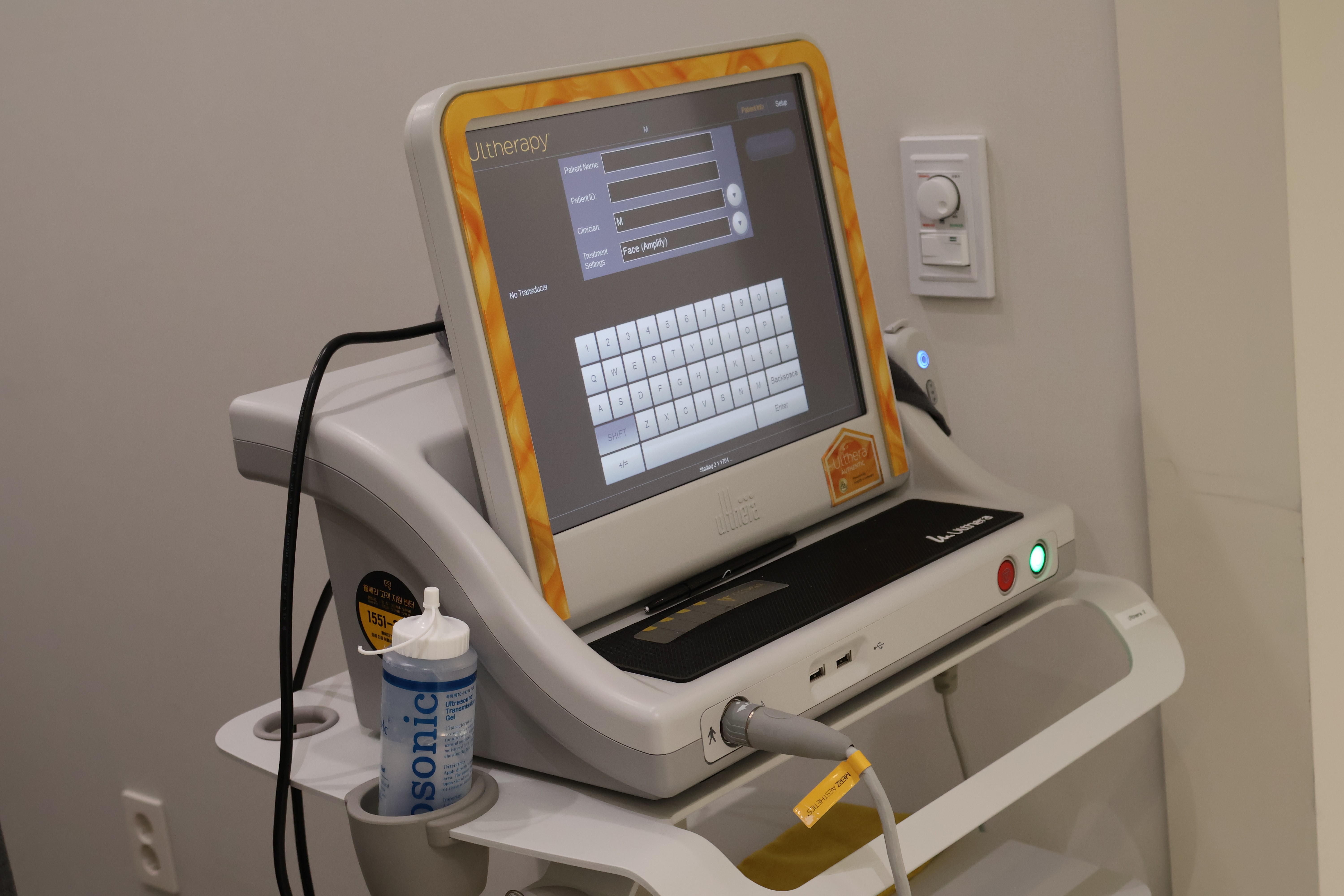
Complete Laser Treatment Guide: Pro Tips for Better Results
Hello, I’m Dr. Yong Ha, Medical Director of Repic Clinic, Gangnam
Have you ever tried laser treatments and thought:
“Why am I not seeing results?”
“Is this laser just not right for me?”
“Did I waste my money…?”
You’re definitely not alone.
Why Didn’t My Laser Treatment Work?
Skin treatments don’t follow a simple rule like “do it once and it works.”
Even the same procedure can deliver completely different results depending on how it’s performed.
Temperature, energy level, contact pressure, shot count, miss even one, and results drop significantly.
Below, I’ll explain common laser treatments, why results may have been disappointing, and what to check to maximize effectiveness.
InMode FX
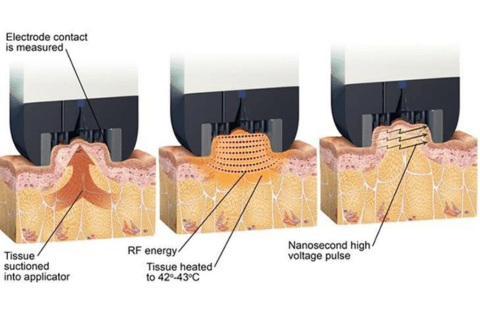
InMode FX uses radiofrequency (RF) energy to help destroy fat cells and tighten skin.
If the treatment only raises surface skin temperature but doesn’t reach the core fat-melting temperature, results will be minimal.
Key Point
For optimal results, skin temperature should reach 41–42°C (105–108°F), followed by sufficient high-voltage pulses with an adequate number of shots.
What Is a “Pulse” in InMode?
A pulse refers to one delivery of RF energy.
Each time the device emits RF energy into the skin, that counts as one pulse.
In handpieces like MiniFX or BodyFX, RF energy + suction + high-voltage pulses work together to disrupt fat cells and improve tightening.
Shurink (HIFU)
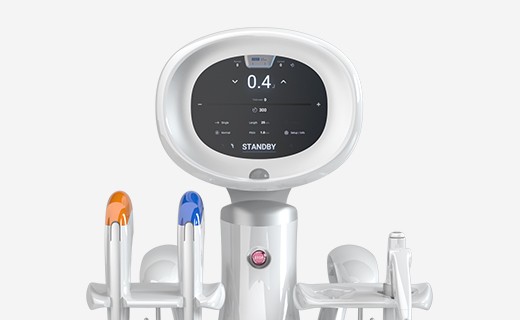
Shurink results depend heavily on tip selection and energy settings.
If you have thicker skin or a higher fat layer, using only a 3.0 mm tip often won’t reach the target depth.
Shurink typically operates around 0.5J, while Ulthera uses about 0.9J, nearly double the energy output.
Key Point
Because energy output can vary, it’s important to increase energy within safe limits and ensure proper tip contact.
Recommended Request Phrase
“I'm okay if it takes longer, please increase the energy safely and make sure the tip is well-attached.”
From a doctor’s perspective, this clearly signals that the patient is serious about results.
Genesis Laser
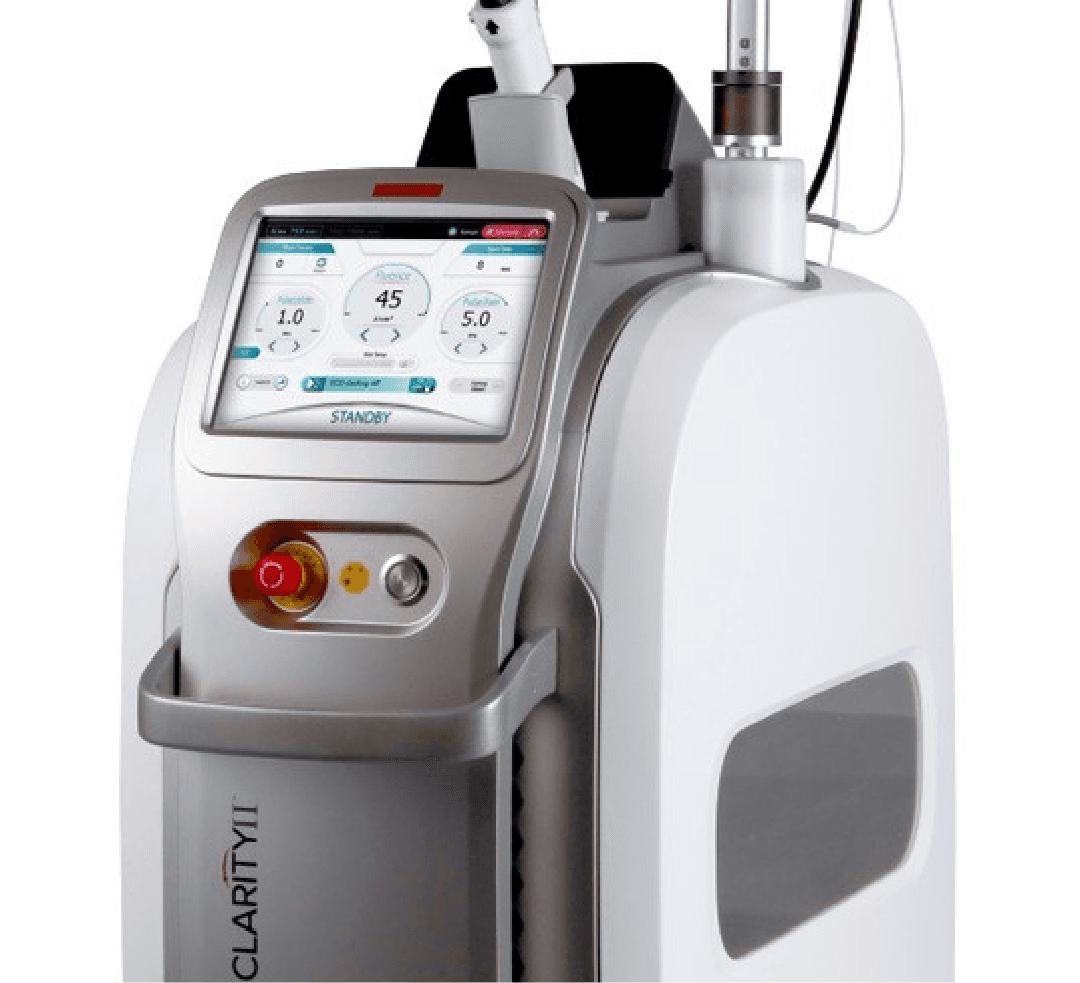
Genesis laser works by accumulating heat in the dermis, the more consistent the heat buildup, the better the outcome.
If it only feels mildly warm on the surface, dermal heating is insufficient, making results negligible.
Key Point
After treatment, your skin should feel noticeably warm, not just mildly heated.
Recommended Request Phrase
“Please treat evenly until the skin is thoroughly warmed throughout.”
Genesis is a precision-and-effort-dependent treatment. Technique truly matters.
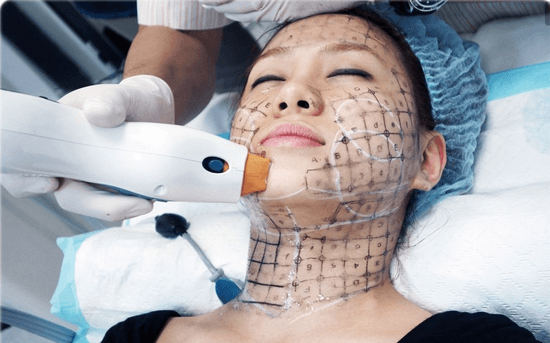
RF Lasers (Thermage, Oligio, etc.)
RF treatments work best when energy is delivered just below the burn threshold (⚠️ safely, of course).
The sensation of “almost too hot” is a key indicator.
During sedated treatments, this feedback is lost, often leading to lower energy settings.
Key Point
Whenever possible, non-sedated treatment allows better energy control and stronger results.
Recommended Request Phrase
“Please use strong energy within safe limits. I’ll manage the discomfort.”
⚠️ Pain tolerance varies, always communicate honestly.
Summary: How to Maximize Laser Treatment Results
Treatment | Why Results Were Weak | Pro Tip |
|---|---|---|
InMode FX | Temperature up, pulses insufficient | Request more pulses after reaching 41°C |
Shurink | Low base energy, poor tip contact | Ask for higher energy + firm tip contact |
Genesis | Not enough dermal heat buildup | Request slow, even heating |
Thermage / Density | Sedation lowered energy | Choose non-sedation if possible |
Final Thoughts
Laser treatments are ultimately performed by people, not machines.
Great results come from:
accurate settings + practitioner skill + clear patient communication
Rather than following trends blindly, the most important step is proper diagnosis based on your skin condition and facial structure,
We strongly recommend advanced skin analysis (e.g., MetaView, MarkView) before choosing any procedure.
For more skin and treatment insights, feel free to check out more of our blogs!
This has been Dr. Yongheon Ha, Medical Director of Repic Clinic!
FAQ: Laser Skin Treatments and Treatment Results
Why do some laser treatments show little results?
Results may be weak if the energy level is too low, the temperature is not properly reached, or the technique is not precise enough. Even small setting differences can significantly affect outcomes.
How can I make my laser treatment more effective?
Ensure the correct energy level, temperature, and sufficient shot count are used within safe limits. At REPIC Clinic, treatments are carefully customized based on detailed skin analysis to help maximize results.
Why is temperature important in some RF treatments?
Certain radiofrequency (RF) treatments rely on controlled heat delivery to the deeper layers of the skin or fat tissue. Reaching an appropriate temperature range helps stimulate processes such as collagen remodeling or fat cell disruption. If the temperature does not reach the therapeutic range, the treatment effect may be limited.
Should laser treatments be done without sedation?
When possible, non-sedated treatments allow you to give real-time feedback, which helps the provider adjust energy levels more effectively.
What is the difference between RF treatments and HIFU treatments?
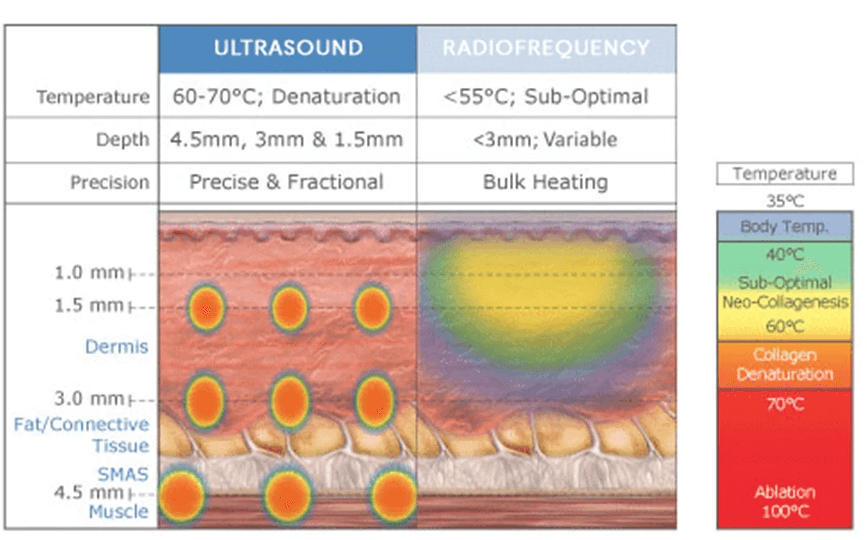
Both radiofrequency (RF) and high-intensity focused ultrasound (HIFU) treatments are used for skin tightening and lifting, but they work differently. RF treatments deliver electrical energy that converts to heat in the skin layers to stimulate collagen production. HIFU treatments use focused ultrasound energy to target deeper structural layers of the skin. Each approach targets different tissue depths and may be recommended depending on individual skin concerns.
Get laser treatments from an expert!
Book a consultation at REPIC Clinic now!
Tags:
Treatment Guides
Lifting
Share this blog
Related Posts.
Looking for more expert insights? Explore these articles from our team of skincare specialists.
Skincare Recommendations
Back to Menu
Rewrite Your Beauty Story with REPIC Clinic
The more you understand your skin, the better decisions you can make about your daily habits and long-term skincare plan. Knowledge is the first step toward healthy, confident skin.
Ready to discover what your skin truly needs?
Back to Menu
REPIC Laser Treatment Guide
Complete Laser Treatment Guide: Pro Tips for Better Results
Hello, I’m Dr. Yong Ha, Medical Director of Repic Clinic, Gangnam
Have you ever tried laser treatments and thought:
“Why am I not seeing results?”
“Is this laser just not right for me?”
“Did I waste my money…?”
You’re definitely not alone.
Why Didn’t My Laser Treatment Work?
Skin treatments don’t follow a simple rule like “do it once and it works.”
Even the same procedure can deliver completely different results depending on how it’s performed.
Temperature, energy level, contact pressure, shot count, miss even one, and results drop significantly.
Below, I’ll explain common laser treatments, why results may have been disappointing, and what to check to maximize effectiveness.
InMode FX
InMode FX uses radiofrequency (RF) energy to help destroy fat cells and tighten skin.
If the treatment only raises surface skin temperature but doesn’t reach the core fat-melting temperature, results will be minimal.
Key Point
For optimal results, skin temperature should reach 41–42°C (105–108°F), followed by sufficient high-voltage pulses with an adequate number of shots.
What Is a “Pulse” in InMode?
A pulse refers to one delivery of RF energy.
Each time the device emits RF energy into the skin, that counts as one pulse.
In handpieces like MiniFX or BodyFX, RF energy + suction + high-voltage pulses work together to disrupt fat cells and improve tightening.
Shurink (HIFU)
Shurink results depend heavily on tip selection and energy settings.
If you have thicker skin or a higher fat layer, using only a 3.0 mm tip often won’t reach the target depth.
Shurink typically operates around 0.5J, while Ulthera uses about 0.9J, nearly double the energy output.
Key Point
Because energy output can vary, it’s important to increase energy within safe limits and ensure proper tip contact.
Recommended Request Phrase
“I'm okay if it takes longer, please increase the energy safely and make sure the tip is well-attached.”
From a doctor’s perspective, this clearly signals that the patient is serious about results.
Genesis Laser
Genesis laser works by accumulating heat in the dermis, the more consistent the heat buildup, the better the outcome.
If it only feels mildly warm on the surface, dermal heating is insufficient, making results negligible.
Key Point
After treatment, your skin should feel noticeably warm, not just mildly heated.
Recommended Request Phrase
“Please treat evenly until the skin is thoroughly warmed throughout.”
Genesis is a precision-and-effort-dependent treatment. Technique truly matters.
RF Lasers (Thermage, Oligio, etc.)
RF treatments work best when energy is delivered just below the burn threshold (⚠️ safely, of course).
The sensation of “almost too hot” is a key indicator.
During sedated treatments, this feedback is lost, often leading to lower energy settings.
Key Point
Whenever possible, non-sedated treatment allows better energy control and stronger results.
Recommended Request Phrase
“Please use strong energy within safe limits. I’ll manage the discomfort.”
⚠️ Pain tolerance varies, always communicate honestly.
Summary: How to Maximize Laser Treatment Results
Treatment | Why Results Were Weak | Pro Tip |
|---|---|---|
InMode FX | Temperature up, pulses insufficient | Request more pulses after reaching 41°C |
Shurink | Low base energy, poor tip contact | Ask for higher energy + firm tip contact |
Genesis | Not enough dermal heat buildup | Request slow, even heating |
Thermage / Density | Sedation lowered energy | Choose non-sedation if possible |
Final Thoughts
Laser treatments are ultimately performed by people, not machines.
Great results come from:
accurate settings + practitioner skill + clear patient communication
Rather than following trends blindly, the most important step is proper diagnosis based on your skin condition and facial structure,
We strongly recommend advanced skin analysis (e.g., MetaView, MarkView) before choosing any procedure.
For more skin and treatment insights, feel free to check out more of our blogs!
This has been Dr. Yongheon Ha, Medical Director of Repic Clinic!
FAQ: Laser Skin Treatments and Treatment Results
Why do some laser treatments show little results?
Results may be weak if the energy level is too low, the temperature is not properly reached, or the technique is not precise enough. Even small setting differences can significantly affect outcomes.
How can I make my laser treatment more effective?
Ensure the correct energy level, temperature, and sufficient shot count are used within safe limits. At REPIC Clinic, treatments are carefully customized based on detailed skin analysis to help maximize results.
Why is temperature important in some RF treatments?
Certain radiofrequency (RF) treatments rely on controlled heat delivery to the deeper layers of the skin or fat tissue. Reaching an appropriate temperature range helps stimulate processes such as collagen remodeling or fat cell disruption. If the temperature does not reach the therapeutic range, the treatment effect may be limited.
Should laser treatments be done without sedation?
When possible, non-sedated treatments allow you to give real-time feedback, which helps the provider adjust energy levels more effectively.
What is the difference between RF treatments and HIFU treatments?
Both radiofrequency (RF) and high-intensity focused ultrasound (HIFU) treatments are used for skin tightening and lifting, but they work differently. RF treatments deliver electrical energy that converts to heat in the skin layers to stimulate collagen production. HIFU treatments use focused ultrasound energy to target deeper structural layers of the skin. Each approach targets different tissue depths and may be recommended depending on individual skin concerns.
Get laser treatments from an expert!
Book a consultation at REPIC Clinic now!
Tags:
Treatment Guides
Lifting
Share this blog
Related Posts.
Looking for more expert insights? Explore these articles from our team of skincare specialists.
Skincare Recommendations
Back to Menu
Rewrite Your Beauty Story with REPIC Clinic
The more you understand your skin, the better decisions you can make about your daily habits and long-term skincare plan. Knowledge is the first step toward healthy, confident skin.
Ready to discover what your skin truly needs?
Back to Menu
REPIC Laser Treatment Guide
Complete Laser Treatment Guide: Pro Tips for Better Results
Hello, I’m Dr. Yong Ha, Medical Director of Repic Clinic, Gangnam
Have you ever tried laser treatments and thought:
“Why am I not seeing results?”
“Is this laser just not right for me?”
“Did I waste my money…?”
You’re definitely not alone.
Why Didn’t My Laser Treatment Work?
Skin treatments don’t follow a simple rule like “do it once and it works.”
Even the same procedure can deliver completely different results depending on how it’s performed.
Temperature, energy level, contact pressure, shot count, miss even one, and results drop significantly.
Below, I’ll explain common laser treatments, why results may have been disappointing, and what to check to maximize effectiveness.
InMode FX
InMode FX uses radiofrequency (RF) energy to help destroy fat cells and tighten skin.
If the treatment only raises surface skin temperature but doesn’t reach the core fat-melting temperature, results will be minimal.
Key Point
For optimal results, skin temperature should reach 41–42°C (105–108°F), followed by sufficient high-voltage pulses with an adequate number of shots.
What Is a “Pulse” in InMode?
A pulse refers to one delivery of RF energy.
Each time the device emits RF energy into the skin, that counts as one pulse.
In handpieces like MiniFX or BodyFX, RF energy + suction + high-voltage pulses work together to disrupt fat cells and improve tightening.
Shurink (HIFU)
Shurink results depend heavily on tip selection and energy settings.
If you have thicker skin or a higher fat layer, using only a 3.0 mm tip often won’t reach the target depth.
Shurink typically operates around 0.5J, while Ulthera uses about 0.9J, nearly double the energy output.
Key Point
Because energy output can vary, it’s important to increase energy within safe limits and ensure proper tip contact.
Recommended Request Phrase
“I'm okay if it takes longer, please increase the energy safely and make sure the tip is well-attached.”
From a doctor’s perspective, this clearly signals that the patient is serious about results.
Genesis Laser
Genesis laser works by accumulating heat in the dermis, the more consistent the heat buildup, the better the outcome.
If it only feels mildly warm on the surface, dermal heating is insufficient, making results negligible.
Key Point
After treatment, your skin should feel noticeably warm, not just mildly heated.
Recommended Request Phrase
“Please treat evenly until the skin is thoroughly warmed throughout.”
Genesis is a precision-and-effort-dependent treatment. Technique truly matters.
RF Lasers (Thermage, Oligio, etc.)
RF treatments work best when energy is delivered just below the burn threshold (⚠️ safely, of course).
The sensation of “almost too hot” is a key indicator.
During sedated treatments, this feedback is lost, often leading to lower energy settings.
Key Point
Whenever possible, non-sedated treatment allows better energy control and stronger results.
Recommended Request Phrase
“Please use strong energy within safe limits. I’ll manage the discomfort.”
⚠️ Pain tolerance varies, always communicate honestly.
Summary: How to Maximize Laser Treatment Results
Treatment | Why Results Were Weak | Pro Tip |
|---|---|---|
InMode FX | Temperature up, pulses insufficient | Request more pulses after reaching 41°C |
Shurink | Low base energy, poor tip contact | Ask for higher energy + firm tip contact |
Genesis | Not enough dermal heat buildup | Request slow, even heating |
Thermage / Density | Sedation lowered energy | Choose non-sedation if possible |
Final Thoughts
Laser treatments are ultimately performed by people, not machines.
Great results come from:
accurate settings + practitioner skill + clear patient communication
Rather than following trends blindly, the most important step is proper diagnosis based on your skin condition and facial structure,
We strongly recommend advanced skin analysis (e.g., MetaView, MarkView) before choosing any procedure.
For more skin and treatment insights, feel free to check out more of our blogs!
This has been Dr. Yongheon Ha, Medical Director of Repic Clinic!
FAQ: Laser Skin Treatments and Treatment Results
Why do some laser treatments show little results?
Results may be weak if the energy level is too low, the temperature is not properly reached, or the technique is not precise enough. Even small setting differences can significantly affect outcomes.
How can I make my laser treatment more effective?
Ensure the correct energy level, temperature, and sufficient shot count are used within safe limits. At REPIC Clinic, treatments are carefully customized based on detailed skin analysis to help maximize results.
Why is temperature important in some RF treatments?
Certain radiofrequency (RF) treatments rely on controlled heat delivery to the deeper layers of the skin or fat tissue. Reaching an appropriate temperature range helps stimulate processes such as collagen remodeling or fat cell disruption. If the temperature does not reach the therapeutic range, the treatment effect may be limited.
Should laser treatments be done without sedation?
When possible, non-sedated treatments allow you to give real-time feedback, which helps the provider adjust energy levels more effectively.
What is the difference between RF treatments and HIFU treatments?
Both radiofrequency (RF) and high-intensity focused ultrasound (HIFU) treatments are used for skin tightening and lifting, but they work differently. RF treatments deliver electrical energy that converts to heat in the skin layers to stimulate collagen production. HIFU treatments use focused ultrasound energy to target deeper structural layers of the skin. Each approach targets different tissue depths and may be recommended depending on individual skin concerns.
Get laser treatments from an expert!
Book a consultation at REPIC Clinic now!
Tags:
Treatment Guides
Lifting
Share this blog
Related Posts.
Looking for more expert insights? Explore these articles from our team of skincare specialists.
Skincare Recommendations
Back to Menu
Rewrite Your Beauty Story with
REPIC Clinic
The more you understand your skin, the better decisions you can make about your daily habits and long-term skincare plan. Knowledge is the first step toward healthy, confident skin.
Ready to discover what your skin truly needs?