Back to Menu
What Your Redness Type Says About Your Skin

Facial Redness Types and What They Mean for Skin Health
“Different Skin, One Standard — Centered on You.”
Hello, this is Repic Clinic.
Many people experience frequent facial redness, often appearing without warning.
Sudden temperature changes, stressful situations, spicy foods, or even a single glass of alcohol can cause the face to heat up and turn visibly red.
This common yet often misunderstood condition is known as facial redness.
Facial redness is more than a temporary flush.
It can lead to uncomfortable misunderstandings—making someone appear as if they’ve been drinking, overly shy, or emotionally reactive— ultimately becoming a source of appearance-related stress.
Inherently Sensitive Skin: Vascular Facial Redness
Type 1: Vascular Redness (Telangiectatic) Redness
The first type of facial redness occurs when capillaries become dilated, causing fine blood vessels to appear on the skin in a spider-web–like pattern.
Under normal conditions, blood vessels expand in hot weather to release heat and constrict in cold environments to preserve body temperature.
This is a natural physiological response.
However, in people with vascular facial redness, this reaction happens much faster than average, and more importantly, the blood vessels have reduced ability to return to their original state after dilation.
As a result, redness appears easily and tends to persist.
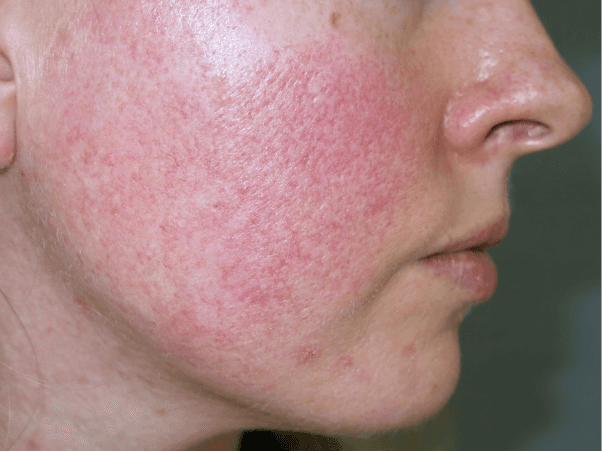
(Source: BPAC 2016, Best Practice Journal BPJ: 75)
Key Characteristics of Vascular Redness
✔️ Redness spreads beyond the face to the ears and neck, especially during stress or tension
✔️ Immediate flushing in response to spicy foods (capsaicin), alcohol, or hot air from heaters
✔️ Red or bluish visible blood vessels become prominent on the face
The causes of vascular redness vary and may include:
Long-term sun exposure
Skin aging
Chronic dermatitis
Misuse or overuse of topical steroid creams
This type of redness can often be treated with vascular lasers that specifically target red pigmentation.
Type 2: Inflammatory Flushing (Rosacea)
The second type is inflammatory redness, which is more than just temporary flushing.
Medically, this is known as rosacea, where chronic inflammation occurs under the skin.
If excess sebum or seborrheic dermatitis is left untreated, the skin becomes a chronic battlefield:
The epidermis gradually thins
Underlying blood vessels expand permanently
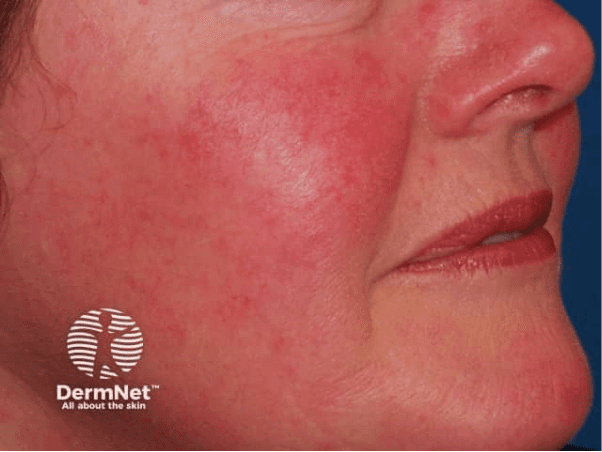
(Source: dermanetnz.org)
Typical features include:
Redness mainly on the nose and cheeks
Burning or stinging sensations
Pimples resembling acne and enlarged pores
Natural improvement is unlikely. If left untreated, sebaceous glands and connective tissue may proliferate, causing pores to enlarge and skin to appear like orange peel, necessitating active treatment.
Why Identifying Redness Type Matters
Although facial redness may look similar, the underlying cause differs:
Some skins are vascular-dominant
Others are driven by inflammation or barrier damage
Before treatment, it’s important to go beyond visible inspection. Imaging tools like Mark-Vu or Meta-Vu can help evaluate:
Heat distribution within the skin
Vascular and pigmentation patterns
However, imaging alone cannot determine the cause. A patient’s history of topical treatments, acne, inflammation, and timing of flare-ups must also be considered.
Conclusion
Treatment isn’t just about reducing redness, it’s about addressing the root cause of flushing. We hope this guide helps those feeling overwhelmed before treatment to find the right approach for their skin.
——
Ready to take the next step? Speak with a skincare professional to create a treatment plan that targets the root cause of your flushing, so your skin can feel calm, confident, and cared for.
FAQ: Facial Redness and Flushing
Why does my face turn red so easily?
Some people have highly reactive blood vessels that dilate quickly in response to heat, stress, or certain foods. When blood vessels expand faster than normal and take longer to return to their original state, the skin can flush easily and remain red for longer periods. This type of redness is often associated with vascular sensitivity in the skin. A professional assessment provides the most accurate identification.
Is facial redness caused by sensitive skin only?
No, redness can also result from chronic inflammation, rosacea, barrier damage, or long-term skin irritation.
What triggers vascular redness flare-ups most often?
Common triggers include spicy foods, alcohol, sudden temperature changes, stress, and sun exposure.
Can skincare help reduce facial redness?
Yes. Skincare that focuses on strengthening the skin barrier and reducing irritation may help manage redness. Products designed for sensitive skin and ingredients that support hydration and barrier repair are commonly recommended. Avoiding known triggers and using sun protection can also help minimize redness flare-ups.
Can laser treatments permanently reduce facial redness?
Laser treatments can effectively target and reduce vascular redness over time. Personalized sessions offered by REPIC Clinic, are designed to deliver safe results.
No need to fight skin redness on your own!
Book a consultation at REPIC Clinic now!
Tags:
Redness
Pigmentation
Share this blog
Related Posts.
Looking for more expert insights? Explore these articles from our team of skincare specialists.
Skincare Recommendations
Back to Menu
Rewrite Your Beauty Story with REPIC Clinic
The more you understand your skin, the better decisions you can make about your daily habits and long-term skincare plan. Knowledge is the first step toward healthy, confident skin.
Ready to discover what your skin truly needs?
Back to Menu
What Your Redness Type Says About Your Skin
Facial Redness Types and What They Mean for Skin Health
“Different Skin, One Standard — Centered on You.”
Hello, this is Repic Clinic.
Many people experience frequent facial redness, often appearing without warning.
Sudden temperature changes, stressful situations, spicy foods, or even a single glass of alcohol can cause the face to heat up and turn visibly red.
This common yet often misunderstood condition is known as facial redness.
Facial redness is more than a temporary flush.
It can lead to uncomfortable misunderstandings—making someone appear as if they’ve been drinking, overly shy, or emotionally reactive— ultimately becoming a source of appearance-related stress.
Inherently Sensitive Skin: Vascular Facial Redness
Type 1: Vascular Redness (Telangiectatic) Redness
The first type of facial redness occurs when capillaries become dilated, causing fine blood vessels to appear on the skin in a spider-web–like pattern.
Under normal conditions, blood vessels expand in hot weather to release heat and constrict in cold environments to preserve body temperature.
This is a natural physiological response.
However, in people with vascular facial redness, this reaction happens much faster than average, and more importantly, the blood vessels have reduced ability to return to their original state after dilation.
As a result, redness appears easily and tends to persist.
(Source: BPAC 2016, Best Practice Journal BPJ: 75)
Key Characteristics of Vascular Redness
✔️ Redness spreads beyond the face to the ears and neck, especially during stress or tension
✔️ Immediate flushing in response to spicy foods (capsaicin), alcohol, or hot air from heaters
✔️ Red or bluish visible blood vessels become prominent on the face
The causes of vascular redness vary and may include:
Long-term sun exposure
Skin aging
Chronic dermatitis
Misuse or overuse of topical steroid creams
This type of redness can often be treated with vascular lasers that specifically target red pigmentation.
Type 2: Inflammatory Flushing (Rosacea)
The second type is inflammatory redness, which is more than just temporary flushing.
Medically, this is known as rosacea, where chronic inflammation occurs under the skin.
If excess sebum or seborrheic dermatitis is left untreated, the skin becomes a chronic battlefield:
The epidermis gradually thins
Underlying blood vessels expand permanently
(Source: dermanetnz.org)
Typical features include:
Redness mainly on the nose and cheeks
Burning or stinging sensations
Pimples resembling acne and enlarged pores
Natural improvement is unlikely. If left untreated, sebaceous glands and connective tissue may proliferate, causing pores to enlarge and skin to appear like orange peel, necessitating active treatment.
Why Identifying Redness Type Matters
Although facial redness may look similar, the underlying cause differs:
Some skins are vascular-dominant
Others are driven by inflammation or barrier damage
Before treatment, it’s important to go beyond visible inspection. Imaging tools like Mark-Vu or Meta-Vu can help evaluate:
Heat distribution within the skin
Vascular and pigmentation patterns
However, imaging alone cannot determine the cause. A patient’s history of topical treatments, acne, inflammation, and timing of flare-ups must also be considered.
Conclusion
Treatment isn’t just about reducing redness, it’s about addressing the root cause of flushing. We hope this guide helps those feeling overwhelmed before treatment to find the right approach for their skin.
——
Ready to take the next step? Speak with a skincare professional to create a treatment plan that targets the root cause of your flushing, so your skin can feel calm, confident, and cared for.
FAQ: Facial Redness and Flushing
Why does my face turn red so easily?
Some people have highly reactive blood vessels that dilate quickly in response to heat, stress, or certain foods. When blood vessels expand faster than normal and take longer to return to their original state, the skin can flush easily and remain red for longer periods. This type of redness is often associated with vascular sensitivity in the skin. A professional assessment provides the most accurate identification.
Is facial redness caused by sensitive skin only?
No, redness can also result from chronic inflammation, rosacea, barrier damage, or long-term skin irritation.
What triggers vascular redness flare-ups most often?
Common triggers include spicy foods, alcohol, sudden temperature changes, stress, and sun exposure.
Can skincare help reduce facial redness?
Yes. Skincare that focuses on strengthening the skin barrier and reducing irritation may help manage redness. Products designed for sensitive skin and ingredients that support hydration and barrier repair are commonly recommended. Avoiding known triggers and using sun protection can also help minimize redness flare-ups.
Can laser treatments permanently reduce facial redness?
Laser treatments can effectively target and reduce vascular redness over time. Personalized sessions offered by REPIC Clinic, are designed to deliver safe results.
No need to fight skin redness on your own!
Book a consultation at REPIC Clinic now!
Tags:
Redness
Pigmentation
Share this blog
Related Posts.
Looking for more expert insights? Explore these articles from our team of skincare specialists.
Skincare Recommendations
Back to Menu
Rewrite Your Beauty Story with REPIC Clinic
The more you understand your skin, the better decisions you can make about your daily habits and long-term skincare plan. Knowledge is the first step toward healthy, confident skin.
Ready to discover what your skin truly needs?
Back to Menu
What Your Redness Type Says About Your Skin
Facial Redness Types and What They Mean for Skin Health
“Different Skin, One Standard — Centered on You.”
Hello, this is Repic Clinic.
Many people experience frequent facial redness, often appearing without warning.
Sudden temperature changes, stressful situations, spicy foods, or even a single glass of alcohol can cause the face to heat up and turn visibly red.
This common yet often misunderstood condition is known as facial redness.
Facial redness is more than a temporary flush.
It can lead to uncomfortable misunderstandings—making someone appear as if they’ve been drinking, overly shy, or emotionally reactive— ultimately becoming a source of appearance-related stress.
Inherently Sensitive Skin: Vascular Facial Redness
Type 1: Vascular Redness (Telangiectatic) Redness
The first type of facial redness occurs when capillaries become dilated, causing fine blood vessels to appear on the skin in a spider-web–like pattern.
Under normal conditions, blood vessels expand in hot weather to release heat and constrict in cold environments to preserve body temperature.
This is a natural physiological response.
However, in people with vascular facial redness, this reaction happens much faster than average, and more importantly, the blood vessels have reduced ability to return to their original state after dilation.
As a result, redness appears easily and tends to persist.
(Source: BPAC 2016, Best Practice Journal BPJ: 75)
Key Characteristics of Vascular Redness
✔️ Redness spreads beyond the face to the ears and neck, especially during stress or tension
✔️ Immediate flushing in response to spicy foods (capsaicin), alcohol, or hot air from heaters
✔️ Red or bluish visible blood vessels become prominent on the face
The causes of vascular redness vary and may include:
Long-term sun exposure
Skin aging
Chronic dermatitis
Misuse or overuse of topical steroid creams
This type of redness can often be treated with vascular lasers that specifically target red pigmentation.
Type 2: Inflammatory Flushing (Rosacea)
The second type is inflammatory redness, which is more than just temporary flushing.
Medically, this is known as rosacea, where chronic inflammation occurs under the skin.
If excess sebum or seborrheic dermatitis is left untreated, the skin becomes a chronic battlefield:
The epidermis gradually thins
Underlying blood vessels expand permanently
(Source: dermanetnz.org)
Typical features include:
Redness mainly on the nose and cheeks
Burning or stinging sensations
Pimples resembling acne and enlarged pores
Natural improvement is unlikely. If left untreated, sebaceous glands and connective tissue may proliferate, causing pores to enlarge and skin to appear like orange peel, necessitating active treatment.
Why Identifying Redness Type Matters
Although facial redness may look similar, the underlying cause differs:
Some skins are vascular-dominant
Others are driven by inflammation or barrier damage
Before treatment, it’s important to go beyond visible inspection. Imaging tools like Mark-Vu or Meta-Vu can help evaluate:
Heat distribution within the skin
Vascular and pigmentation patterns
However, imaging alone cannot determine the cause. A patient’s history of topical treatments, acne, inflammation, and timing of flare-ups must also be considered.
Conclusion
Treatment isn’t just about reducing redness, it’s about addressing the root cause of flushing. We hope this guide helps those feeling overwhelmed before treatment to find the right approach for their skin.
——
Ready to take the next step? Speak with a skincare professional to create a treatment plan that targets the root cause of your flushing, so your skin can feel calm, confident, and cared for.
FAQ: Facial Redness and Flushing
Why does my face turn red so easily?
Some people have highly reactive blood vessels that dilate quickly in response to heat, stress, or certain foods. When blood vessels expand faster than normal and take longer to return to their original state, the skin can flush easily and remain red for longer periods. This type of redness is often associated with vascular sensitivity in the skin. A professional assessment provides the most accurate identification.
Is facial redness caused by sensitive skin only?
No, redness can also result from chronic inflammation, rosacea, barrier damage, or long-term skin irritation.
What triggers vascular redness flare-ups most often?
Common triggers include spicy foods, alcohol, sudden temperature changes, stress, and sun exposure.
Can skincare help reduce facial redness?
Yes. Skincare that focuses on strengthening the skin barrier and reducing irritation may help manage redness. Products designed for sensitive skin and ingredients that support hydration and barrier repair are commonly recommended. Avoiding known triggers and using sun protection can also help minimize redness flare-ups.
Can laser treatments permanently reduce facial redness?
Laser treatments can effectively target and reduce vascular redness over time. Personalized sessions offered by REPIC Clinic, are designed to deliver safe results.
No need to fight skin redness on your own!
Book a consultation at REPIC Clinic now!
Tags:
Redness
Pigmentation
Share this blog
Related Posts.
Looking for more expert insights? Explore these articles from our team of skincare specialists.
Skincare Recommendations
Back to Menu
Rewrite Your Beauty Story with
REPIC Clinic
The more you understand your skin, the better decisions you can make about your daily habits and long-term skincare plan. Knowledge is the first step toward healthy, confident skin.
Ready to discover what your skin truly needs?