Back to Menu
Ultherapy vs Thermage in Seoul: Which Lifting Treatment Works Better?
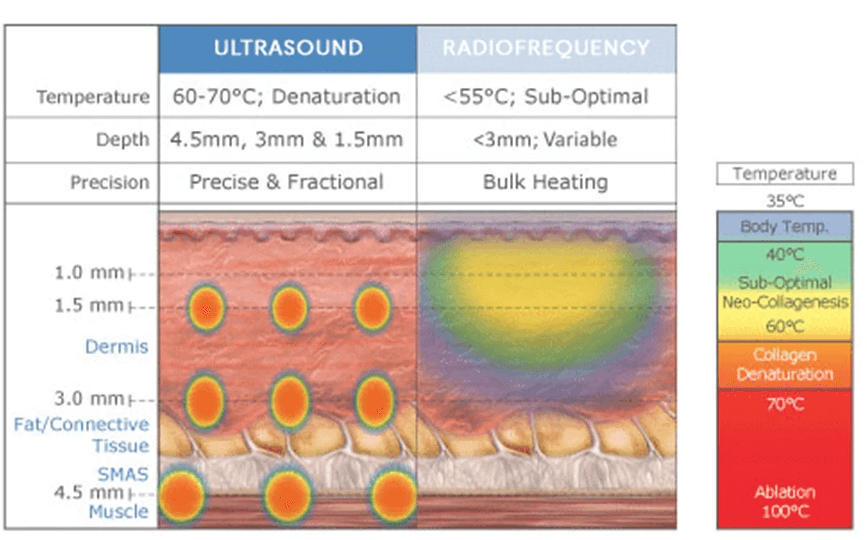
Quick Summary
Ultherapy targets deeper structural lifting
Thermage focuses more on tightening and skin quality
Ultherapy is often preferred for sagging jawlines and lower face lifting
Thermage is commonly chosen for texture, pores, and mild laxity
Many clinics combine both treatments for layered collagen stimulation
If you’re researching Ultherapy vs Thermage in Seoul, you’re probably trying to answer one question: which treatment actually works better for lifting and tightening the skin?
While both treatments stimulate collagen production, they work at different depths and use completely different technologies. Ultherapy uses focused ultrasound energy to target deeper structural layers, while Thermage uses radiofrequency to improve skin tightening and texture more superficially.
This guide explains the differences in results, pain, downtime, treatment depth, and which option may fit different skin concerns.
What Is Ultherapy?
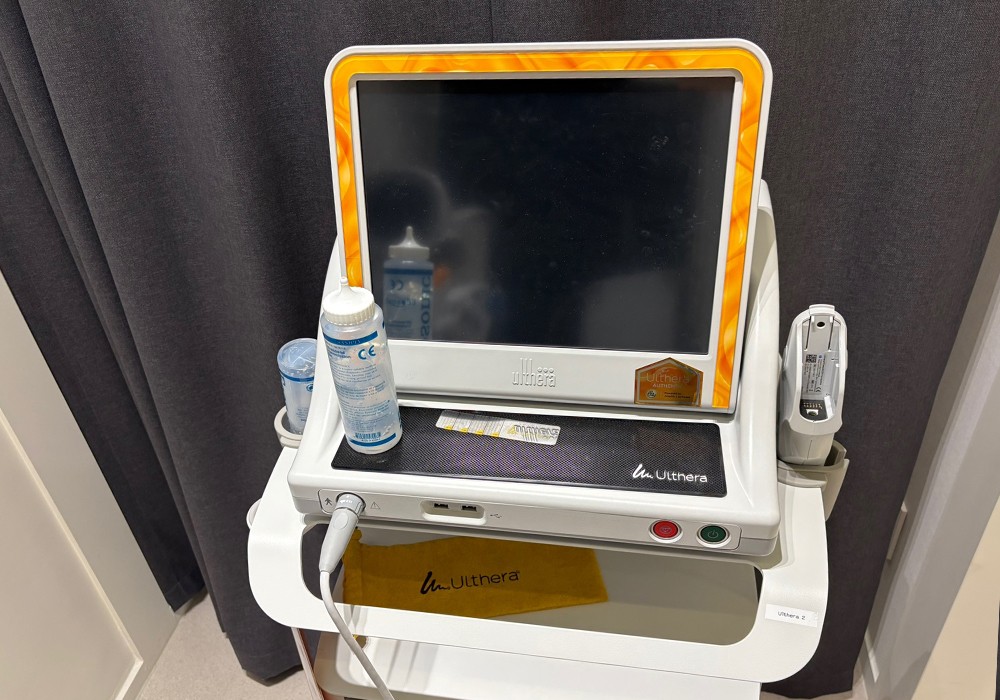
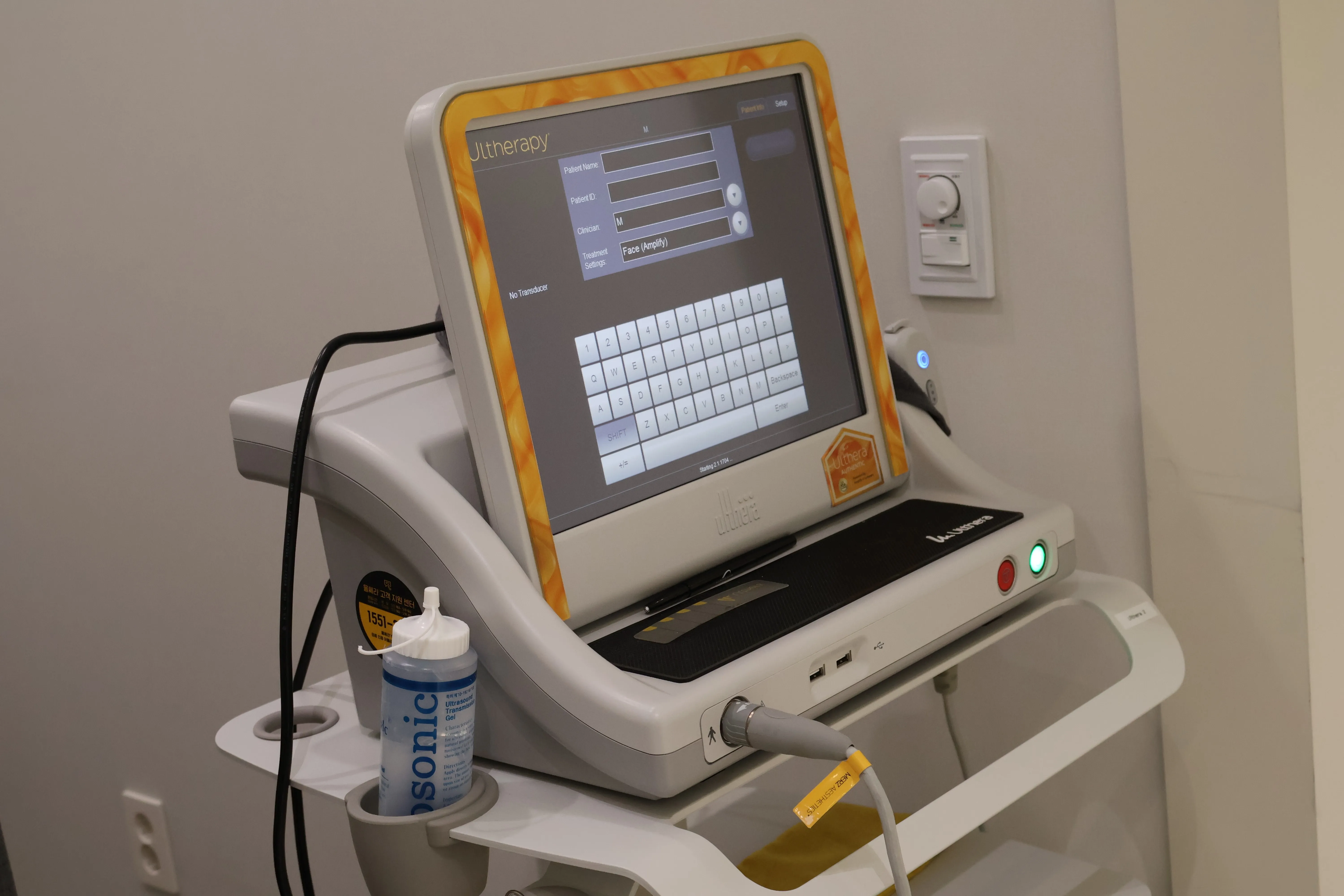
Ultherapy is a High-Intensity Focused Ultrasound (HIFU) device developed by Merz Aesthetics in Germany.
Ultherapy is a non-surgical lifting treatment that uses focused ultrasound energy to stimulate collagen production deep beneath the skin.
Unlike many skin-tightening treatments that mainly target superficial layers, Ultherapy reaches the SMAS layer — the same structural layer addressed during surgical facelifts.
Ultherapy is commonly used for:
Jawline sagging
Lower face laxity
Mild double chin concerns
Loose skin around the cheeks
Brow lifting
Neck tightening
Because it targets deeper layers, Ultherapy is usually chosen for lifting-focused concerns rather than surface texture improvement.
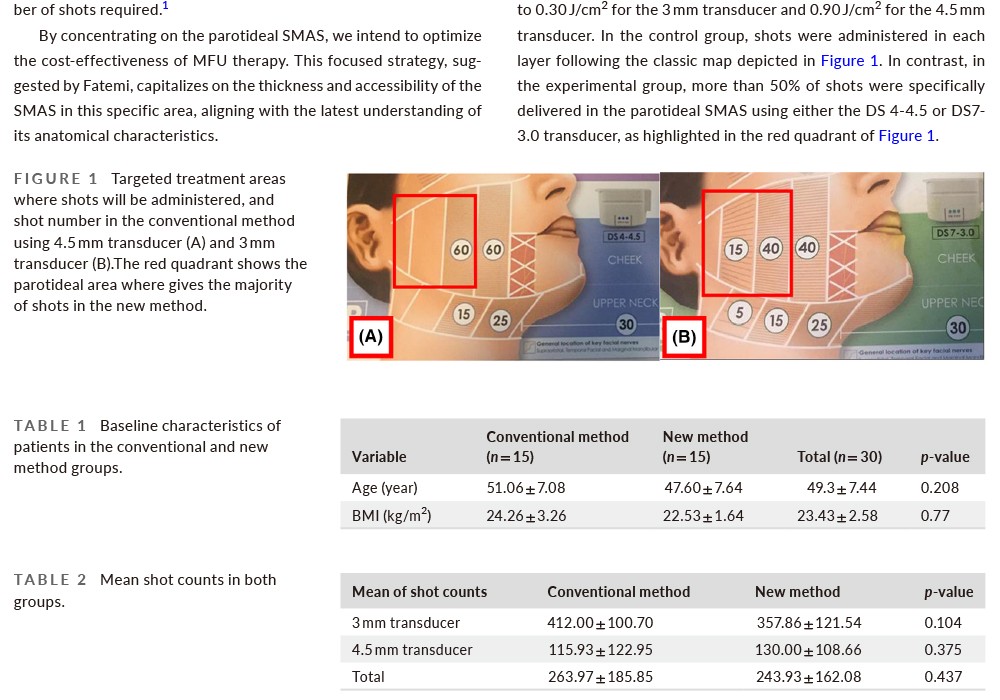
Source: New Ultherapy method: Utilizing novel surgical and anatomical concepts yields outstanding results.
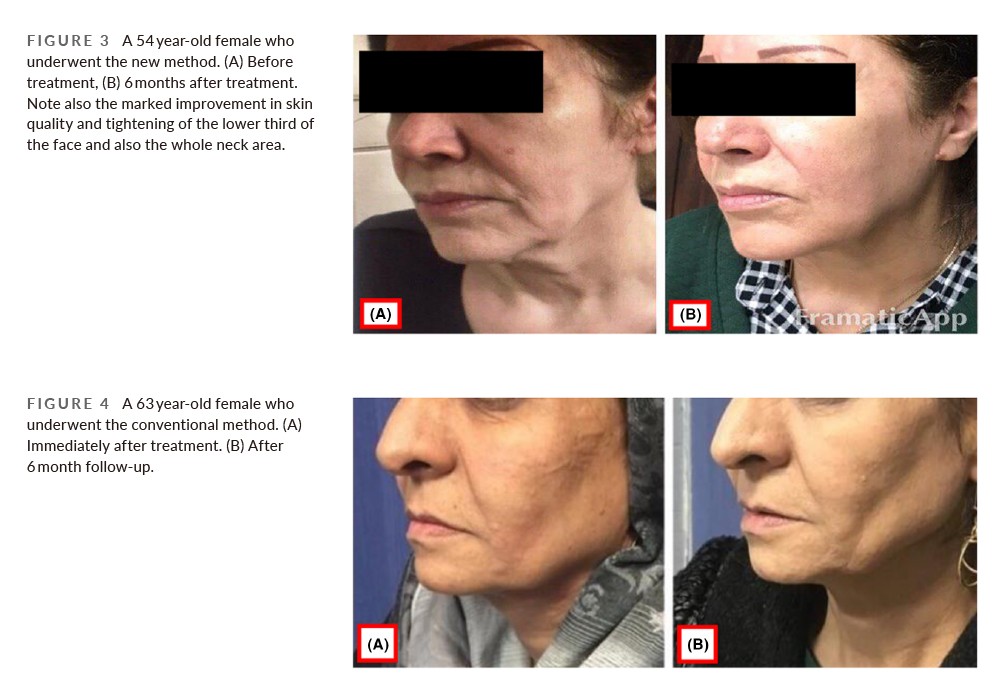
Results after 6 months.
It delivers energy to the SMAS (superficial musculoaponeurotic system) layer, stimulating collagen regeneration and tissue contraction to achieve lifting effects.
Think of it like grilling squid on a hot stone, just as the heat shrinks the squid, Ulthera contracts the fascia to lift the skin.

Target layers: Can be adjusted for different areas to improve elasticity
Clinical evidence: Studies on Korean patients show reduced pore number and size as well
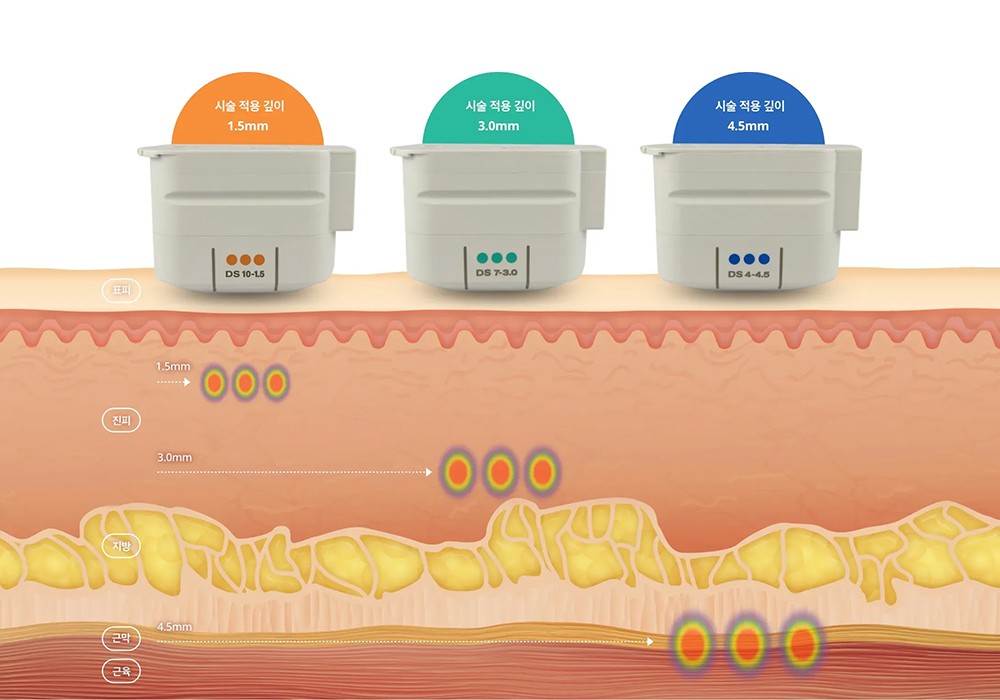
The treatment tip can be adjusted according to the target layer
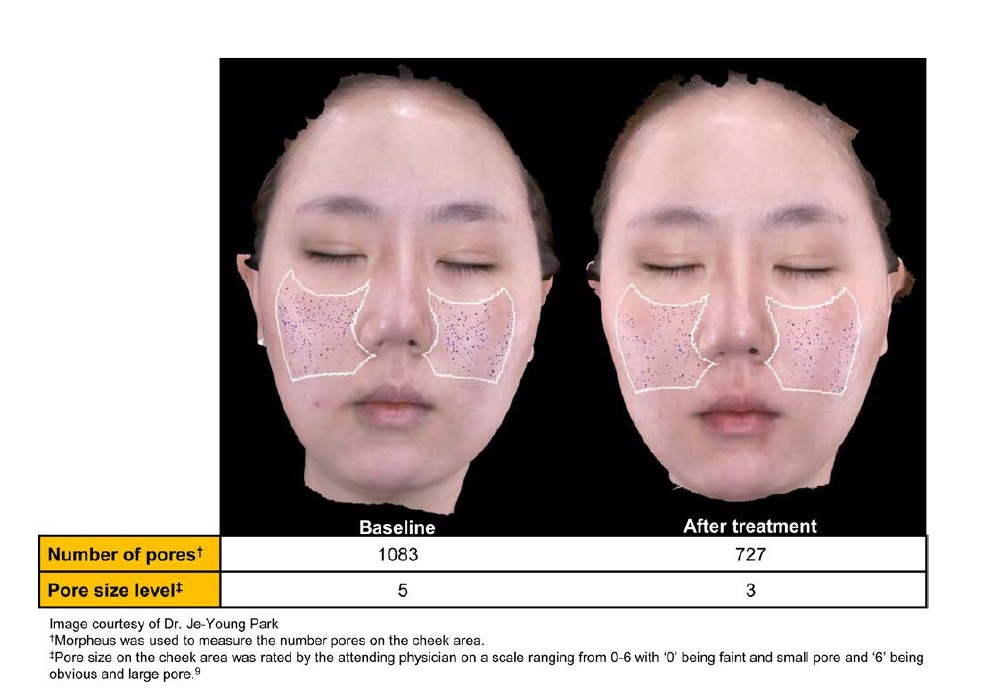
Reference: Treatment Protocol on Using Microfocused Ultrasound with Visualization for Skin Quality Improvement: The Korean Experience
What is Thermage?
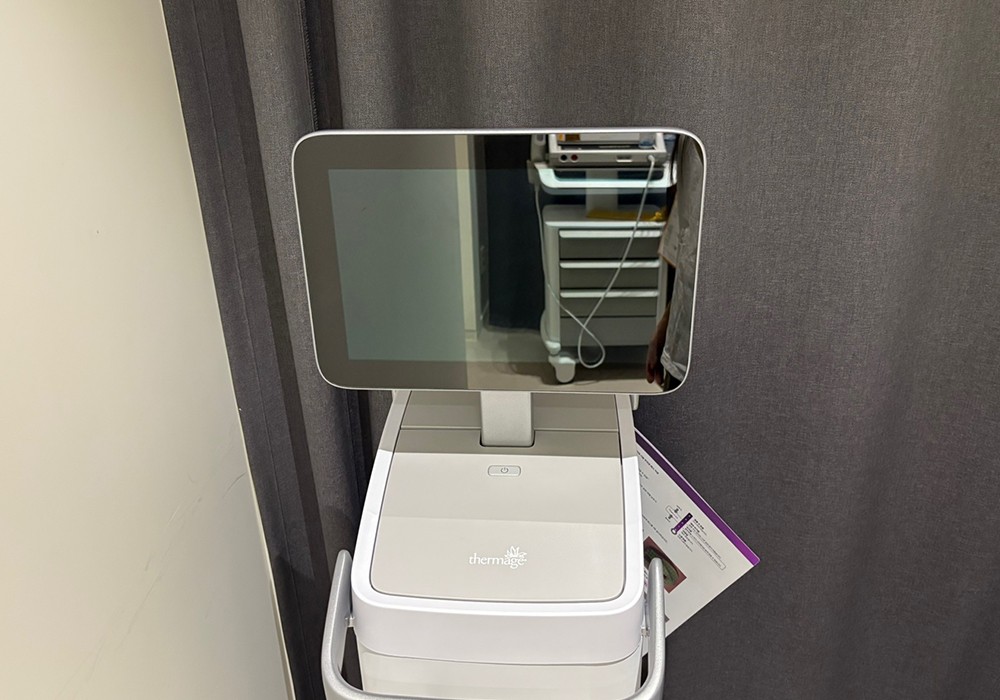
Thermage is a radiofrequency (RF) skin-tightening treatment designed to improve skin firmness, elasticity, and texture.
Instead of targeting the deeper SMAS layer, Thermage primarily heats collagen-rich dermal layers to trigger remodeling and tightening.
Thermage is commonly used for:
Mild skin laxity
Enlarged pores
Crepey skin texture
Fine lines
Preventative anti-aging
Overall skin firmness
At REPIC Clinic, patients in their 30s and early 40s commonly choose Thermage for preventative tightening and texture improvement before deeper sagging develops.
Thermage uses monopolar radiofrequency (RF) to rapidly heat the dermis:
Contracts existing dermal tissue
Stimulates new collagen formation
Provides both lifting and skin tightening effects
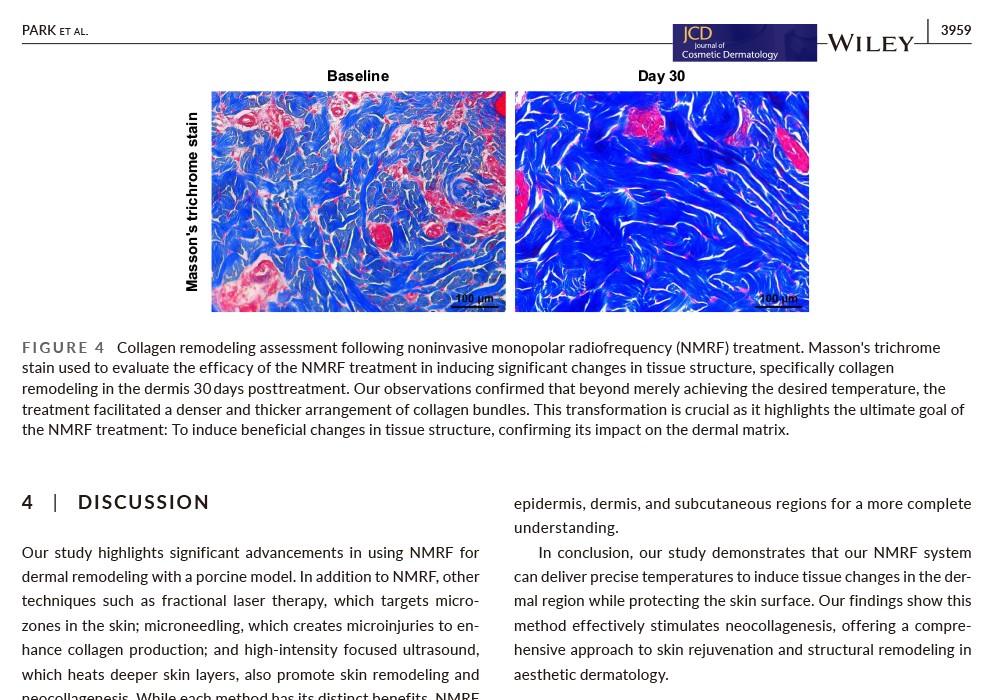
Reference: Monopolar radiofrequency for dermal temperature regulation and remodeling: A porcine model study
After 30 days, microscopic observations show increased collagen density and dermal thickness.
Ulthera vs. Thermage: Key Differences
Feature | Ulthera | Thermage |
|---|---|---|
Device Type | Ultrasound (HIFU) | Monopolar RF |
Treatment Depth | SMAS 4.5mm / Deep dermis 3mm / Upper dermis 1mm | Dermis |
Pain (1–5 scale) | 3 | 2 |
Main Effects | Facial contour lifting, sagging cheeks | Lifting, skin tightening, fine lines |
Duration of Effect | 6–12 months | ~12 months |
Side Effects | Cheek hollowing, burns | Burns |
Does Ultherapy Hurt More Than Thermage?
Short answer: usually yes. Ultherapy often feels more uncomfortable because ultrasound energy is delivered deeper into the skin near structural layers and nerves.
Patients commonly describe Ultherapy as:
deep heat sensations
zapping discomfort
sharp temporary pain
pressure under the skin
Thermage, on the other hand, is more commonly described as:
hot surface sensations
repetitive heat pulses
milder discomfort overall
Pain levels vary depending on:
treatment intensity
skin sensitivity
provider technique
facial area being treated
At REPIC Clinic in Gangnam, Seoul, numbing methods and energy customization are commonly used to improve comfort during both treatments.
Which Treatment Is Better for Different Skin Concerns?
For Sagging Jawlines and Lower Face Laxity
Ultherapy is usually the stronger option because it targets deeper structural support layers.
For Enlarged Pores and Skin Texture
Thermage is often preferred because radiofrequency treatments can improve firmness and overall skin texture more evenly.
For Preventative Anti-Aging in Your 30s
Thermage is commonly chosen for early collagen maintenance and tightening before major sagging develops.
For Moderate to Advanced Skin Laxity
Ultherapy is often recommended for patients with more visible lifting concerns.
For Combination Rejuvenation
Many clinics combine Ultherapy and Thermage because the treatments target different skin depths.
Why Combine Ulthera and Thermage?
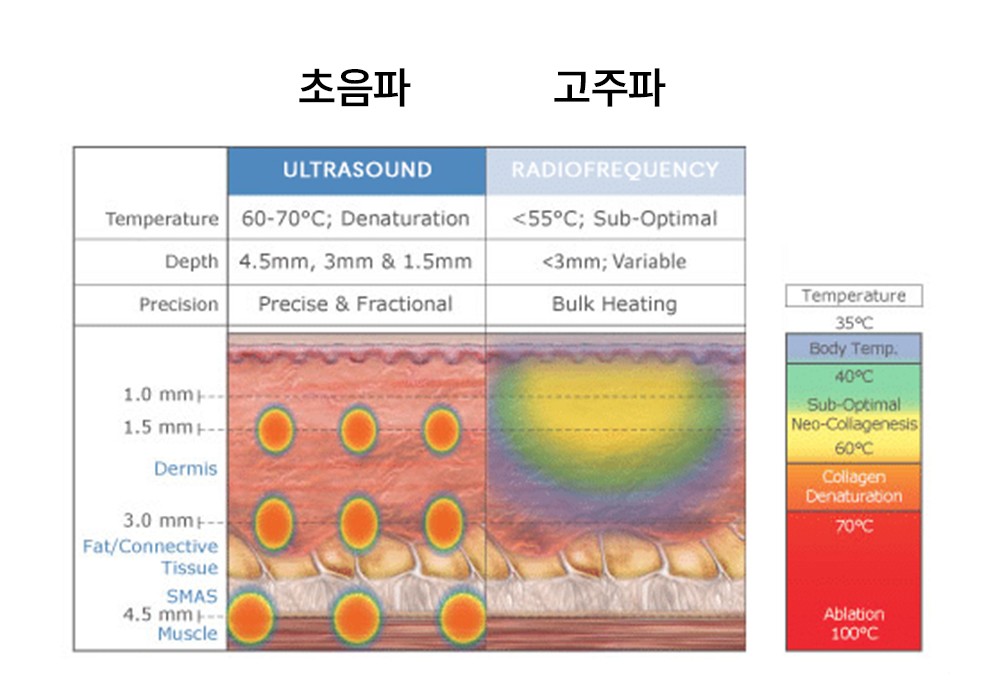
Since the two devices target different skin layers, combining them creates a synergistic effect, improving both:
Inner layer lifting (Ulthera)
Outer layer tightening (Thermage)
Additionally, Ulthera’s effect develops gradually, while Thermage shows more immediate improvement. Using both can produce faster and more pronounced results, which is why many patients choose a combined treatment called “UlThermage.”
UlThermage Treatment Tips
Combination isn’t always better: Selection should be based on skin type, concerns, and elasticity
Facial volume and contouring: Ulthera is ideal
Thin skin with elasticity concerns: Thermage can provide effective improvement
More shots ≠ better results: Excess energy can cause burns or hollows
The key is personalized treatment planning, adjusting energy and design according to skin condition, age, and target improvements.
Personalized Evaluation at Repic Clinic
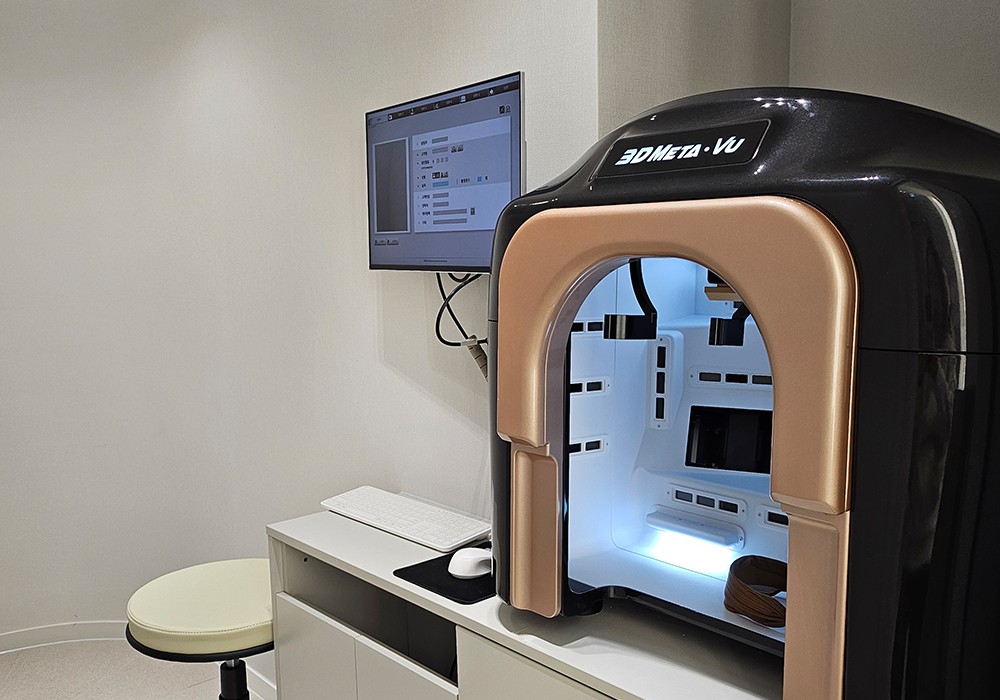
At Repic, we use 3D Meta-VU imaging to:
Measure facial length and angles
Simulate aging changes
Evaluate individual results in detail
This allows our doctors to design customized treatment plans for each patient.
Summary
Ulthera: Focuses on deep lifting via SMAS
Thermage: Targets dermis for tightening and collagen regeneration
Combination (UlThermage): Maximizes lifting, tightening, and overall skin improvement
If you’re unsure whether to combine treatments, Repic provides precision skin diagnostics and personalized consultations to determine the optimal plan.
FAQ: Thermage and Ultherapy
Which lasts longer: Ultherapy or Thermage?
Ultherapy results often last longer for lifting-focused concerns because the treatment targets deeper structural layers.
Is Ultherapy more painful than Thermage?
Most patients report that Ultherapy feels more intense because ultrasound energy reaches deeper tissues.
Which treatment is better for jowls?
Ultherapy is commonly preferred for jawline and jowl lifting because it targets deeper support structures.
Can Ultherapy melt facial fat?
In some cases, aggressive energy settings may contribute to facial fat reduction. Proper patient selection and technique are important.
Is Thermage better for pores and texture?
Thermage is commonly chosen for improving skin texture, enlarged pores, and mild skin laxity.
Can Ultherapy and Thermage be combined?
Yes. Many clinics combine both treatments for layered collagen stimulation and more comprehensive rejuvenation.
What age is best for Ultherapy or Thermage?
Thermage is often popular in the 30s and early 40s, while Ultherapy becomes more common as skin laxity progresses.
Which treatment has less downtime?
Both treatments have relatively minimal downtime, though Thermage is usually associated with slightly milder recovery.
Not Sure Whether Ultherapy or Thermage Is Right for You?
At REPIC Clinic in Gangnam, Seoul, we evaluate skin laxity, facial structure, collagen loss, and treatment goals before recommending Ultherapy, Thermage, or combination lifting approaches.
Tags:
Lifting
Antiaging
Share this blog
Related Posts.
Looking for more expert insights? Explore these articles from our team of skincare specialists.
Skincare Recommendations

Back to Menu
Back to Menu
Ultherapy vs Thermage in Seoul: Which Lifting Treatment Works Better?
Quick Summary
Ultherapy targets deeper structural lifting
Thermage focuses more on tightening and skin quality
Ultherapy is often preferred for sagging jawlines and lower face lifting
Thermage is commonly chosen for texture, pores, and mild laxity
Many clinics combine both treatments for layered collagen stimulation
If you’re researching Ultherapy vs Thermage in Seoul, you’re probably trying to answer one question: which treatment actually works better for lifting and tightening the skin?
While both treatments stimulate collagen production, they work at different depths and use completely different technologies. Ultherapy uses focused ultrasound energy to target deeper structural layers, while Thermage uses radiofrequency to improve skin tightening and texture more superficially.
This guide explains the differences in results, pain, downtime, treatment depth, and which option may fit different skin concerns.
What Is Ultherapy?
Ultherapy is a High-Intensity Focused Ultrasound (HIFU) device developed by Merz Aesthetics in Germany.
Ultherapy is a non-surgical lifting treatment that uses focused ultrasound energy to stimulate collagen production deep beneath the skin.
Unlike many skin-tightening treatments that mainly target superficial layers, Ultherapy reaches the SMAS layer — the same structural layer addressed during surgical facelifts.
Ultherapy is commonly used for:
Jawline sagging
Lower face laxity
Mild double chin concerns
Loose skin around the cheeks
Brow lifting
Neck tightening
Because it targets deeper layers, Ultherapy is usually chosen for lifting-focused concerns rather than surface texture improvement.
Source: New Ultherapy method: Utilizing novel surgical and anatomical concepts yields outstanding results.
Results after 6 months.
It delivers energy to the SMAS (superficial musculoaponeurotic system) layer, stimulating collagen regeneration and tissue contraction to achieve lifting effects.
Think of it like grilling squid on a hot stone, just as the heat shrinks the squid, Ulthera contracts the fascia to lift the skin.
Target layers: Can be adjusted for different areas to improve elasticity
Clinical evidence: Studies on Korean patients show reduced pore number and size as well
The treatment tip can be adjusted according to the target layer
Reference: Treatment Protocol on Using Microfocused Ultrasound with Visualization for Skin Quality Improvement: The Korean Experience
What is Thermage?
Thermage is a radiofrequency (RF) skin-tightening treatment designed to improve skin firmness, elasticity, and texture.
Instead of targeting the deeper SMAS layer, Thermage primarily heats collagen-rich dermal layers to trigger remodeling and tightening.
Thermage is commonly used for:
Mild skin laxity
Enlarged pores
Crepey skin texture
Fine lines
Preventative anti-aging
Overall skin firmness
At REPIC Clinic, patients in their 30s and early 40s commonly choose Thermage for preventative tightening and texture improvement before deeper sagging develops.
Thermage uses monopolar radiofrequency (RF) to rapidly heat the dermis:
Contracts existing dermal tissue
Stimulates new collagen formation
Provides both lifting and skin tightening effects
Reference: Monopolar radiofrequency for dermal temperature regulation and remodeling: A porcine model study
After 30 days, microscopic observations show increased collagen density and dermal thickness.
Ulthera vs. Thermage: Key Differences
Feature | Ulthera | Thermage |
|---|---|---|
Device Type | Ultrasound (HIFU) | Monopolar RF |
Treatment Depth | SMAS 4.5mm / Deep dermis 3mm / Upper dermis 1mm | Dermis |
Pain (1–5 scale) | 3 | 2 |
Main Effects | Facial contour lifting, sagging cheeks | Lifting, skin tightening, fine lines |
Duration of Effect | 6–12 months | ~12 months |
Side Effects | Cheek hollowing, burns | Burns |
Does Ultherapy Hurt More Than Thermage?
Short answer: usually yes. Ultherapy often feels more uncomfortable because ultrasound energy is delivered deeper into the skin near structural layers and nerves.
Patients commonly describe Ultherapy as:
deep heat sensations
zapping discomfort
sharp temporary pain
pressure under the skin
Thermage, on the other hand, is more commonly described as:
hot surface sensations
repetitive heat pulses
milder discomfort overall
Pain levels vary depending on:
treatment intensity
skin sensitivity
provider technique
facial area being treated
At REPIC Clinic in Gangnam, Seoul, numbing methods and energy customization are commonly used to improve comfort during both treatments.
Which Treatment Is Better for Different Skin Concerns?
For Sagging Jawlines and Lower Face Laxity
Ultherapy is usually the stronger option because it targets deeper structural support layers.
For Enlarged Pores and Skin Texture
Thermage is often preferred because radiofrequency treatments can improve firmness and overall skin texture more evenly.
For Preventative Anti-Aging in Your 30s
Thermage is commonly chosen for early collagen maintenance and tightening before major sagging develops.
For Moderate to Advanced Skin Laxity
Ultherapy is often recommended for patients with more visible lifting concerns.
For Combination Rejuvenation
Many clinics combine Ultherapy and Thermage because the treatments target different skin depths.
Why Combine Ulthera and Thermage?
Since the two devices target different skin layers, combining them creates a synergistic effect, improving both:
Inner layer lifting (Ulthera)
Outer layer tightening (Thermage)
Additionally, Ulthera’s effect develops gradually, while Thermage shows more immediate improvement. Using both can produce faster and more pronounced results, which is why many patients choose a combined treatment called “UlThermage.”
UlThermage Treatment Tips
Combination isn’t always better: Selection should be based on skin type, concerns, and elasticity
Facial volume and contouring: Ulthera is ideal
Thin skin with elasticity concerns: Thermage can provide effective improvement
More shots ≠ better results: Excess energy can cause burns or hollows
The key is personalized treatment planning, adjusting energy and design according to skin condition, age, and target improvements.
Personalized Evaluation at Repic Clinic
At Repic, we use 3D Meta-VU imaging to:
Measure facial length and angles
Simulate aging changes
Evaluate individual results in detail
This allows our doctors to design customized treatment plans for each patient.
Summary
Ulthera: Focuses on deep lifting via SMAS
Thermage: Targets dermis for tightening and collagen regeneration
Combination (UlThermage): Maximizes lifting, tightening, and overall skin improvement
If you’re unsure whether to combine treatments, Repic provides precision skin diagnostics and personalized consultations to determine the optimal plan.
FAQ: Thermage and Ultherapy
Which lasts longer: Ultherapy or Thermage?
Ultherapy results often last longer for lifting-focused concerns because the treatment targets deeper structural layers.
Is Ultherapy more painful than Thermage?
Most patients report that Ultherapy feels more intense because ultrasound energy reaches deeper tissues.
Which treatment is better for jowls?
Ultherapy is commonly preferred for jawline and jowl lifting because it targets deeper support structures.
Can Ultherapy melt facial fat?
In some cases, aggressive energy settings may contribute to facial fat reduction. Proper patient selection and technique are important.
Is Thermage better for pores and texture?
Thermage is commonly chosen for improving skin texture, enlarged pores, and mild skin laxity.
Can Ultherapy and Thermage be combined?
Yes. Many clinics combine both treatments for layered collagen stimulation and more comprehensive rejuvenation.
What age is best for Ultherapy or Thermage?
Thermage is often popular in the 30s and early 40s, while Ultherapy becomes more common as skin laxity progresses.
Which treatment has less downtime?
Both treatments have relatively minimal downtime, though Thermage is usually associated with slightly milder recovery.
Not Sure Whether Ultherapy or Thermage Is Right for You?
At REPIC Clinic in Gangnam, Seoul, we evaluate skin laxity, facial structure, collagen loss, and treatment goals before recommending Ultherapy, Thermage, or combination lifting approaches.
Tags:
Lifting
Antiaging
Share this blog
Related Posts.
Looking for more expert insights? Explore these articles from our team of skincare specialists.
Skincare Recommendations
Back to Menu
Back to Menu
Ultherapy vs Thermage in Seoul: Which Lifting Treatment Works Better?
Quick Summary
Ultherapy targets deeper structural lifting
Thermage focuses more on tightening and skin quality
Ultherapy is often preferred for sagging jawlines and lower face lifting
Thermage is commonly chosen for texture, pores, and mild laxity
Many clinics combine both treatments for layered collagen stimulation
If you’re researching Ultherapy vs Thermage in Seoul, you’re probably trying to answer one question: which treatment actually works better for lifting and tightening the skin?
While both treatments stimulate collagen production, they work at different depths and use completely different technologies. Ultherapy uses focused ultrasound energy to target deeper structural layers, while Thermage uses radiofrequency to improve skin tightening and texture more superficially.
This guide explains the differences in results, pain, downtime, treatment depth, and which option may fit different skin concerns.
What Is Ultherapy?
Ultherapy is a High-Intensity Focused Ultrasound (HIFU) device developed by Merz Aesthetics in Germany.
Ultherapy is a non-surgical lifting treatment that uses focused ultrasound energy to stimulate collagen production deep beneath the skin.
Unlike many skin-tightening treatments that mainly target superficial layers, Ultherapy reaches the SMAS layer — the same structural layer addressed during surgical facelifts.
Ultherapy is commonly used for:
Jawline sagging
Lower face laxity
Mild double chin concerns
Loose skin around the cheeks
Brow lifting
Neck tightening
Because it targets deeper layers, Ultherapy is usually chosen for lifting-focused concerns rather than surface texture improvement.
Source: New Ultherapy method: Utilizing novel surgical and anatomical concepts yields outstanding results.
Results after 6 months.
It delivers energy to the SMAS (superficial musculoaponeurotic system) layer, stimulating collagen regeneration and tissue contraction to achieve lifting effects.
Think of it like grilling squid on a hot stone, just as the heat shrinks the squid, Ulthera contracts the fascia to lift the skin.
Target layers: Can be adjusted for different areas to improve elasticity
Clinical evidence: Studies on Korean patients show reduced pore number and size as well
The treatment tip can be adjusted according to the target layer
Reference: Treatment Protocol on Using Microfocused Ultrasound with Visualization for Skin Quality Improvement: The Korean Experience
What is Thermage?
Thermage is a radiofrequency (RF) skin-tightening treatment designed to improve skin firmness, elasticity, and texture.
Instead of targeting the deeper SMAS layer, Thermage primarily heats collagen-rich dermal layers to trigger remodeling and tightening.
Thermage is commonly used for:
Mild skin laxity
Enlarged pores
Crepey skin texture
Fine lines
Preventative anti-aging
Overall skin firmness
At REPIC Clinic, patients in their 30s and early 40s commonly choose Thermage for preventative tightening and texture improvement before deeper sagging develops.
Thermage uses monopolar radiofrequency (RF) to rapidly heat the dermis:
Contracts existing dermal tissue
Stimulates new collagen formation
Provides both lifting and skin tightening effects
Reference: Monopolar radiofrequency for dermal temperature regulation and remodeling: A porcine model study
After 30 days, microscopic observations show increased collagen density and dermal thickness.
Ulthera vs. Thermage: Key Differences
Feature | Ulthera | Thermage |
|---|---|---|
Device Type | Ultrasound (HIFU) | Monopolar RF |
Treatment Depth | SMAS 4.5mm / Deep dermis 3mm / Upper dermis 1mm | Dermis |
Pain (1–5 scale) | 3 | 2 |
Main Effects | Facial contour lifting, sagging cheeks | Lifting, skin tightening, fine lines |
Duration of Effect | 6–12 months | ~12 months |
Side Effects | Cheek hollowing, burns | Burns |
Does Ultherapy Hurt More Than Thermage?
Short answer: usually yes. Ultherapy often feels more uncomfortable because ultrasound energy is delivered deeper into the skin near structural layers and nerves.
Patients commonly describe Ultherapy as:
deep heat sensations
zapping discomfort
sharp temporary pain
pressure under the skin
Thermage, on the other hand, is more commonly described as:
hot surface sensations
repetitive heat pulses
milder discomfort overall
Pain levels vary depending on:
treatment intensity
skin sensitivity
provider technique
facial area being treated
At REPIC Clinic in Gangnam, Seoul, numbing methods and energy customization are commonly used to improve comfort during both treatments.
Which Treatment Is Better for Different Skin Concerns?
For Sagging Jawlines and Lower Face Laxity
Ultherapy is usually the stronger option because it targets deeper structural support layers.
For Enlarged Pores and Skin Texture
Thermage is often preferred because radiofrequency treatments can improve firmness and overall skin texture more evenly.
For Preventative Anti-Aging in Your 30s
Thermage is commonly chosen for early collagen maintenance and tightening before major sagging develops.
For Moderate to Advanced Skin Laxity
Ultherapy is often recommended for patients with more visible lifting concerns.
For Combination Rejuvenation
Many clinics combine Ultherapy and Thermage because the treatments target different skin depths.
Why Combine Ulthera and Thermage?
Since the two devices target different skin layers, combining them creates a synergistic effect, improving both:
Inner layer lifting (Ulthera)
Outer layer tightening (Thermage)
Additionally, Ulthera’s effect develops gradually, while Thermage shows more immediate improvement. Using both can produce faster and more pronounced results, which is why many patients choose a combined treatment called “UlThermage.”
UlThermage Treatment Tips
Combination isn’t always better: Selection should be based on skin type, concerns, and elasticity
Facial volume and contouring: Ulthera is ideal
Thin skin with elasticity concerns: Thermage can provide effective improvement
More shots ≠ better results: Excess energy can cause burns or hollows
The key is personalized treatment planning, adjusting energy and design according to skin condition, age, and target improvements.
Personalized Evaluation at Repic Clinic
At Repic, we use 3D Meta-VU imaging to:
Measure facial length and angles
Simulate aging changes
Evaluate individual results in detail
This allows our doctors to design customized treatment plans for each patient.
Summary
Ulthera: Focuses on deep lifting via SMAS
Thermage: Targets dermis for tightening and collagen regeneration
Combination (UlThermage): Maximizes lifting, tightening, and overall skin improvement
If you’re unsure whether to combine treatments, Repic provides precision skin diagnostics and personalized consultations to determine the optimal plan.
FAQ: Thermage and Ultherapy
Which lasts longer: Ultherapy or Thermage?
Ultherapy results often last longer for lifting-focused concerns because the treatment targets deeper structural layers.
Is Ultherapy more painful than Thermage?
Most patients report that Ultherapy feels more intense because ultrasound energy reaches deeper tissues.
Which treatment is better for jowls?
Ultherapy is commonly preferred for jawline and jowl lifting because it targets deeper support structures.
Can Ultherapy melt facial fat?
In some cases, aggressive energy settings may contribute to facial fat reduction. Proper patient selection and technique are important.
Is Thermage better for pores and texture?
Thermage is commonly chosen for improving skin texture, enlarged pores, and mild skin laxity.
Can Ultherapy and Thermage be combined?
Yes. Many clinics combine both treatments for layered collagen stimulation and more comprehensive rejuvenation.
What age is best for Ultherapy or Thermage?
Thermage is often popular in the 30s and early 40s, while Ultherapy becomes more common as skin laxity progresses.
Which treatment has less downtime?
Both treatments have relatively minimal downtime, though Thermage is usually associated with slightly milder recovery.
Not Sure Whether Ultherapy or Thermage Is Right for You?
At REPIC Clinic in Gangnam, Seoul, we evaluate skin laxity, facial structure, collagen loss, and treatment goals before recommending Ultherapy, Thermage, or combination lifting approaches.
Tags:
Lifting
Antiaging
Share this blog
Related Posts.
Looking for more expert insights? Explore these articles from our team of skincare specialists.