Back to Menu
Dark Circle Treatments by Type: A Complete Guide
SKIN WIKI
SKIN WIKI
Dark Circle Removal Treatments by Type: A Complete Guide by REPIC Clinic
Source: NamuWiki
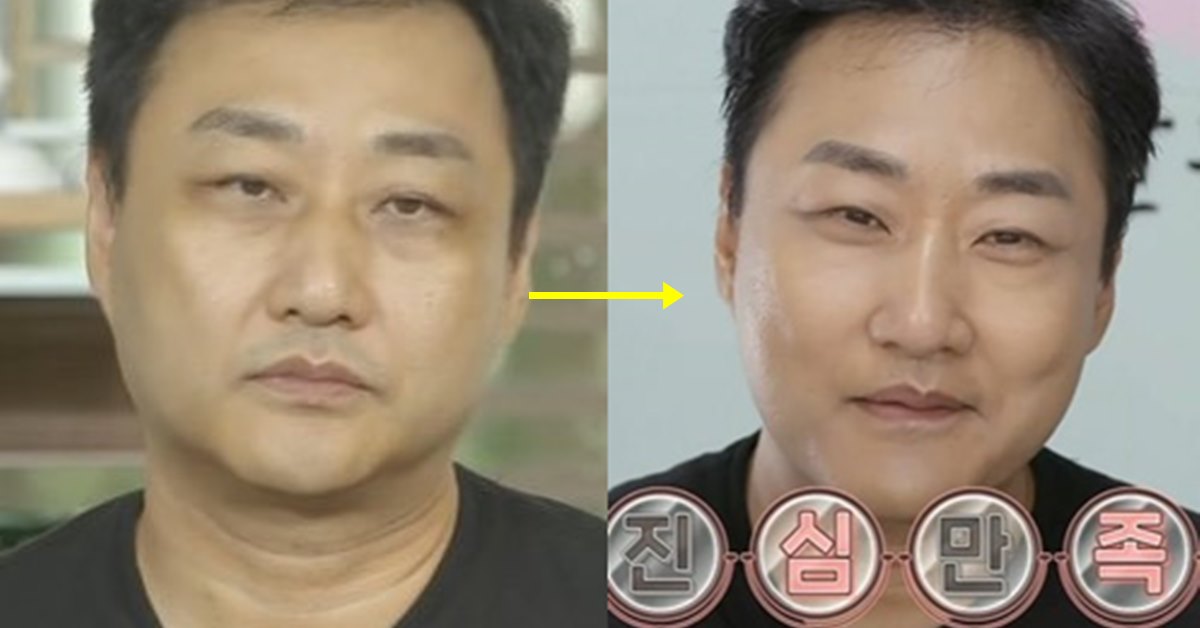
Just removing dark circles can dramatically improve your overall appearance. If you often meet people face-to-face or work in client-facing roles, you know how important a clean, well-rested look can be.
Many patients tell us the same thing:
“I don’t feel tired, but I look exhausted.”
In this guide, we’ll explain why dark circles develop and the most effective treatment options based on their causes, so you can find the solution that fits your condition.
Why Do Dark Circles Form?
As explained in our previous blog post Dark Circles: 3 Common Types and Their Causes, not all under-eye darkness is the same. Dark circles can be classified into vascular, pigmented, and structural types, and many people experience a combination of these. Because each type has a different underlying cause, choosing the right treatment approach is essential for safe, effective, and long-lasting results. In this article, we’ll focus on the most effective treatment options tailored to each type of dark circle.
1. Vascular Dark Circles (Blue or Reddish Tone)
Classification by causes of dark circles and appropriate evaluation method of dark circles.
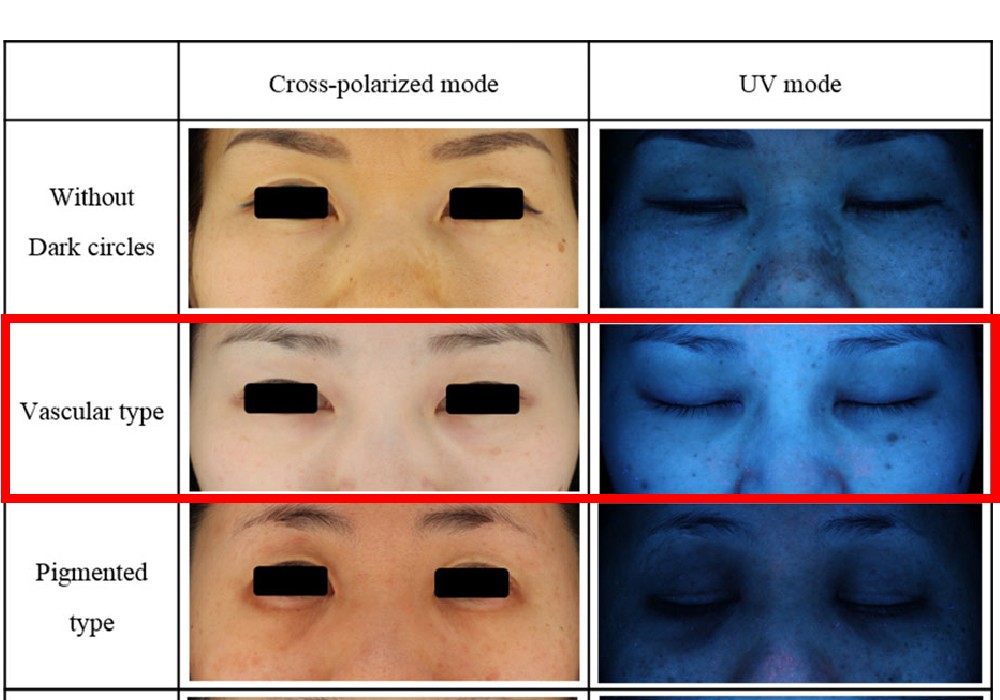
The skin under the eyes is extremely thin. Because of this:
Veins beneath the skin may show through, creating a bluish tint.
The orbicularis oculi muscle surrounding the eye can appear reddish through thin skin.
These are known as vascular dark circles, and they often look worse when you're tired or sleep-deprived.
2. Pigmented Dark Circles (Brown Tone)
Treatments of Infra-Orbital Dark Circles by Various Etiologies.
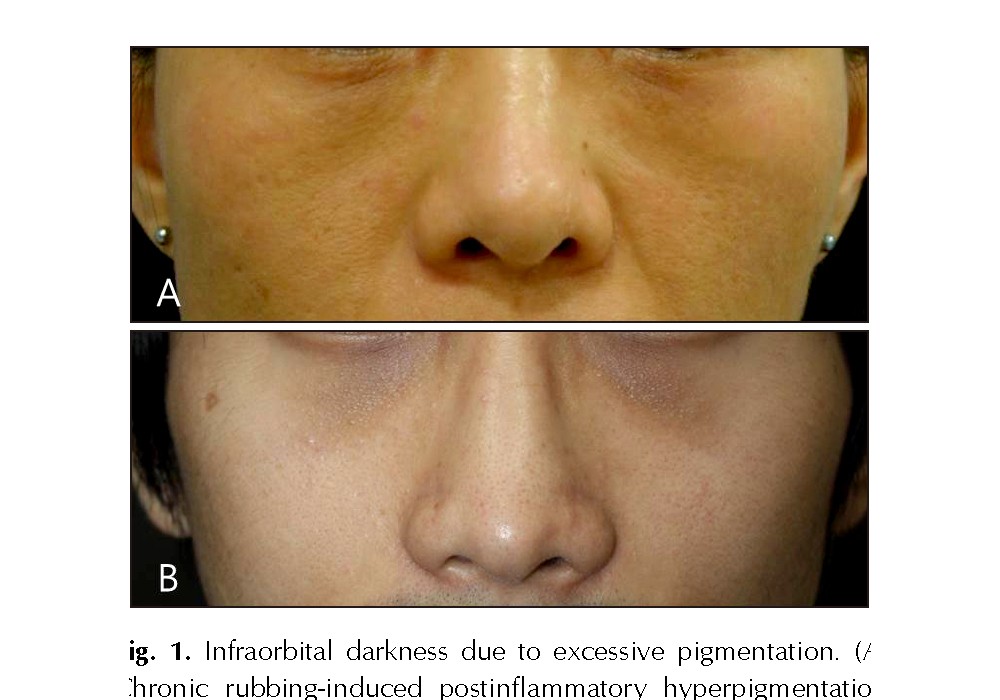
Pigmented dark circles are caused by hyperpigmentation. Common triggers include:
Atopic dermatitis
Chronic skin irritation
Frequent eye rubbing
Post-inflammatory pigmentation
They are more common in individuals with darker skin tones and may gradually worsen over time.
3. Structural Dark Circles (Shadowing from Volume Loss)
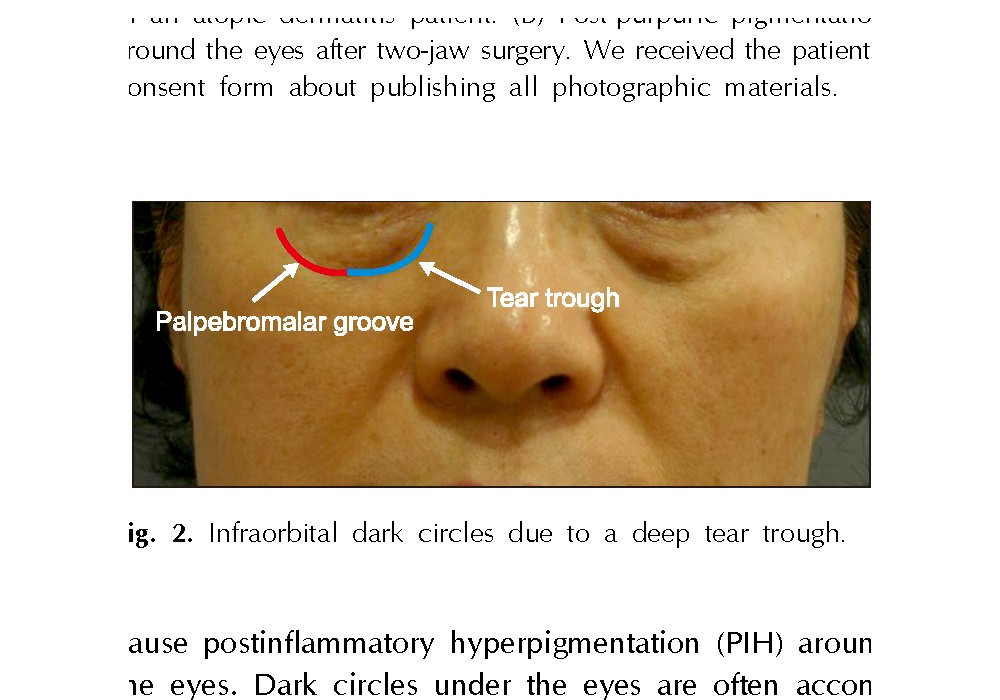
Treatments of Infra-Orbital Dark Circles by Various Etiologies.
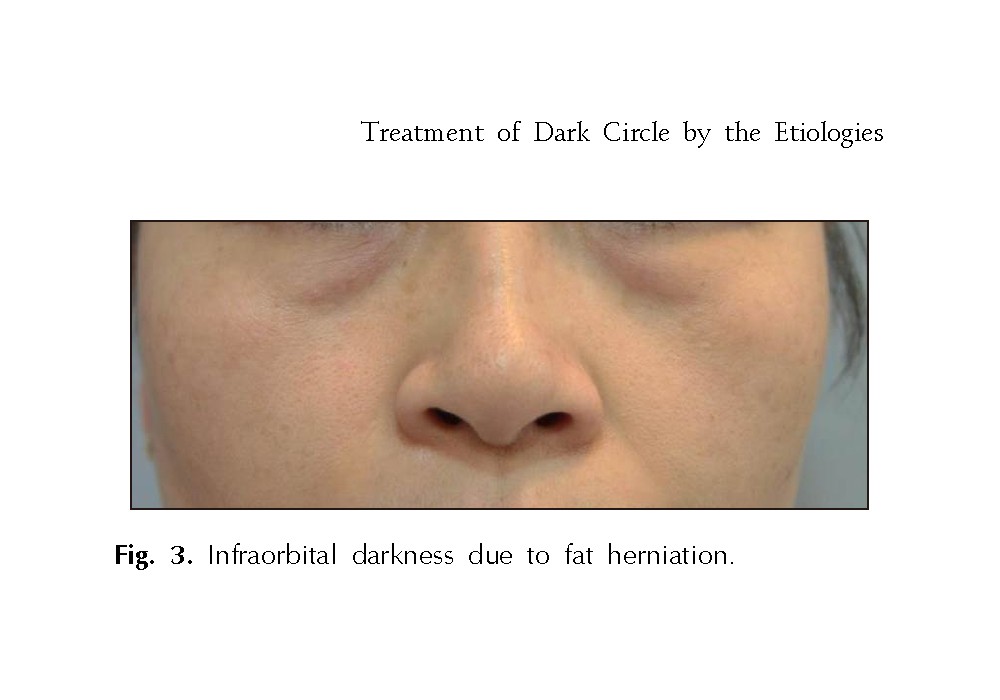
Structural dark circles are caused by anatomy and aging changes, such as:
Deep tear troughs (nasojugal groove)
Volume loss due to aging or weight loss
Protruding under-eye fat
Hollowing beneath eye bags
In these cases, the darkness is actually a shadow effect, not pigmentation.
Dark Circle Treatments by Type
Because causes vary, treatments must be customized. Here are the most effective clinical options:
1. Under-Eye Filler (Hyaluronic Acid Filler)
Best for: Structural dark circles / tear trough deformity
Real-World Evidence on the Routine Use, Efficacy, and Safety of a Hyaluronic Acid-Based Dermal Filler in the Periorbital Region.
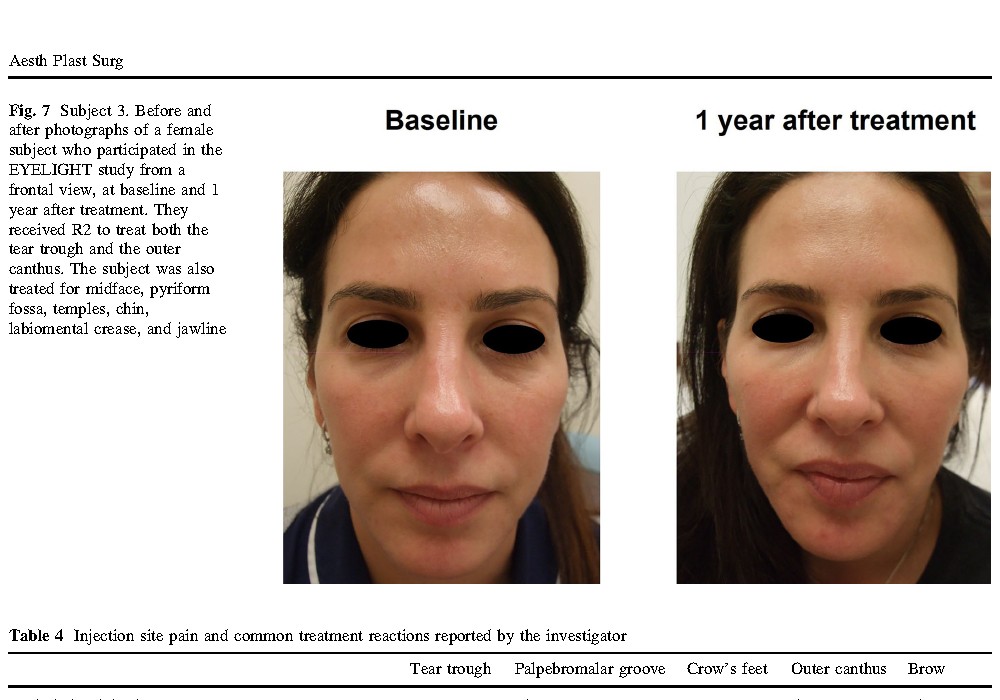
Low-viscosity, low-elasticity hyaluronic acid fillers are carefully injected into hollow areas to restore volume.
Benefits:
Fills depressed tear troughs
Reduces shadowing
Immediate visible improvement
Non-surgical solution
Important Consideration: Tyndall Effect
The under-eye skin is thin and delicate. If:
Filler particles are too large, or
The injection is placed too superficially
A bluish discoloration called the Tyndall effect may occur.
This is why expert technique and precise depth control are critical.
2. PN Skin Booster (Rejuran)
Best for: Thin, crepey, and aging under-eye skin
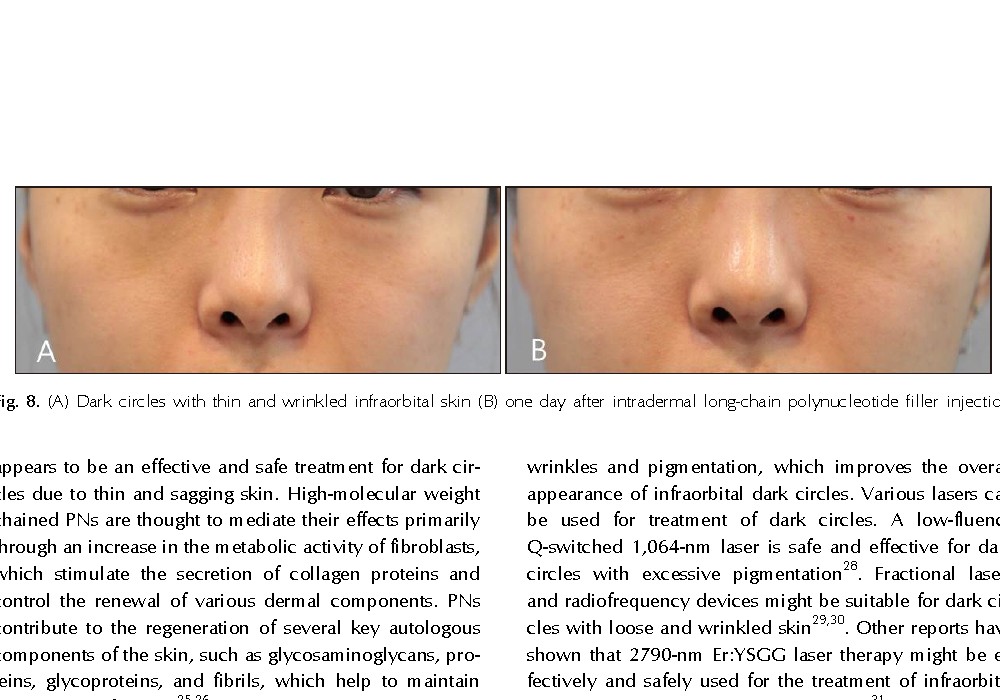
Rejuran contains PN (Polynucleotide), which:
Stimulates fibroblast activity
Increases collagen production
Improves skin elasticity
Strengthens thin under-eye skin
Rather than adding volume, this treatment improves skin quality and thickness, making vascular show-through less visible.
Ideal for:
Early aging
Fine wrinkles
Thin, fragile skin under the eyes
3. Laser Treatment for Pigmentation (1064nm Q-Switched Nd:YAG)
Best for: Pigmented dark circles
Q-Switched Nd:YAG Laser to Manage Hyperpigmentation in Asians: A Multicenter Study.
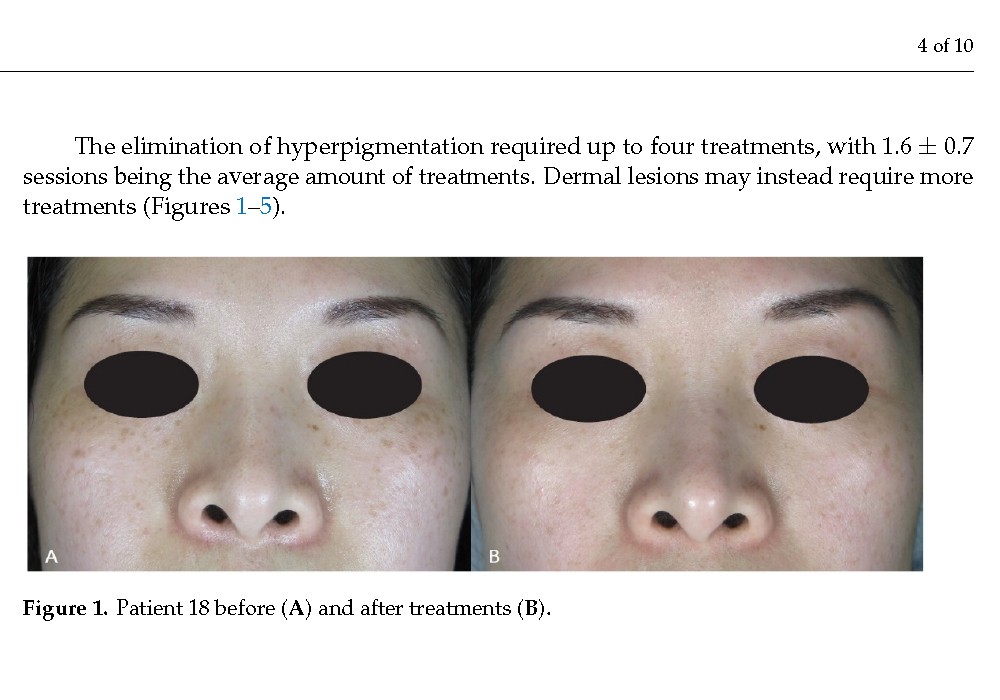
The 1064nm Q-switched Nd:YAG laser targets melanin pigment and breaks it down safely.
Benefits:
Brightens darkened under-eye skin
Improves uneven tone
Effective for post-inflammatory hyperpigmentation
Safe for Asian and darker skin types
Multiple sessions may be required for optimal results.
Why Proper Diagnosis Matters
Many patients have mixed-type dark circles, such as:
Structural + vascular
Pigmented + structural
Treating pigmentation with filler, or hollowing with laser alone, will not produce satisfactory results.
That’s why professional consultation and individualized treatment planning are essential.
Which Dark Circle Treatment Is Right for You?
The best approach depends on:
Skin thickness
Pigment depth
Tear trough anatomy
Fat protrusion
Overall facial balance
A customized plan may combine:
Under-eye filler
Skin boosters
Laser treatments
For long-lasting and natural-looking results.
Final Thoughts
If dark circles are making you look tired, stressed, or older than you feel, there are effective and minimally invasive solutions available.
The key is identifying the exact cause and choosing the right treatment strategy.
If you have more questions about dark circle removal treatments, feel free to leave a comment or reach out for professional consultation.
Brighter, fresher-looking eyes are absolutely achievable.
FAQ: Dark Circle Treatments
How can I identify my dark circle type accurately?
You can try the pinch and stretch test at home. If the color lightens, it’s usually vascular; if it stays dark, it’s likely pigmented; if it changes with lighting or angles, it may be structural shadowing. For a precise assessment, a professional consultation is recommended.
Why do I look tired even when I’m well rested?
In many cases, dark circles are not related to fatigue. Structural features such as tear trough hollows, thin under-eye skin, or pigmentation can create a constant shadow or discoloration under the eyes. This can make someone appear tired even when they feel fully rested.
What is under-eye filler and how does it help dark circles?
Under-eye filler is a treatment that uses hyaluronic acid filler to restore volume in hollow areas beneath the eyes. By filling the tear trough region, the shadow effect is reduced and the under-eye area can appear brighter and smoother. Results are usually visible immediately, although final results become clearer after any swelling subsides.
Can someone have more than one type of dark circle?
Yes. Many people experience mixed-type dark circles, such as: Structural + vascular Pigmented + structural Vascular + pigmented In these cases, a combination of treatments may be recommended to address the different causes.
How do I know which dark circle treatment is right for me?
The most effective treatment depends on several factors, including: Skin thickness Depth of pigmentation Tear trough anatomy Presence of under-eye fat or volume loss A professional consultation can help determine the underlying cause and create a treatment plan tailored to the individual.
Tired of looking tired?
Book a consultation at Repic Clinic now!
Tags:
Eyes
Treatment Guides
Share this blog
Related Posts.
Looking for more expert insights? Explore these articles from our team of skincare specialists.


Skincare Recommendations

Back to Menu
Back to Menu
Dark Circle Treatments by Type: A Complete Guide
SKIN WIKI
SKIN WIKI
Dark Circle Removal Treatments by Type: A Complete Guide by REPIC Clinic
Source: NamuWiki
Just removing dark circles can dramatically improve your overall appearance. If you often meet people face-to-face or work in client-facing roles, you know how important a clean, well-rested look can be.
Many patients tell us the same thing:
“I don’t feel tired, but I look exhausted.”
In this guide, we’ll explain why dark circles develop and the most effective treatment options based on their causes, so you can find the solution that fits your condition.
Why Do Dark Circles Form?
As explained in our previous blog post Dark Circles: 3 Common Types and Their Causes, not all under-eye darkness is the same. Dark circles can be classified into vascular, pigmented, and structural types, and many people experience a combination of these. Because each type has a different underlying cause, choosing the right treatment approach is essential for safe, effective, and long-lasting results. In this article, we’ll focus on the most effective treatment options tailored to each type of dark circle.
1. Vascular Dark Circles (Blue or Reddish Tone)
Classification by causes of dark circles and appropriate evaluation method of dark circles.
The skin under the eyes is extremely thin. Because of this:
Veins beneath the skin may show through, creating a bluish tint.
The orbicularis oculi muscle surrounding the eye can appear reddish through thin skin.
These are known as vascular dark circles, and they often look worse when you're tired or sleep-deprived.
2. Pigmented Dark Circles (Brown Tone)
Treatments of Infra-Orbital Dark Circles by Various Etiologies.
Pigmented dark circles are caused by hyperpigmentation. Common triggers include:
Atopic dermatitis
Chronic skin irritation
Frequent eye rubbing
Post-inflammatory pigmentation
They are more common in individuals with darker skin tones and may gradually worsen over time.
3. Structural Dark Circles (Shadowing from Volume Loss)
Treatments of Infra-Orbital Dark Circles by Various Etiologies.
Structural dark circles are caused by anatomy and aging changes, such as:
Deep tear troughs (nasojugal groove)
Volume loss due to aging or weight loss
Protruding under-eye fat
Hollowing beneath eye bags
In these cases, the darkness is actually a shadow effect, not pigmentation.
Dark Circle Treatments by Type
Because causes vary, treatments must be customized. Here are the most effective clinical options:
1. Under-Eye Filler (Hyaluronic Acid Filler)
Best for: Structural dark circles / tear trough deformity
Real-World Evidence on the Routine Use, Efficacy, and Safety of a Hyaluronic Acid-Based Dermal Filler in the Periorbital Region.
Low-viscosity, low-elasticity hyaluronic acid fillers are carefully injected into hollow areas to restore volume.
Benefits:
Fills depressed tear troughs
Reduces shadowing
Immediate visible improvement
Non-surgical solution
Important Consideration: Tyndall Effect
The under-eye skin is thin and delicate. If:
Filler particles are too large, or
The injection is placed too superficially
A bluish discoloration called the Tyndall effect may occur.
This is why expert technique and precise depth control are critical.
2. PN Skin Booster (Rejuran)
Best for: Thin, crepey, and aging under-eye skin
Rejuran contains PN (Polynucleotide), which:
Stimulates fibroblast activity
Increases collagen production
Improves skin elasticity
Strengthens thin under-eye skin
Rather than adding volume, this treatment improves skin quality and thickness, making vascular show-through less visible.
Ideal for:
Early aging
Fine wrinkles
Thin, fragile skin under the eyes
3. Laser Treatment for Pigmentation (1064nm Q-Switched Nd:YAG)
Best for: Pigmented dark circles
Q-Switched Nd:YAG Laser to Manage Hyperpigmentation in Asians: A Multicenter Study.
The 1064nm Q-switched Nd:YAG laser targets melanin pigment and breaks it down safely.
Benefits:
Brightens darkened under-eye skin
Improves uneven tone
Effective for post-inflammatory hyperpigmentation
Safe for Asian and darker skin types
Multiple sessions may be required for optimal results.
Why Proper Diagnosis Matters
Many patients have mixed-type dark circles, such as:
Structural + vascular
Pigmented + structural
Treating pigmentation with filler, or hollowing with laser alone, will not produce satisfactory results.
That’s why professional consultation and individualized treatment planning are essential.
Which Dark Circle Treatment Is Right for You?
The best approach depends on:
Skin thickness
Pigment depth
Tear trough anatomy
Fat protrusion
Overall facial balance
A customized plan may combine:
Under-eye filler
Skin boosters
Laser treatments
For long-lasting and natural-looking results.
Final Thoughts
If dark circles are making you look tired, stressed, or older than you feel, there are effective and minimally invasive solutions available.
The key is identifying the exact cause and choosing the right treatment strategy.
If you have more questions about dark circle removal treatments, feel free to leave a comment or reach out for professional consultation.
Brighter, fresher-looking eyes are absolutely achievable.
FAQ: Dark Circle Treatments
How can I identify my dark circle type accurately?
You can try the pinch and stretch test at home. If the color lightens, it’s usually vascular; if it stays dark, it’s likely pigmented; if it changes with lighting or angles, it may be structural shadowing. For a precise assessment, a professional consultation is recommended.
Why do I look tired even when I’m well rested?
In many cases, dark circles are not related to fatigue. Structural features such as tear trough hollows, thin under-eye skin, or pigmentation can create a constant shadow or discoloration under the eyes. This can make someone appear tired even when they feel fully rested.
What is under-eye filler and how does it help dark circles?
Under-eye filler is a treatment that uses hyaluronic acid filler to restore volume in hollow areas beneath the eyes. By filling the tear trough region, the shadow effect is reduced and the under-eye area can appear brighter and smoother. Results are usually visible immediately, although final results become clearer after any swelling subsides.
Can someone have more than one type of dark circle?
Yes. Many people experience mixed-type dark circles, such as: Structural + vascular Pigmented + structural Vascular + pigmented In these cases, a combination of treatments may be recommended to address the different causes.
How do I know which dark circle treatment is right for me?
The most effective treatment depends on several factors, including: Skin thickness Depth of pigmentation Tear trough anatomy Presence of under-eye fat or volume loss A professional consultation can help determine the underlying cause and create a treatment plan tailored to the individual.
Tired of looking tired?
Book a consultation at Repic Clinic now!
Tags:
Eyes
Treatment Guides
Share this blog
Related Posts.
Looking for more expert insights? Explore these articles from our team of skincare specialists.
Skincare Recommendations
Back to Menu
Back to Menu
Dark Circle Treatments by Type: A Complete Guide
SKIN WIKI
SKIN WIKI
Dark Circle Removal Treatments by Type: A Complete Guide by REPIC Clinic
Source: NamuWiki
Just removing dark circles can dramatically improve your overall appearance. If you often meet people face-to-face or work in client-facing roles, you know how important a clean, well-rested look can be.
Many patients tell us the same thing:
“I don’t feel tired, but I look exhausted.”
In this guide, we’ll explain why dark circles develop and the most effective treatment options based on their causes, so you can find the solution that fits your condition.
Why Do Dark Circles Form?
As explained in our previous blog post Dark Circles: 3 Common Types and Their Causes, not all under-eye darkness is the same. Dark circles can be classified into vascular, pigmented, and structural types, and many people experience a combination of these. Because each type has a different underlying cause, choosing the right treatment approach is essential for safe, effective, and long-lasting results. In this article, we’ll focus on the most effective treatment options tailored to each type of dark circle.
1. Vascular Dark Circles (Blue or Reddish Tone)
Classification by causes of dark circles and appropriate evaluation method of dark circles.
The skin under the eyes is extremely thin. Because of this:
Veins beneath the skin may show through, creating a bluish tint.
The orbicularis oculi muscle surrounding the eye can appear reddish through thin skin.
These are known as vascular dark circles, and they often look worse when you're tired or sleep-deprived.
2. Pigmented Dark Circles (Brown Tone)
Treatments of Infra-Orbital Dark Circles by Various Etiologies.
Pigmented dark circles are caused by hyperpigmentation. Common triggers include:
Atopic dermatitis
Chronic skin irritation
Frequent eye rubbing
Post-inflammatory pigmentation
They are more common in individuals with darker skin tones and may gradually worsen over time.
3. Structural Dark Circles (Shadowing from Volume Loss)
Treatments of Infra-Orbital Dark Circles by Various Etiologies.
Structural dark circles are caused by anatomy and aging changes, such as:
Deep tear troughs (nasojugal groove)
Volume loss due to aging or weight loss
Protruding under-eye fat
Hollowing beneath eye bags
In these cases, the darkness is actually a shadow effect, not pigmentation.
Dark Circle Treatments by Type
Because causes vary, treatments must be customized. Here are the most effective clinical options:
1. Under-Eye Filler (Hyaluronic Acid Filler)
Best for: Structural dark circles / tear trough deformity
Real-World Evidence on the Routine Use, Efficacy, and Safety of a Hyaluronic Acid-Based Dermal Filler in the Periorbital Region.
Low-viscosity, low-elasticity hyaluronic acid fillers are carefully injected into hollow areas to restore volume.
Benefits:
Fills depressed tear troughs
Reduces shadowing
Immediate visible improvement
Non-surgical solution
Important Consideration: Tyndall Effect
The under-eye skin is thin and delicate. If:
Filler particles are too large, or
The injection is placed too superficially
A bluish discoloration called the Tyndall effect may occur.
This is why expert technique and precise depth control are critical.
2. PN Skin Booster (Rejuran)
Best for: Thin, crepey, and aging under-eye skin
Rejuran contains PN (Polynucleotide), which:
Stimulates fibroblast activity
Increases collagen production
Improves skin elasticity
Strengthens thin under-eye skin
Rather than adding volume, this treatment improves skin quality and thickness, making vascular show-through less visible.
Ideal for:
Early aging
Fine wrinkles
Thin, fragile skin under the eyes
3. Laser Treatment for Pigmentation (1064nm Q-Switched Nd:YAG)
Best for: Pigmented dark circles
Q-Switched Nd:YAG Laser to Manage Hyperpigmentation in Asians: A Multicenter Study.
The 1064nm Q-switched Nd:YAG laser targets melanin pigment and breaks it down safely.
Benefits:
Brightens darkened under-eye skin
Improves uneven tone
Effective for post-inflammatory hyperpigmentation
Safe for Asian and darker skin types
Multiple sessions may be required for optimal results.
Why Proper Diagnosis Matters
Many patients have mixed-type dark circles, such as:
Structural + vascular
Pigmented + structural
Treating pigmentation with filler, or hollowing with laser alone, will not produce satisfactory results.
That’s why professional consultation and individualized treatment planning are essential.
Which Dark Circle Treatment Is Right for You?
The best approach depends on:
Skin thickness
Pigment depth
Tear trough anatomy
Fat protrusion
Overall facial balance
A customized plan may combine:
Under-eye filler
Skin boosters
Laser treatments
For long-lasting and natural-looking results.
Final Thoughts
If dark circles are making you look tired, stressed, or older than you feel, there are effective and minimally invasive solutions available.
The key is identifying the exact cause and choosing the right treatment strategy.
If you have more questions about dark circle removal treatments, feel free to leave a comment or reach out for professional consultation.
Brighter, fresher-looking eyes are absolutely achievable.
FAQ: Dark Circle Treatments
How can I identify my dark circle type accurately?
You can try the pinch and stretch test at home. If the color lightens, it’s usually vascular; if it stays dark, it’s likely pigmented; if it changes with lighting or angles, it may be structural shadowing. For a precise assessment, a professional consultation is recommended.
Why do I look tired even when I’m well rested?
In many cases, dark circles are not related to fatigue. Structural features such as tear trough hollows, thin under-eye skin, or pigmentation can create a constant shadow or discoloration under the eyes. This can make someone appear tired even when they feel fully rested.
What is under-eye filler and how does it help dark circles?
Under-eye filler is a treatment that uses hyaluronic acid filler to restore volume in hollow areas beneath the eyes. By filling the tear trough region, the shadow effect is reduced and the under-eye area can appear brighter and smoother. Results are usually visible immediately, although final results become clearer after any swelling subsides.
Can someone have more than one type of dark circle?
Yes. Many people experience mixed-type dark circles, such as: Structural + vascular Pigmented + structural Vascular + pigmented In these cases, a combination of treatments may be recommended to address the different causes.
How do I know which dark circle treatment is right for me?
The most effective treatment depends on several factors, including: Skin thickness Depth of pigmentation Tear trough anatomy Presence of under-eye fat or volume loss A professional consultation can help determine the underlying cause and create a treatment plan tailored to the individual.
Tired of looking tired?
Book a consultation at Repic Clinic now!
Tags:
Eyes
Treatment Guides
Share this blog
Related Posts.
Looking for more expert insights? Explore these articles from our team of skincare specialists.